
What Is Systematic Theology for Kids? Do Kids Really Need These Books?

If you’ve been searching for Christian workbooks or Bible study books for your child, you’ve probably seen many of them described as systematic theology for kids. These books are becoming very popular, especially with homeschool families and parents who want their children to learn the Bible in a clear and structured way.
But what does systematic theology actually mean, and do kids really need this type of book? Understanding this can help you choose the right kind of book for your child instead of just picking whatever is popular online.
What Does Systematic Theology Mean?
Systematic theology is a way of teaching the Bible by organizing its teachings into clear topics.
Instead of reading the Bible in order, systematic theology looks at questions like:
-
Who is God?
-
Why did Jesus die on the cross?
-
What is sin?
-
What happens after death?
-
What does the Bible teach about salvation?
-
What does the Bible say about heaven and eternity?
Each topic is studied by looking at what the Bible says in different places, helping readers see how the Bible fits together.
For adults, systematic theology is usually taught in Bible college or seminary. For kids, these same ideas are simplified into workbooks, activity books, or question-and-answer style chapter books.
What Does Systematic Theology for Kids Usually Teach?
Systematic theology books for kids focus on the main parts of the Christian faith.
Common topics include:
-
Creation and the beginning of the world
-
Sin and why people need forgiveness
-
Jesus and salvation
-
Prayer and the Christian life
-
Heaven, hell, and eternity
-
Why Christianity is different from other religions
Many of the newer theology workbooks also include apologetics-style questions, such as how we know the Bible can be trusted or how we know God is real. These topics are meant to help children understand not only what Christians believe, but why those beliefs are true.
Books that focus on these kinds of questions are often described as apologetics for kids, and they’re becoming more common as parents look for ways to help their children build a strong foundation in their faith.
You can see more examples of apologetics books here: The 5 Best Christian Apologetics Books for Kids Ages 8–12
Why Are Systematic Theology Workbooks for Kids So Popular Right Now?
Recently, there has been a huge increase in theology workbooks and Bible activity books for kids, especially online.
Parents are looking for ways to help their children understand their faith, and workbooks feel like an easy place to start. They look structured, educational, and safe, but the quality of content can vary quite a bit from one book to another.
Many of these books follow the same format:
-
short lesson
-
short explanation
-
simple questions
-
coloring or writing activity
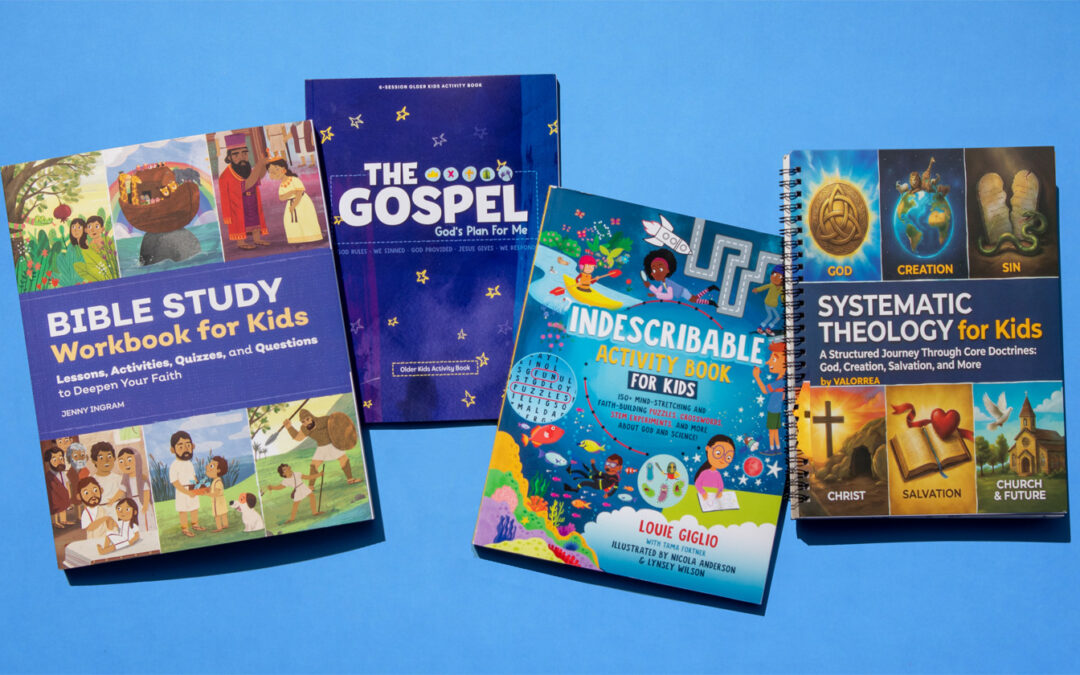
This style can be helpful for review and practice, but not every workbook teaches the same depth or quality of material. Some books explain ideas clearly and thoughtfully, while others stay very basic or only cover the surface of what the Bible teaches.
If you want to see how several popular workbooks compare side by side, you can read my full review here: Which Bible Workbook for Kids Is Best?
Are Workbooks the Only Way to Teach Theology to Kids?
Not every family who wants to teach systematic theology chooses to use a workbook. Workbooks are only one way to teach children about God and the Bible.
Some families prefer:
-
workbooks and activity books
-
chapter books that explain faith
-
family devotional books
-
Bible reading plans
-
faith-based homeschool curriculum
Each method teaches in a different way. Workbooks usually focus on short, repetitive lessons, while chapter books and discussion-based books often go deeper and help children think through ideas more clearly.
If you’re trying to decide how to teach the Bible at home and whether workbooks are the best option, you may also want to read: How to Teach the Bible at Home
When a Systematic Theology Workbook Can Be Helpful
A theology workbook can be a good choice if your child:
-
likes worksheets and activities
-
enjoys short lessons
-
needs structure
-
is learning at home or in homeschool
-
is just starting to learn the basics of the Bible
These books can make big ideas feel easier to understand, especially for younger kids.
When You Might Want Something More Than a Workbook
Some parents notice that workbooks don’t always explain enough. Because the lessons are short, topics may only be explained briefly. Kids may learn the right answers but still have questions about why those answers are true.
In those cases, families sometimes use additional books that explain faith through stories, conversations, or longer chapters instead of only worksheets. The goal is not just to memorize facts, but to help children understand what they believe and why.
Choosing the Right Theology Book for Your Child
There is no single book that works for every family.
When choosing a systematic theology book for kids, it helps to think about:
-
your child’s age
-
how much depth you want
-
whether your child prefers reading or activities
-
whether you want discussion questions
-
whether you want a workbook or a chapter book
Some children do well with simple worksheets, while others learn more from books that explain ideas in more detail. The best choice depends on how your child learns and what you want them to understand about their faith.
Do Children Really Need Systematic Theology?
Yes, children do need to learn theology. Every child is already forming beliefs about God, whether those beliefs are accurately taught or not. The question isn’t whether they will develop an understanding of these things, but whether that understanding will be guided, accurate, and rooted in truth.
Children naturally ask questions about who God is, why the world is the way it is, what happens after we die, and what’s right or wrong. If those questions are not answered clearly, they are often shaped by culture, assumptions, or incomplete ideas instead.
Christian theology helps give children a clear and consistent understanding of what the Bible teaches. It connects ideas so their faith isn’t based on isolated stories or simple answers, but on a fuller picture of who God is and how everything fits together.
They don’t need to study theology in the same way adults do, but they do need help understanding the basic truths of Christianity. Having clear answers builds a foundation that can grow with them over time.
For some families, a systematic theology workbook is a helpful tool because it organizes these topics into simple lessons. Workbooks can make big ideas feel easier to understand, especially for younger children or for homeschool settings.
However, workbooks are not the only way to teach theology. Some children learn better through reading, discussion, or stories that explain faith in more detail. In those cases, a chapter book or question-and-answer style book may help children think more clearly about what they believe and why.
The goal isn’t just to complete lessons, but to help children grow in understanding, confidence, and trust in God.
Final Thoughts
Systematic theology can be a helpful way to introduce kids to the basic truths of the Christian faith. These books organize important topics like God, sin, salvation, prayer, and the Bible into clear lessons that are easier for children to understand.
For some families, a workbook format works well because it provides structure and short activities that keep kids engaged. For others, a discussion-based book or chapter book may be a better fit, especially if a child asks a lot of questions or wants to understand why the Bible teaches what it does.
Not every child learns the same way, and not every book teaches with the same depth. Some workbooks focus on short answers and repetition, while other books spend more time explaining ideas and helping kids think through big questions about faith.
The goal is not just to give children the right answers, but to help them grow in understanding, confidence, and trust in what they believe.
If you’re also wondering whether workbooks are enough on their own, you can read more here: Are Bible Workbooks Enough for Kids to Understand Their Faith?
Frequently Asked Questions
What age should kids learn systematic theology?
Most systematic theology books for kids are written for ages 6–12, but the right age depends on the child. Some younger kids enjoy simple activity books, while older kids may understand deeper explanations.
Is systematic theology too hard for children?
It can be, if the material is written like an adult textbook. Good children’s books explain the same ideas in simple language and use examples kids can understand.
Are systematic theology workbooks better than regular Christian books?
Not necessarily. Workbooks are helpful for practice and review, but some children learn more from reading, discussion, or story-based books. Many families use both.
Why are there so many theology workbooks online right now?
There has been a growing interest in helping children understand their faith more deeply, especially among homeschool and Christian families. Because of this, many new workbooks have been published in recent years.
Other Articles You May Enjoy:


Share This Page on Social Media:
Let’s Be Friends!
Follow The Smartest Sprout on Facebook and Instagram! Discover the latest parenting tips, activity ideas, and more! Plus, get deal alerts on our favorite educational toys and healthy family essentials!