How to Teach the Bible at Home (Even If You Don’t Know Where to Start)

How to Teach the Bible at Home (Even If You Don’t Know Where to Start)

How to Teach the Bible at Home (Even If You Don’t Know Where to Start)

Many parents want to teach their children about the Bible, but aren’t always sure how to begin.

You may feel like you need to have all the answers, follow a perfect plan, or understand everything yourself before you can teach your kids. Because of that, it’s easy to feel overwhelmed or unsure where to start.

The good news is that teaching the Bible at home doesn’t have to be complicated. What matters most is helping your child begin to understand who God is, what the Bible teaches, and how those ideas fit together over time.

Start With the Right Goal

Before choosing a workbook or reading plan, it helps to think about the goal.

The goal is not just for children to memorize Bible stories or complete lessons. It’s to help them understand what they believe and why.

As kids grow, they naturally begin to ask deeper questions. They may wonder who God is, why Jesus came to earth, why bad things happen, or how we know the Bible is true. These are important questions, and they shape how a child understands their faith.

If you want a deeper explanation of how these ideas connect, you may also want to read: What Is Systematic Theology for Kids?

Use the Right Tools (But Don’t Rely on Just One)

There are many different ways to teach the Bible at home, and each one has strengths.

Workbooks

Workbooks can be helpful for structure. They give children something to do and can make lessons feel clear and manageable.

If you’re comparing options, you can see a full breakdown here: The Best Bible Workbooks for Kids (Honest Review and Comparison)

However, workbooks are usually designed for short lessons, which means they may not always explain ideas in much detail.

Chapter Books and Discussion-Based Learning

Some children understand ideas better when they read, ask questions, and talk through what they’re learning.

Books written in this style often spend more time explaining what the Bible teaches and how different ideas connect. This can be especially helpful for children who ask a lot of questions or want to understand their faith more clearly.

Because of this, some parents begin to wonder whether workbooks alone are enough to support that kind of understanding. If you’re asking that same question, you can read more here: Are Bible Workbooks Enough for Kids?

Keep It Simple and Consistent

One of the biggest mistakes parents make is trying to do too much at once.

Teaching the Bible at home does not require long lessons or complicated plans. Short, consistent time together is often more effective than trying to cover everything at once.

This might look like:

  • reading a short passage
  • working through a workbook page
  • talking about a question your child asked

Even a few minutes each day can make a lasting impact over time.

how to teach the bible at home for kids simple method parent helping child understand faith

Let Your Kids Ask Questions

Some of the best learning happens when children ask questions.

Instead of seeing questions as interruptions, try to see them as opportunities. Questions often show that your child is starting to think more carefully about what they’re learning.

They may ask things like:

  • How do we know God is real?
  • Why do people believe different things?
  • What happens after we die?

These are the moments when real understanding begins to grow.

You Don’t Have to Have All the Answers

Many parents hesitate to teach the Bible because they feel like they need to know everything first.

But you don’t have to have all the answers.

It’s okay to say:
“I’m not sure, but let’s look it up together.”

In fact, learning alongside your child can be one of the most meaningful parts of the process.

A Balanced Approach Works Best

In most cases, the best approach is not choosing just one method, but combining a few.

  • Workbooks can provide structure
  • Books can provide explanation
  • Conversations can provide understanding

Together, these create a more complete picture of what the Bible teaches.

Final Thoughts

Teaching the Bible at home doesn’t have to be complicated or overwhelming.

What matters most is creating space for your child to learn, ask questions, and grow in their understanding over time.

The goal is not just to complete lessons, but to help children understand what they believe and why. Small, consistent steps can make a lasting difference in how their faith develops.

Looking for the Right Kind of Book?

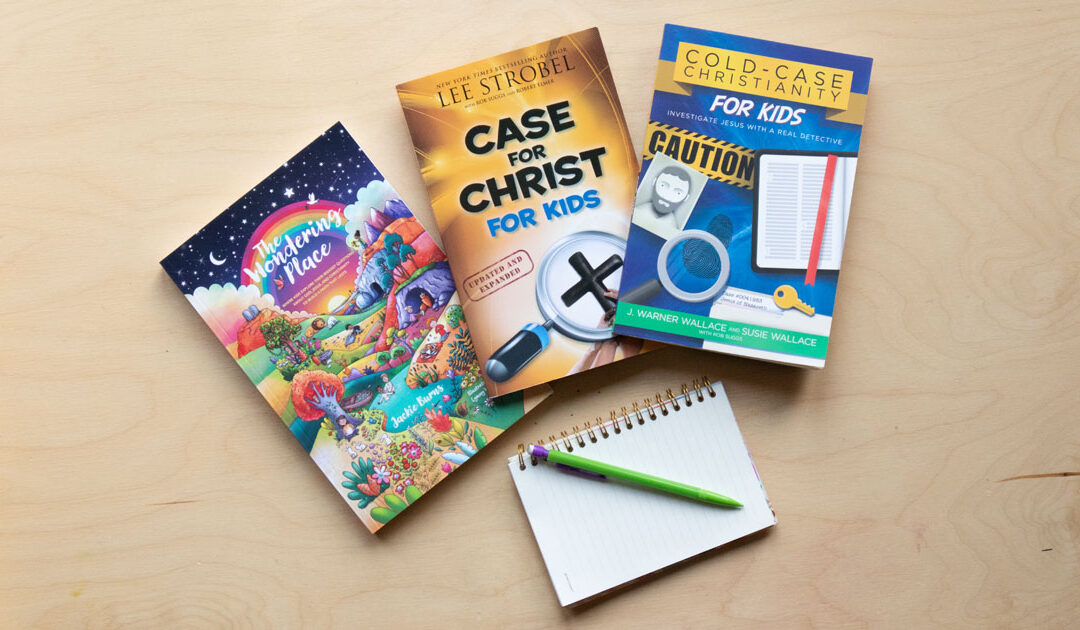
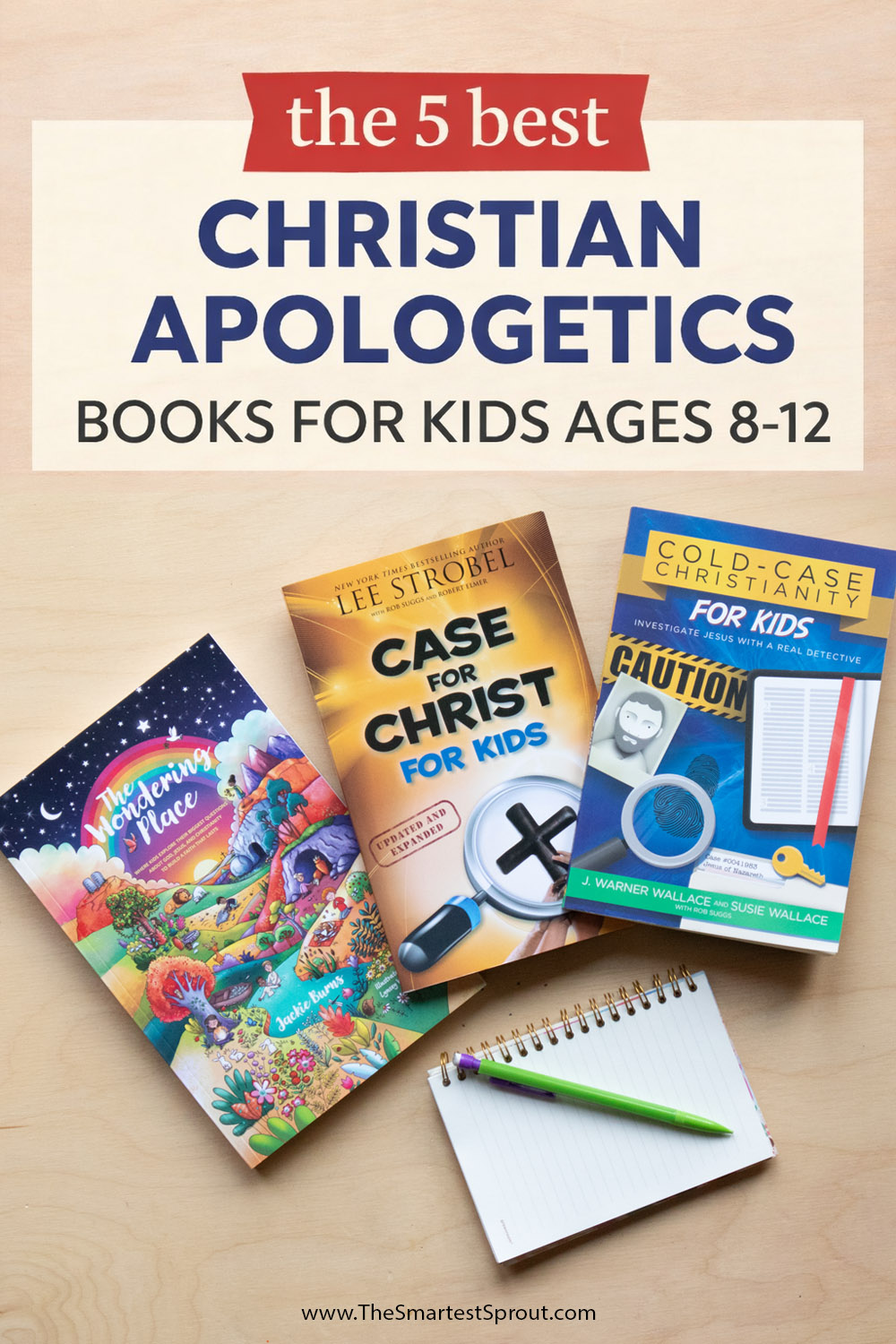
If you want to find books that help children understand what they believe and why they can trust it, you can explore some of the best options here: The 5 Best Christian Apologetics Books for Kids

Let’s Be Friends!

Follow The Smartest Sprout on Facebook and Instagram! Discover the latest parenting tips, activity ideas, and more! Plus, get deal alerts on our favorite educational toys and healthy family essentials!

What Is Systematic Theology for Kids? Do Kids Really Need These Books?

What Is Systematic Theology for Kids? Do Kids Really Need These Books?

What Is Systematic Theology for Kids? Do Kids Really Need These Books?

If you’ve been searching for Christian workbooks or Bible study books for your child, you’ve probably seen many of them described as systematic theology for kids. These books are becoming very popular, especially with homeschool families and parents who want their children to learn the Bible in a clear and structured way.

But what does systematic theology actually mean, and do kids really need this type of book? Understanding this can help you choose the right kind of book for your child instead of just picking whatever is popular online.

What Does Systematic Theology Mean?

Systematic theology is a way of teaching the Bible by organizing its teachings into clear topics.

Instead of reading the Bible in order, systematic theology looks at questions like:

  • Who is God?

  • Why did Jesus die on the cross?

  • What is sin?

  • What happens after death?

  • What does the Bible teach about salvation?

  • What does the Bible say about heaven and eternity?

Each topic is studied by looking at what the Bible says in different places, helping readers see how the Bible fits together.

For adults, systematic theology is usually taught in Bible college or seminary. For kids, these same ideas are simplified into workbooks, activity books, or question-and-answer style chapter books.

What Does Systematic Theology for Kids Usually Teach?

Systematic theology books for kids focus on the main parts of the Christian faith.

Common topics include:

  • Creation and the beginning of the world

  • Sin and why people need forgiveness

  • Jesus and salvation

  • Prayer and the Christian life

  • Heaven, hell, and eternity

  • Why Christianity is different from other religions

Many of the newer theology workbooks also include apologetics-style questions, such as how we know the Bible can be trusted or how we know God is real. These topics are meant to help children understand not only what Christians believe, but why those beliefs are true.

Books that focus on these kinds of questions are often described as apologetics for kids, and they’re becoming more common as parents look for ways to help their children build a strong foundation in their faith.

You can see more examples of apologetics books here: The 5 Best Christian Apologetics Books for Kids Ages 8–12

Why Are Systematic Theology Workbooks for Kids So Popular Right Now?

Recently, there has been a huge increase in theology workbooks and Bible activity books for kids, especially online.

Parents are looking for ways to help their children understand their faith, and workbooks feel like an easy place to start. They look structured, educational, and safe, but the quality of content can vary quite a bit from one book to another.

Many of these books follow the same format:

  • short lesson

  • short explanation

  • simple questions

  • coloring or writing activity

This style can be helpful for review and practice, but not every workbook teaches the same depth or quality of material. Some books explain ideas clearly and thoughtfully, while others stay very basic or only cover the surface of what the Bible teaches.

If you want to see how several popular workbooks compare side by side, you can read my full review here: Which Bible Workbook for Kids Is Best?

child using workbook learning systematic theology for kids and understanding christian beliefs

Are Workbooks the Only Way to Teach Theology to Kids?

Not every family who wants to teach systematic theology chooses to use a workbook. Workbooks are only one way to teach children about God and the Bible.

Some families prefer:

  • workbooks and activity books

  • chapter books that explain faith

  • family devotional books

  • Bible reading plans

  • faith-based homeschool curriculum

Each method teaches in a different way. Workbooks usually focus on short, repetitive lessons, while chapter books and discussion-based books often go deeper and help children think through ideas more clearly.

If you’re trying to decide how to teach the Bible at home and whether workbooks are the best option, you may also want to read: How to Teach the Bible at Home

When a Systematic Theology Workbook Can Be Helpful

A theology workbook can be a good choice if your child:

  • likes worksheets and activities

  • enjoys short lessons

  • needs structure

  • is learning at home or in homeschool

  • is just starting to learn the basics of the Bible

These books can make big ideas feel easier to understand, especially for younger kids.

When You Might Want Something More Than a Workbook

Some parents notice that workbooks don’t always explain enough. Because the lessons are short, topics may only be explained briefly. Kids may learn the right answers but still have questions about why those answers are true.

In those cases, families sometimes use additional books that explain faith through stories, conversations, or longer chapters instead of only worksheets. The goal is not just to memorize facts, but to help children understand what they believe and why.

Choosing the Right Theology Book for Your Child

There is no single book that works for every family.

When choosing a systematic theology book for kids, it helps to think about:

  • your child’s age

  • how much depth you want

  • whether your child prefers reading or activities

  • whether you want discussion questions

  • whether you want a workbook or a chapter book

Some children do well with simple worksheets, while others learn more from books that explain ideas in more detail. The best choice depends on how your child learns and what you want them to understand about their faith.

Do Children Really Need Systematic Theology?

Yes, children do need to learn theology. Every child is already forming beliefs about God, whether those beliefs are accurately taught or not. The question isn’t whether they will develop an understanding of these things, but whether that understanding will be guided, accurate, and rooted in truth.

Children naturally ask questions about who God is, why the world is the way it is, what happens after we die, and what’s right or wrong. If those questions are not answered clearly, they are often shaped by culture, assumptions, or incomplete ideas instead.

Christian theology helps give children a clear and consistent understanding of what the Bible teaches. It connects ideas so their faith isn’t based on isolated stories or simple answers, but on a fuller picture of who God is and how everything fits together.

They don’t need to study theology in the same way adults do, but they do need help understanding the basic truths of Christianity. Having clear answers builds a foundation that can grow with them over time.

For some families, a systematic theology workbook is a helpful tool because it organizes these topics into simple lessons. Workbooks can make big ideas feel easier to understand, especially for younger children or for homeschool settings.

However, workbooks are not the only way to teach theology. Some children learn better through reading, discussion, or stories that explain faith in more detail. In those cases, a chapter book or question-and-answer style book may help children think more clearly about what they believe and why.

The goal isn’t just to complete lessons, but to help children grow in understanding, confidence, and trust in God.

Final Thoughts

Systematic theology can be a helpful way to introduce kids to the basic truths of the Christian faith. These books organize important topics like God, sin, salvation, prayer, and the Bible into clear lessons that are easier for children to understand.

For some families, a workbook format works well because it provides structure and short activities that keep kids engaged. For others, a discussion-based book or chapter book may be a better fit, especially if a child asks a lot of questions or wants to understand why the Bible teaches what it does.

Not every child learns the same way, and not every book teaches with the same depth. Some workbooks focus on short answers and repetition, while other books spend more time explaining ideas and helping kids think through big questions about faith.

The goal is not just to give children the right answers, but to help them grow in understanding, confidence, and trust in what they believe.

If you’re also wondering whether workbooks are enough on their own, you can read more here: Are Bible Workbooks Enough for Kids to Understand Their Faith?

Frequently Asked Questions

What age should kids learn systematic theology?

Most systematic theology books for kids are written for ages 6–12, but the right age depends on the child. Some younger kids enjoy simple activity books, while older kids may understand deeper explanations.

Is systematic theology too hard for children?

It can be, if the material is written like an adult textbook. Good children’s books explain the same ideas in simple language and use examples kids can understand.

Are systematic theology workbooks better than regular Christian books?

Not necessarily. Workbooks are helpful for practice and review, but some children learn more from reading, discussion, or story-based books. Many families use both.

Why are there so many theology workbooks online right now?

There has been a growing interest in helping children understand their faith more deeply, especially among homeschool and Christian families. Because of this, many new workbooks have been published in recent years.

Let’s Be Friends!

Follow The Smartest Sprout on Facebook and Instagram! Discover the latest parenting tips, activity ideas, and more! Plus, get deal alerts on our favorite educational toys and healthy family essentials!

The Best Bible Workbooks for Kids (Honest Review and Comparison)

The Best Bible Workbooks for Kids (Honest Review and Comparison)

The Best Bible Workbooks for Kids (Honest Review and Comparison)

This post may contain affiliate links and other material connections. Read our disclosure here.

In recent years, many new Christian workbooks, theology workbooks, and Bible activity books for kids have been published, especially online. Some are very well made, while others feel rushed, confusing, or not as carefully written. Because of this, for parents to know which ones actually teach something meaningful and which ones are mostly just busywork.

Some books focus on theology, some focus on Bible stories, and others are more like activity books with light devotional content. These types of books are often grouped together, and the terms workbook and activity book are sometimes used interchangeably, even though they are not always designed the same way. Because of this overlap, I included both in this review. All of them can be helpful, but the format, depth, and overall quality can vary quite a bit.

In this review, I compared several popular Christian workbooks and activity books for kids to see how they actually look inside, how clear the lessons are, and which ones are easiest for children to use at home.

Books Included in This Comparison

For this comparison, I looked at the following books:

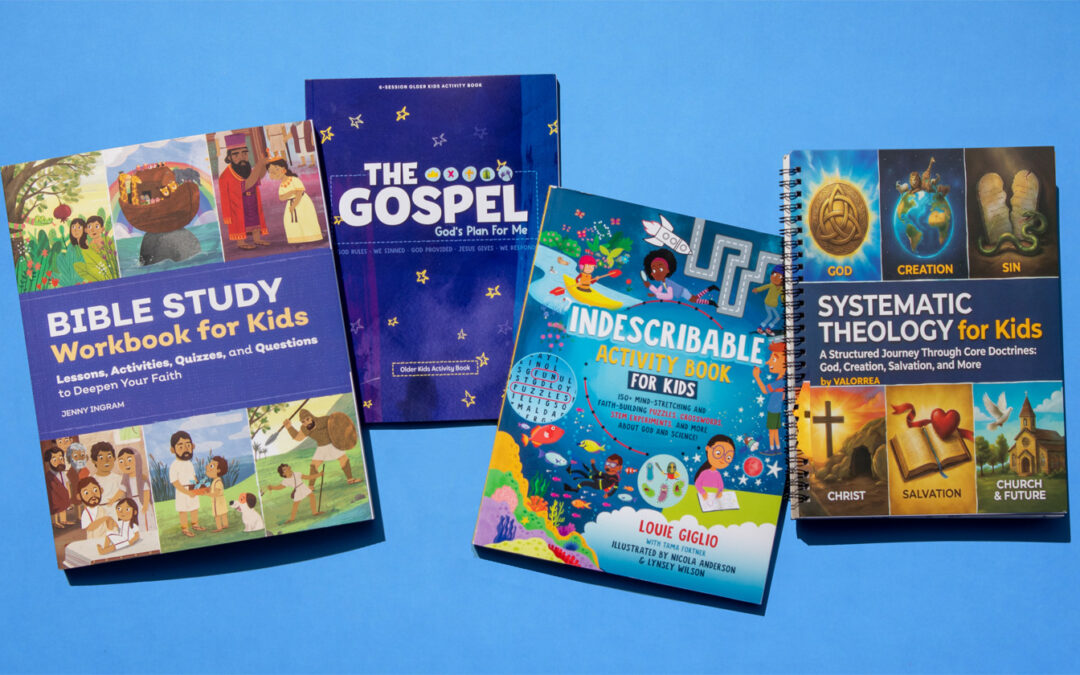
  • Bible Study Workbook for Kids by Jenny Ingram
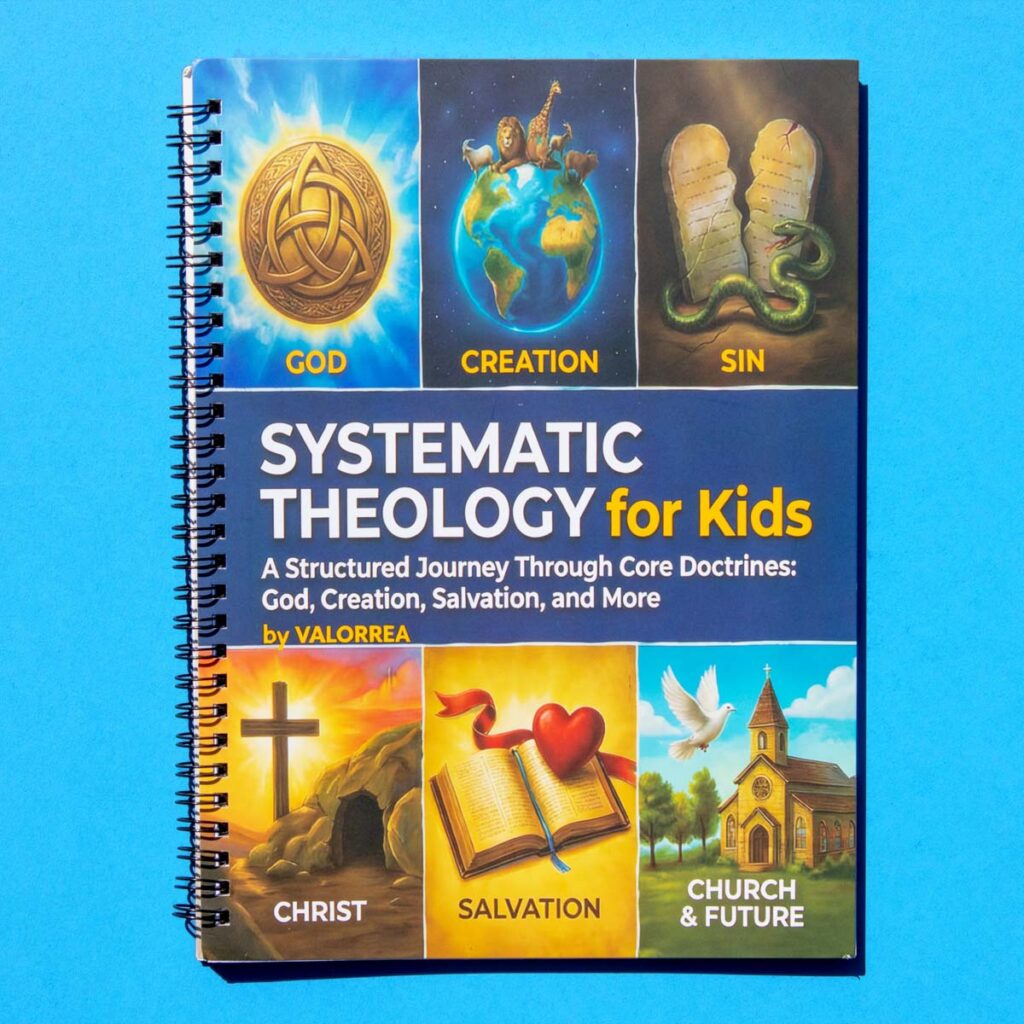
  • Systematic Theology for Kids by Valorrea
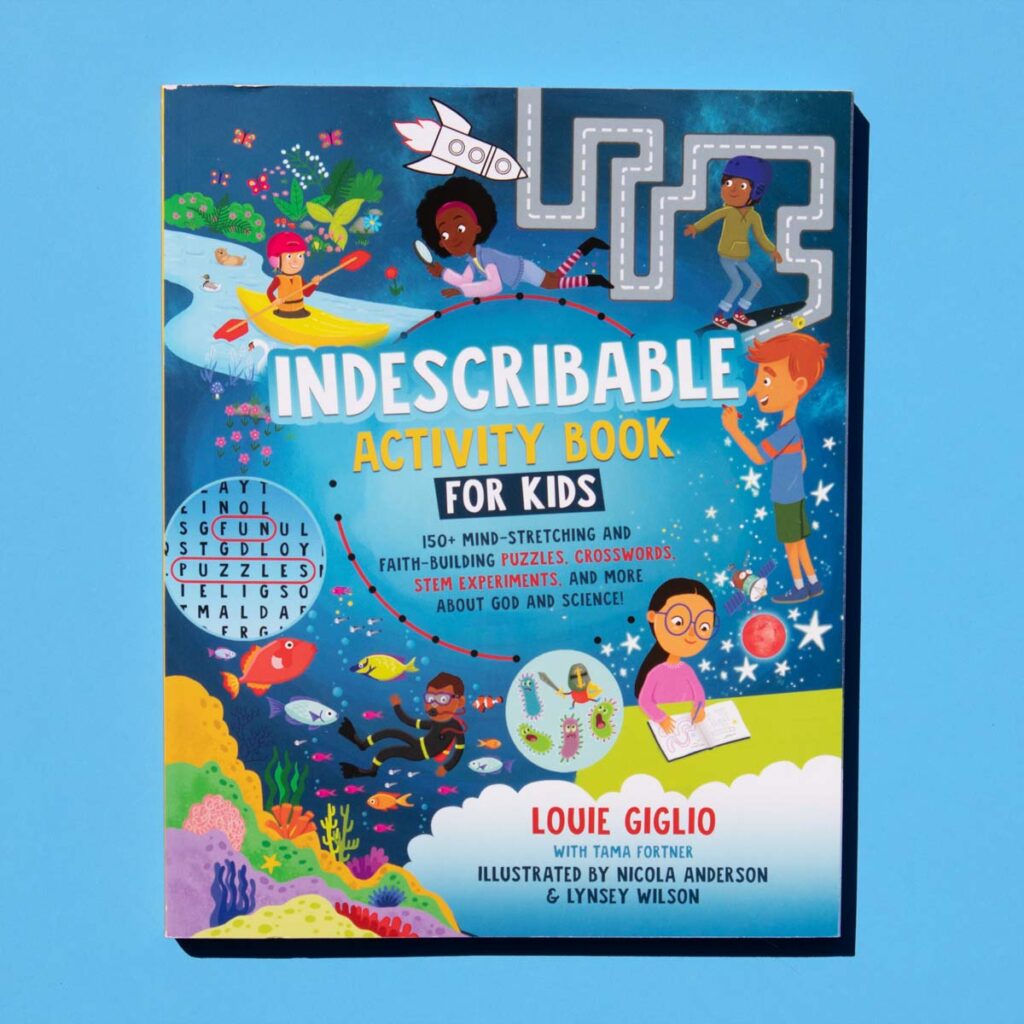
  • Indescribable Activity Book for Kids by Louie Giglio
  • The Gospel: Older Kids Activity Book by Lifeway

These books all fall into the general category of Christian workbooks, Bible workbooks, or activity books for kids, but they’re designed for slightly different purposes.

Some focus mostly on systematic theology and follow a more structured, academic approach, while others are more creative and activity-based.

If you’d like a clearer explanation of what systematic theology means and how it fits into Christian learning, you may also want to read: What Is Systematic Theology for Kids?

Now let’s take a closer look at each book and what it offers.

Bible Study Workbook for Kids

Lessons, Activities, Quizzes, and Questions to Deepen Your Faith

by Jenny Ingram

This workbook is one of the most organized and professionally designed books in this comparison.

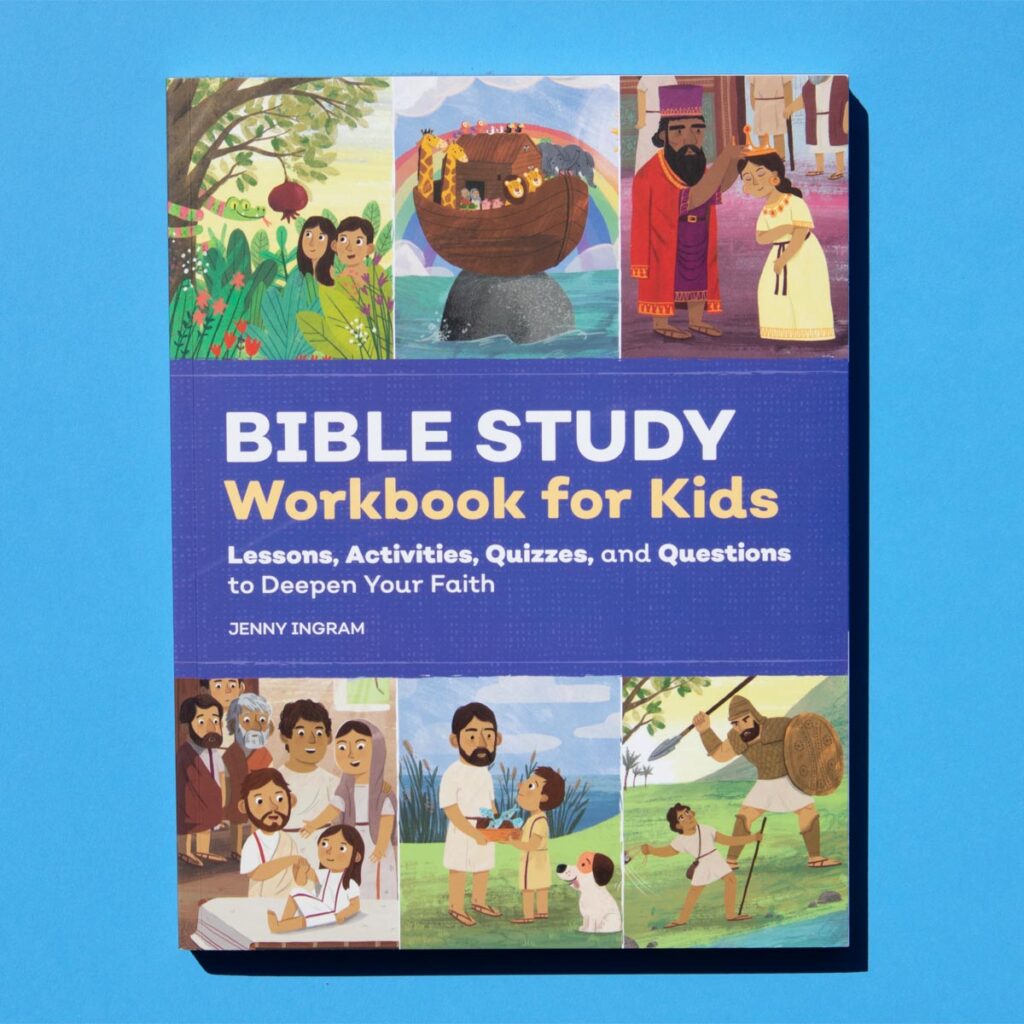
Bible Study Workbook for Kids by Jenny Ingram cover showing Christian workbook for children

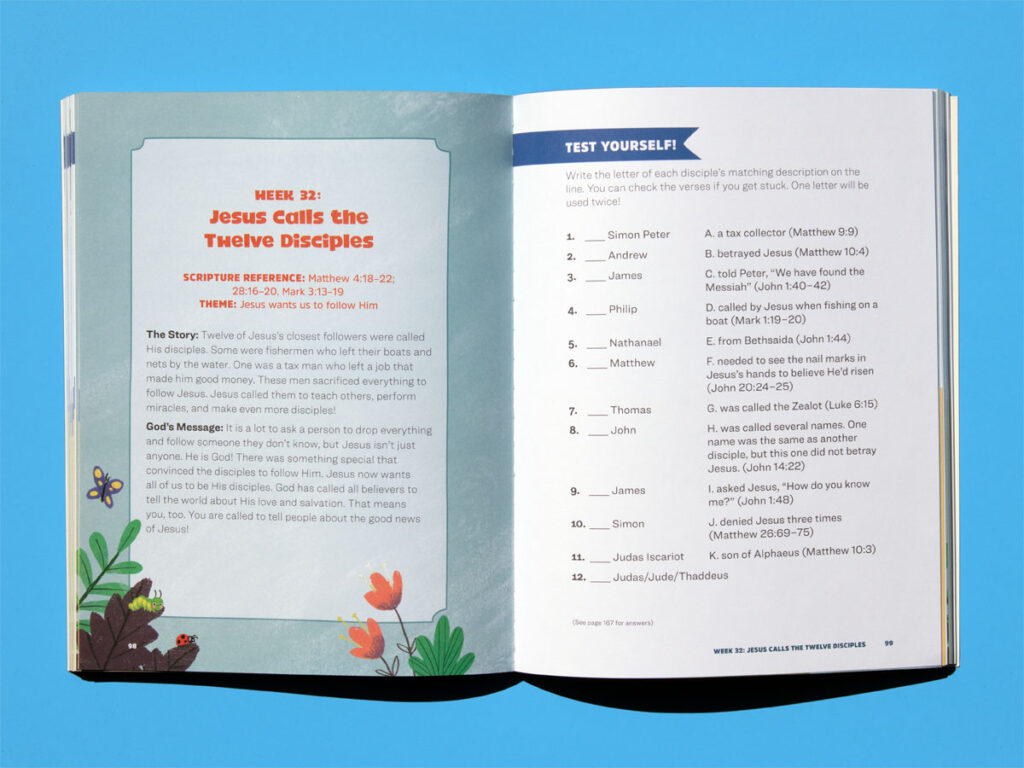
Each lesson follows a clear structure. A weekly theme is introduced with a Bible story, followed by a short paragraph called “God’s Message” that explains what the child should learn from the story. After that, there is a worksheet and a hands-on activity related to what was just read. The activities include things like trivia, fill-in-the-blank questions, simple experiments, drawing, and discussion questions.

The writing is very clear and easy to understand, but still feels thoughtful and accurate to Scripture. The lessons are short enough to keep a child’s attention while still teaching something with depth.

One thing I liked about this workbook is that it feels intentional. You can tell the author really wants to help kids learn about the Bible. The instructions are easy to follow, and each lesson has a clear point. It also includes discussion questions, which makes it useful for parents who want to talk through the lesson with their child.

Inside pages of Bible Study Workbook for Kids showing worksheet and Bible lesson activity for children

Overall, this is a very strong choice for families who want a structured workbook that actually teaches something, not just busywork.

The only small issue I noticed was a minor formatting detail in the Week One activity where the mix of uppercase and lowercase letters could be confusing for younger readers, but this was a one-time problem and did not affect the overall quality.

Best for:

  • kids who like clear instructions
  • homeschool or home Bible time
  • parents who want real teaching, not just activities

Systematic Theology for Kids

A Structured Journey Through Core Doctrines: God, Creation, Salvation, and More

by Valorrea

This workbook looks like it should be very strong based on the title, but in practice it was the weakest book in this comparison.

Systematic Theology for Kids workbook cover showing Christian theology workbook for children

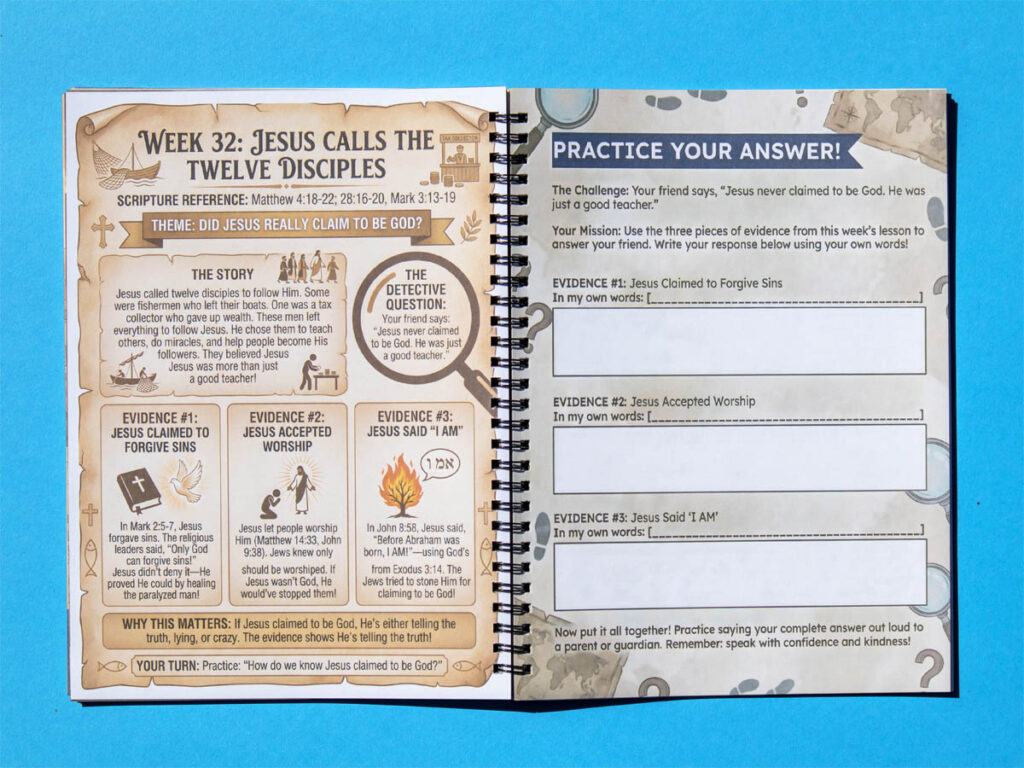
The biggest problem is that the lessons feel repetitive and poorly organized. Many of the weekly themes are very similar, such as asking whether different Bible characters were real people or just stories. Some topics appear more than once, and the overall flow doesn’t feel carefully planned.

The writing also feels uneven. Some sections include good ideas, especially when talking about evidence for the Bible, but other parts feel rushed or unclear. In several places, the wording sounds like it may have been generated quickly without careful editing, and there are a few small formatting issues and missing words that make parts of the text harder to follow.

Another issue is that the activity at the end of each lesson is always the same. Instead of a variety of activities, each lessons asks the child to write out answers in their own words. This can become repetitive and may not hold a child’s attention very well.

Although the book is labeled as systematic theology, many of the lessons focus more on apologetics-style questions than on teaching the main parts of Christian doctrine. This is not necessarily bad, but the way it’s presented feels inconsistent.

Inside pages of theology workbook for kids showing lesson and worksheet activity about Jesus and Bible doctrine

Because of these issues, this workbook is hard to recommend, especially when there are other options that are clearer and more thoughtfully written.

Best for:

  • older kids who enjoy writing answers
  • parents willing to guide every lesson

Harder to recommend for:

  • independent work
  • younger children
  • families looking for clear structure

Indescribable Activity Book for Kids

150+ Mind-Stretching and Faith-Building Puzzles, Crosswords, Stem Experiments, and More About God and Science!

by Louie Giglio

This book is very different from the others. It’s more of an activity book than a theology workbook.

Indescribable Activity Book for Kids by Louie Giglio Christian activity book about God and science for children

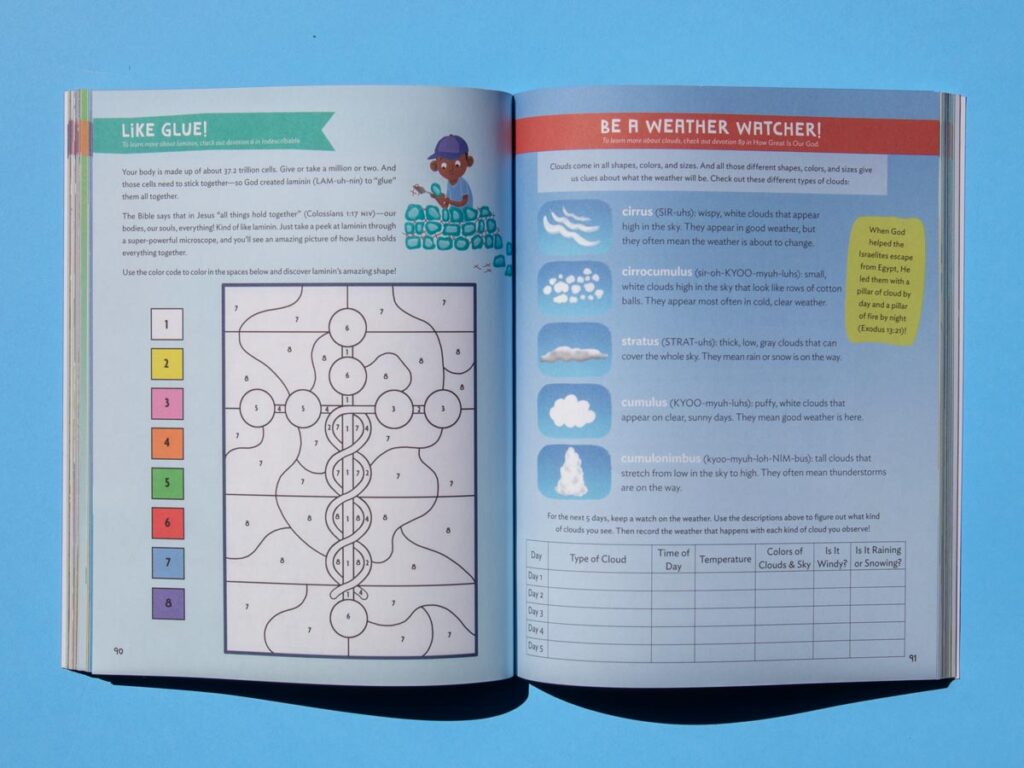
The illustrations are excellent, and the pages are colorful and engaging. There is a wide variety of fun activities, including puzzles, drawing, mazes, simple science experiments, and creative projects. Kids who enjoy science or activity books will probably like this one a lot.

Compared to the other books in this comparison, the theology content is lighter, and the focus is more on science and nature themes. The lessons do connect to biblical ideas, but the main goal of the book seems to be helping kids see how science relates to God’s creation through fun and engaging activities rather than teaching detailed theology.

This is a fantastic activity book, and it does exactly what it’s designed to do. However, if your main goal is to teach theology, you will probably want to use it alongside another workbook that focuses more directly on Christian doctrine.

It could be a good choice for:

  • science or nature lessons
  • fun homeschool activities
Inside pages of Christian activity book for kids showing worksheets puzzles and science lessons about God

Best for:

  • fun learning
  • younger kids
  • creative activities

Not ideal for:

  • deep theology study
  • structured lessons

The Gospel: Older Kids Activity Book

God’s Plan for Me

by Lifeway

This book has a good balance of reading, worksheets, and devotional content, but it feels like it was designed more for a church or classroom setting than for independent use at home.

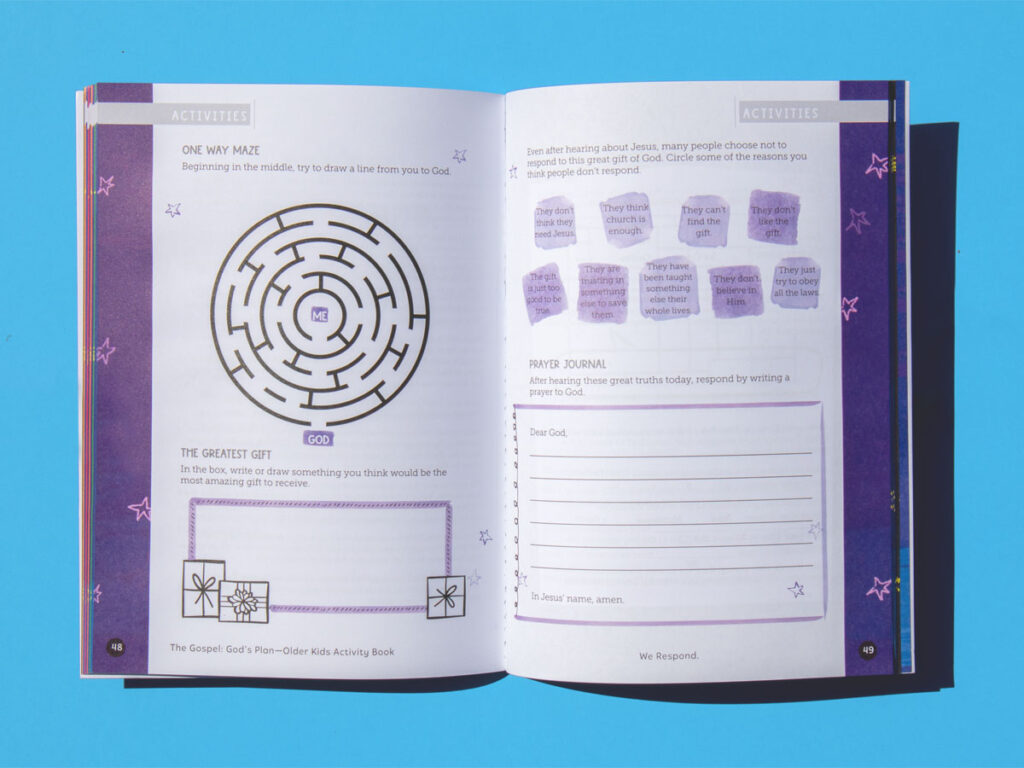
Interior pages from a Christian activity book for kids showing puzzles, coloring pages, and learning activities that connect science and faith in a workbook-style format.

Each lesson includes a Bible story, activity pages, and journaling or reflection questions. The explanations of the stories are clear and cover important parts of the gospel, including creation, sin, salvation, and the life of Jesus.

One thing I noticed is that the lessons can be long. Each session includes several pages, and it may be hard for some kids to complete the entire lesson at one time. Breaking the lessons into smaller sections might make it easier to use at home.

Another issue is that some activities refer to a “leader” or assume that extra instructions will be given. Though a child can complete most of the pages on their own, without the leader guide, certain pages can feel confusing, and it may not always be clear what the child is supposed to do.

At the time of writing this post, the Amazon product description did not clearly mention that a separate leader guide would be required for some lessons. This could be confusing for parents who expect the workbook to be fully self-contained.

Because of this, the book works best when a parent, teacher, or group leader is guiding the lesson with the leader guide in hand.

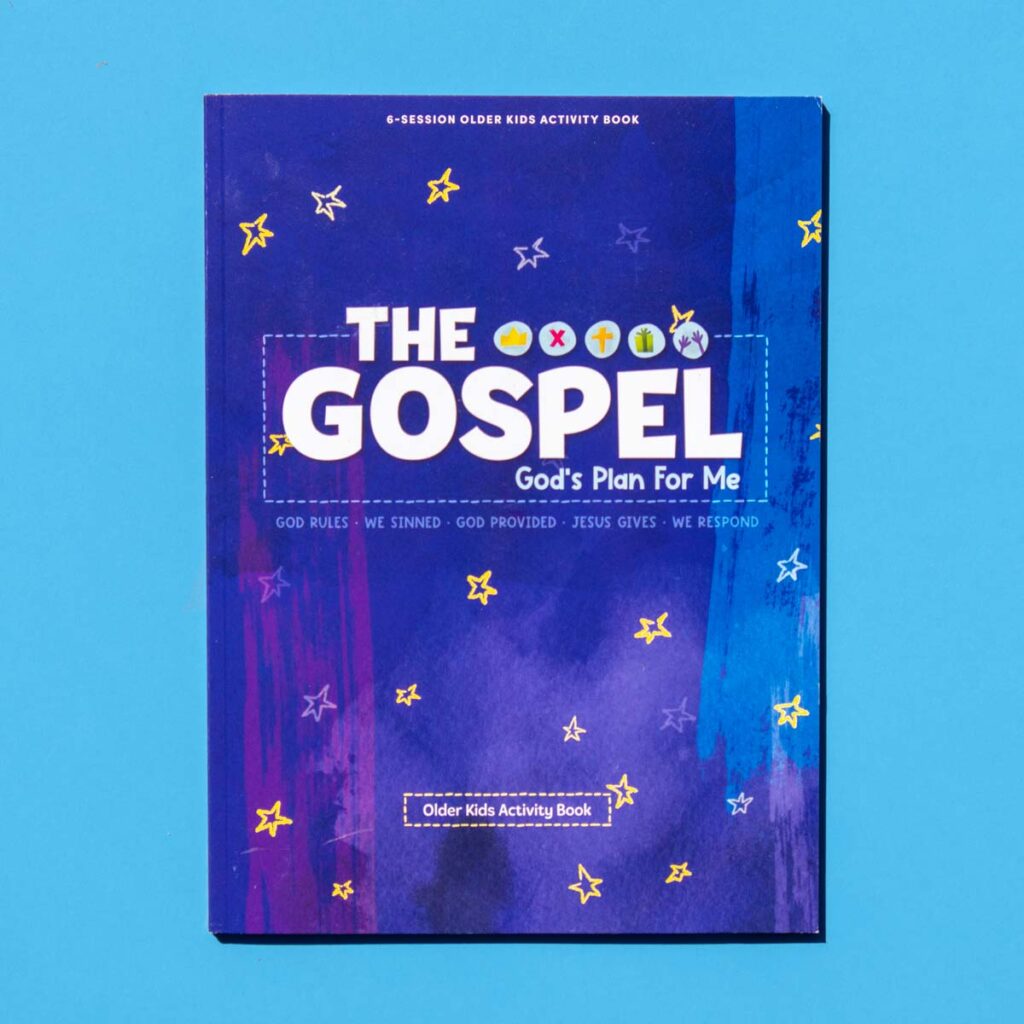
Cover of The Gospel God’s Plan for Me activity book for kids, a Christian workbook designed to teach the gospel message through Bible lessons, activities, and discussion questions.

With that in mind, it can still be a good workbook, but families should know that it may require extra help to use fully.

Best for:

  • church classes
  • homeschool with parent guidance
  • kids who like structured lessons

Less ideal for:

  • independent workbook use
  • younger children with short attention spans

When Workbooks Work Well

Workbooks can be very helpful for kids who like structure and clear instructions. They give children something to do with their hands while they learn, and this can make learning feel more manageable, especially for children who need clear direction. They can also make Bible lessons feel more simple to follow.

Workbooks are often a good choice for:

  • homeschool lessons
  • church classes
  • short daily Bible time
  • kids who enjoy worksheets

Some workbooks focus on theology, some focus on Bible stories, and some are more activity-based. Choosing the right one depends on how your child learns best.

If you are wondering whether workbooks are enough for teaching theology on their own, you may also want to read: Are Bible Workbooks Enough for Kids?

When a Workbook May Not Be the Best Fit

Not every child learns best by filling in blanks or completing activity pages. Some kids understand ideas better when they read, ask questions, or talk through what they are learning.

Workbooks are usually designed to teach in short pieces. That can be helpful, but it can also mean the explanations stay very simple. This can leave important questions only partially answered.

For children who ask a lot of questions or want to understand what the Bible teaches and why Christians believe it, a book with longer explanations may be a better fit.

Best for Deeper Learning: A Chapter Book Approach

For those children, a chapter-book approach can sometimes work better than a workbook.

Books written this way usually spend more time explaining why Christians believe certain things, not just what the Bible says. They can explore topics like suffering, different religions, and how we know the Bible is true, helping kids understand their faith more clearly.

One example of this type of book is The Wondering Place. Instead of worksheets, it teaches both theology and apologetics through short chapters that answer common questions kids have about God, the Bible, and Christianity. Each chapter is written in simple language but goes further than most workbook lessons and includes discussion questions instead of write-in activities.

The book also includes a glossary that explains key terms, helping children understand the lessons even if they don’t have much background in Christian theology. It also helps them see how those ideas connect.

The Wondering Place Christian book for kids by Jackie Burns colorful illustrated cover about God, Jesus, and Christianity

This kind of format can work well for homeschool, family Bible time, or for kids who enjoy reading more than completing workbook pages. It may not be the best fit for children who only want puzzles or activities, but it can be a good option for families who want a stronger understanding of what Christians believe and why those beliefs are true.

Best for:

  • kids who like chapter books
  • deeper discussions about faith
  • homeschool or family Bible study
  • children who ask a lot of questions

Not ideal for:

  • kids who only want activities
  • very short lesson times

If you are interested in books that help kids understand Christian beliefs more clearly, including answers to big questions about God, the Bible, and why we believe these things, you can see my full list here: The 5 Best Christian Apologetics Books for Kids 

Final Ranking

Final Thoughts

There are many Christian workbooks for kids available right now, and they’re not all the same. Some are carefully written and easy to use, while others feel repetitive or unclear.

The best choice depends on your child’s age, attention span, and learning style. Some kids do well with worksheets, while others learn more from reading and discussion.

Taking time to look inside the book before buying can make a big difference, especially when you want something that will really help your child understand their faith.

The goal is not just to complete lessons, but to help children understand what they believe and why. Choosing the right kind of book can make a lasting difference in how their faith grows over time.

Frequently Asked Questions

What is the difference between a Bible workbook and an activity book?

A Bible workbook usually teaches specific lessons about the Bible, Christian beliefs, or theology, often with questions, worksheets, or short reading sections. These books are designed to help children understand what the Bible teaches and why those teachings matter.

An activity book is usually more focused on fun exercises like puzzles, coloring, mazes, or games, with Bible verses or themes included. These can be great for younger children or for extra practice, but they may not go as deep as a structured workbook.

Both types can be helpful, depending on whether your goal is learning, review, or simply keeping kids engaged with biblical topics.

Are theology workbooks good for children?

Theology workbooks can be very helpful for children when they are written at the right level. Good theology books for kids explain big ideas in simple, clear language without making the material confusing or overwhelming.

However, not every workbook labeled “theology” is actually well organized or easy to understand. Some books repeat the same ideas, skip important explanations, or use wording that feels unclear. This is why it is important to choose books that are carefully written and designed specifically for children, not just simplified versions of adult material.

What age should kids start learning theology?

Children can begin learning basic theology as soon as they’re able to understand simple Bible stories and ask questions about God. For many families, this starts around ages 6–8, when kids naturally begin wondering why Christians believe certain things.

At this age, lessons should be short, clear, and easy to follow. As children get older, they can handle more detailed explanations about topics like salvation, the reliability of the Bible, prayer, and life after death. The key is to choose books that match the child’s maturity level instead of jumping into material that feels too advanced or confusing.

Is a workbook or a chapter book better for learning the Bible?

Workbooks are helpful for kids who enjoy writing, filling in answers, or doing hands-on activities. They work well for structured learning, homeschool settings, or short lessons that can be completed one page at a time.

Chapter books can be better for children who like to read and want to understand ideas more clearly. Instead of filling in blanks, these books explain topics in full sentences and stories, which can help kids remember what they learn and think more carefully about their faith.

Many families find that using both works best. A workbook can make learning interactive, while a chapter book can give a fuller understanding of what the Bible teaches and why it matters.

Let’s Be Friends!

Follow The Smartest Sprout on Facebook and Instagram! Discover the latest parenting tips, activity ideas, and more! Plus, get deal alerts on our favorite educational toys and healthy family essentials!

Are Bible Workbooks Enough for Kids to Understand Their Faith?

Are Bible Workbooks Enough for Kids to Understand Their Faith?

Are Bible Workbooks Enough for Kids to Understand Their Faith?

Many parents use Bible workbooks or Christian activity books to help their children learn about faith. These books can be a helpful tool, especially for younger kids who enjoy coloring pages, puzzles, and simple lessons. Workbooks give children something to do with their hands while they learn, and they can make Bible time feel more structured and easy to follow.

But some parents eventually wonder if worksheets and activity pages are enough on their own. If a child starts asking bigger questions about God, the Bible, or why Christians believe certain things, a workbook may not always give the kind of explanation they’re looking for.

So are Bible workbooks enough for kids, or do children need something more?

Why Many Parents Use Bible Workbooks

Bible workbooks are popular because they’re simple to use and easy to understand. Most are designed with short lessons, simple questions, and activities that help children stay focused. For families who want something structured, workbooks can make it easier to have regular Bible time at home.

They can also be helpful for homeschool, Sunday school, or families who want a clear plan instead of trying to come up with lessons on their own. A good workbook can introduce Bible stories, teach basic Christian ideas, and help kids remember what they learned.

For many children, this kind of hands-on learning works very well.

What Bible Workbooks Do Well

Workbooks are especially good for teaching in small steps. Each lesson usually focuses on one idea at a time, which can make learning feel manageable instead of overwhelming.

Activity pages can also help children stay engaged. Puzzles, drawing, matching games, and short questions give kids something to do while they learn, and this can make Bible lessons feel more fun.

For younger children or kids who struggle to sit still, this format can be very helpful. It keeps lessons short and clear, and it gives parents an easy way to guide the conversation.

Because of this, Bible workbooks can be a strong starting point for learning about faith.

Where Workbooks Can Fall Short

Even though workbooks can be helpful, they’re not designed to do everything. Most workbook lessons are short on purpose, which means the explanations also have to stay simple. This can leave important questions only partially answered.

Workbooks works well for basic ideas, but it can become harder when children start asking deeper questions. Topics like suffering, different religions, and questions about God often need more explanation than a worksheet can provide.

Some workbooks also repeat the same type of activity in every lesson. When every page looks similar, children may lose interest, especially as they get older or begin to think more seriously about their faith.

As a result, workbooks can sometimes introduce ideas without fully explaining them.

Some Kids Need More Than Worksheets

Not every child learns about the Bible best by completing activity pages. Some kids understand ideas better when they read a story, ask questions, or talk through what they’re learning instead of writing answers on a worksheet.

As children grow, they often want to understand not just what the Bible says, but what Christians believe and why it’s true. They may ask how we know God is real, why bad things happen, or how the different parts of the Bible fit together.

Books that use chapters instead of worksheets can help meet this need. They have more space to explain ideas clearly, connect different topics together, and walk through questions step by step.

For children who are curious or and ask big questions, this kind of learning can make faith feel more real and easier to understand.

bible workbooks for kids vs apologetics showing why kids need to understand what they believe and why

A Better Approach for Deeper Understanding

This doesn’t mean workbooks are bad. In many cases, the best approach is to use more than one kind of resource.

A workbook can be helpful for structure and review, while other books such as chapter books or apologetics-based books that help children understand what they believe and why can give fuller explanations and answer harder questions.

When children have the chance to both do activities and talk about what they believe, they often understand the lesson more clearly.

Parents don’t have to choose between workbooks and other resources. Using them together can give kids a stronger foundation and help them grow in their understanding as they get older.

When Workbooks Are Helpful and When They’re Not

Bible workbooks can be a great tool, especially for younger children, short lessons, or families who want something structured and easy to use.

But they’re not always enough on their own, especially for kids who ask a lot of questions or want to understand their faith in a deeper way. Some children need more explanation, more discussion, and more time to think through what they’re learning.

Every child learns differently, but they all need help understanding what they believe and why. The best approach for many children is often a mix of activities, reading, and conversation.

When parents understand the strengths and limits of workbooks, it becomes much easier to choose the right tools to help their kids grow in faith.

Keep Learning

If you want to explore this further, here are a few helpful next steps:

How to Teach the Bible at Home
Which Bible Workbook Is Best

Let’s Be Friends!

Follow The Smartest Sprout on Facebook and Instagram! Discover the latest parenting tips, activity ideas, and more! Plus, get deal alerts on our favorite educational toys and healthy family essentials!

The 7 Best Faith-Based Chapter Books For Kids (Parent Approved)

The 7 Best Faith-Based Chapter Books For Kids (Parent Approved)

The 7 Best Faith-Based Chapter Books For Kids (Parent Approved)

This post may contain affiliate links and other material connections. Read our disclosure here.

Finding good books for kids is harder than it used to be. Many modern chapter books include sarcasm, disrespectful humor, confusing messages about right and wrong, or themes that don’t line up with the values you are trying to teach at home. Even when a book looks innocent on the outside, parents sometimes discover content they weren’t expecting once their child starts reading.

That’s why many families look specifically for faith based chapter books for kids. These books tend to focus on strong character, meaningful lessons, courage, kindness, and a clear sense of right and wrong. Some are openly Christian, while others reflect biblical values through their characters, stories, and lessons.

In this guide, I’m sharing a list of faith based chapter books that parents can feel good about giving to their kids. These are stories that are clean, engaging, and built around themes of faith, truth, and character.

Most of the books on this list are best for kids ages 8 to 12, but many will also work for slightly younger or older readers.
Faith based chapter books for kids - Clean christian chapter books for kids that parents can trust

What counts as a faith based chapter book?

Not every faith based book looks the same. Some stories talk about God directly. Others show faith through the choices characters make, the way good and evil are treated, or the lessons the story teaches.

For this list, I look for books that have at least one of these qualities:

  • Clear moral themes such as courage, honesty, sacrifice, or forgiveness

  • Respect for God, Scripture, or biblical values

  • Clean language and age-appropriate content

  • A strong sense that good and evil are real and that truth matters

  • Stories that encourage kids to think about life, faith, and character

Some books on this list are fully Christian, while others are simply faith-friendly. But all of them are chapter books kids can enjoy, with themes and values parents can trust.

Why parents are searching for clean and faith based books

A lot of parents today feel like they have to preview everything before their kids read it.

Books that used to be considered safe sometimes include themes that feel too mature, too negative, or too confusing for younger readers. Many parents want stories that build kids up instead of filling their heads with ideas they are not ready for yet.

Faith based chapter books often feel different because they tend to:

  • Show respect for parents and family

  • Treat good and evil as real

  • Encourage bravery, kindness, and self-control

  • Avoid unnecessary romance or mature topics

  • Point kids toward truth instead of confusion

For families who care about values, these kinds of books can make a big difference.

Faith-Based Chapter Books for Kids

Below you will find faith based chapter books that parents often recommend when they want clean, meaningful stories for their children.

1. The Wondering Place

Where Kids Explore Their Biggest Questions About God, Jesus, and Christianity to Build a Faith That Lasts
by Jackie Burns
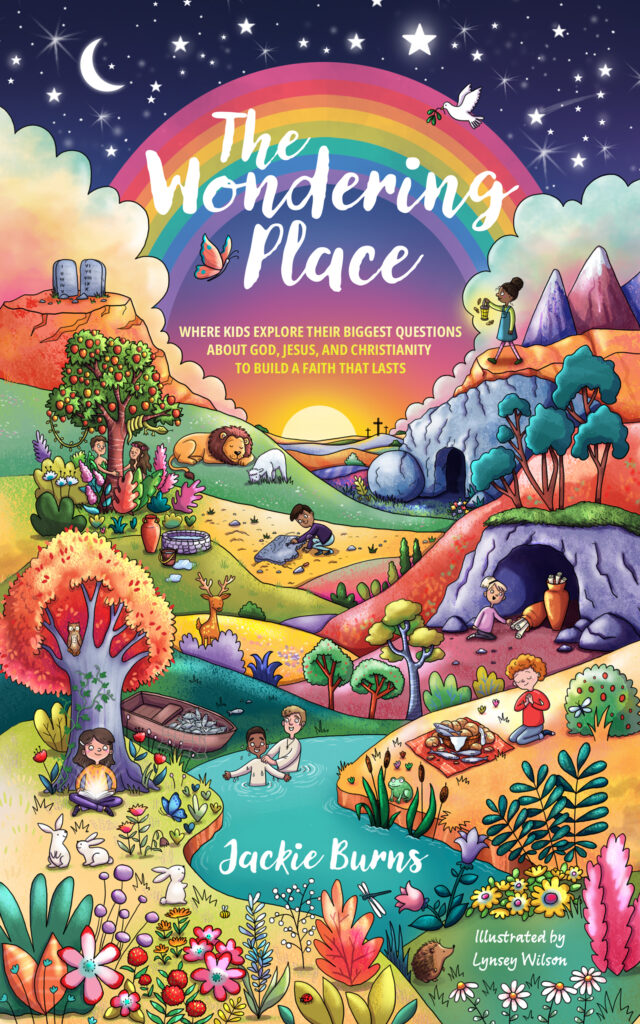
The Wondering Place book cover by Jackie Burns showing children exploring a colorful landscape under a rainbow

The Wondering Place is a thoughtful Christian chapter book designed to help kids explore big questions about faith in a clear and engaging way. Instead of simply telling children what to believe, the book walks them through the reasons Christians trust the Bible, believe in Jesus, and build their lives around God.

Across 37 chapters, kids explore topics like the existence of God, historical evidence for the life of Jesus, archaeological support for the Bible, and why Christianity teaches what it does about sin, salvation, and spiritual growth.

Written in a warm and approachable style, the book encourages curiosity while helping children see that faith and thoughtful questions can go together. It is designed to help young readers develop a confident foundation for their beliefs.

A great fit for:

Kids who ask big questions about God and faith
Families who want deeper conversations about Christianity
Readers who enjoy learning how faith connects with real evidence

Why parents like it:

Explains complex topics in a clear and age-appropriate way
Encourages kids to think deeply about their beliefs
Helps children build a strong foundation of faith

You can read more about this book or see current pricing here:

2. Little Pilgrim’s Progress

From John Bunyan’s classic
by Helen L. Taylor
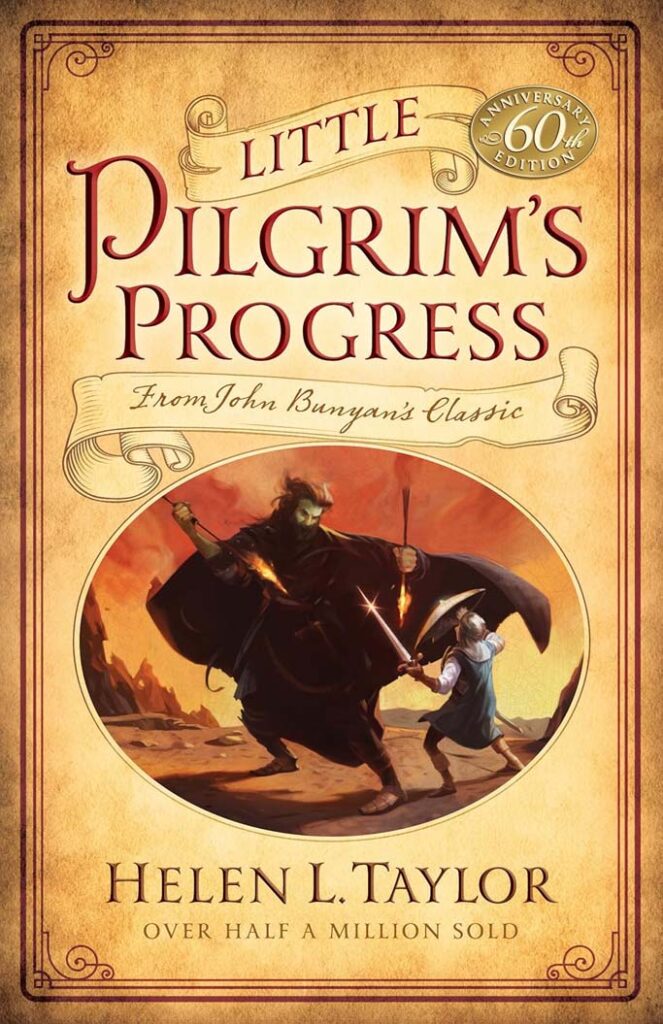
Little Pilgrim’s Progress book cover by Helen L Taylor, a children’s adaptation of John Bunyan’s Christian allegory about a pilgrim’s journey of faith

Little Pilgrim’s Progress is a beautifully adapted version of John Bunyan’s classic Christian allegory, rewritten in language that younger readers can understand. The story follows Christian and Christiana on their journey toward the Celestial City, facing trials, temptations, and challenges that test their faith along the way.

This version keeps the powerful message of the original story while making it easier for children to follow. Through the characters’ journey, kids see how courage, obedience, and trust in God help guide them through difficult situations.

The book has been loved by Christian families for generations and is often recommended for children who are ready for longer chapter books but still need clear, meaningful storytelling.

A great fit for:

Kids who enjoy adventure stories with strong moral lessons
Families looking for classic Christian books for children
Readers who are ready for longer chapter books with deeper themes

Why parents like it:

Teaches faith, perseverance, and trust in God in a clear way
Based on one of the most respected Christian books ever written
Written in language that younger readers can understand

You can read more about this book or see current pricing here:

3. The Secret of the Hidden Scrolls: The Beginning

The Secret of the Hidden Scrolls (Book 1)
by M. J. Thomas
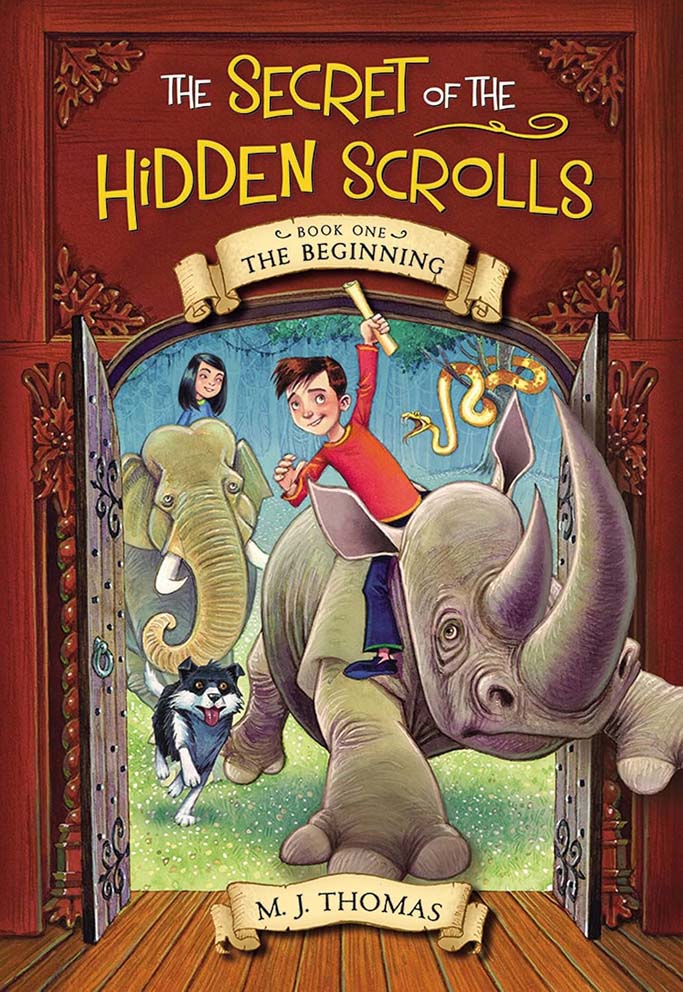
Secret of the Hidden Scrolls The Beginning book cover Christian chapter book for kids about Bible stories and time travel adventure

The Secret of the Hidden Scrolls: The Beginning is the first book in a Christian adventure series that sends two siblings back in time to witness events from the Bible. When Peter and Mary discover mysterious scrolls, they are suddenly transported to the very beginning of creation and must find their way back before time runs out.

Each book in the series combines exciting storytelling with real moments from Scripture, helping kids experience Bible history in a way that feels alive and memorable. The stories are fast-paced, imaginative, and easy to read, making them a great choice for younger chapter book readers.

Along the way, children learn about God’s power, His plan for the world, and why the events in the Bible matter.

A great fit for:

Kids who enjoy adventure stories with Bible themes
Readers who like time-travel or mystery stories
Families looking for fun books that teach Scripture

Why parents like it:

Introduces Bible stories in an engaging way
Easy chapter length for younger readers
Encourages interest in learning more about the Bible

You can read more about this book or see current pricing here:

4. Voyage with the Vikings

The Imagination Station (Book 1)
by Marianne Hering and Paul McCusker
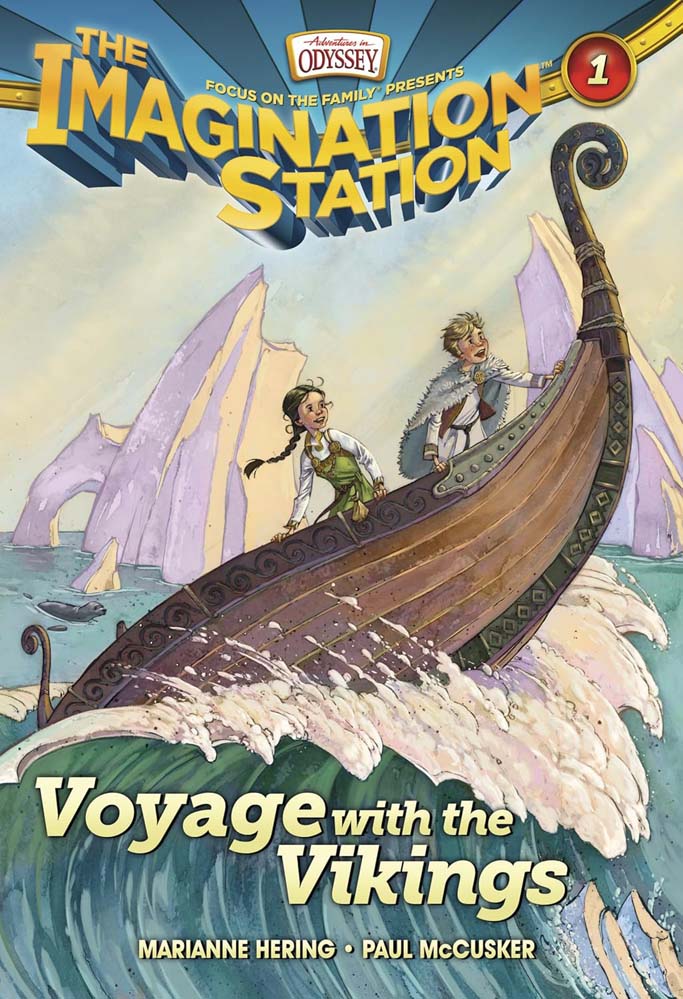
Voyage with the Vikings Imagination Station book cover Christian time travel adventure chapter book for kids

Voyage with the Vikings is the first book in the popular Imagination Station series created by the team behind Adventures in Odyssey. The story follows cousins Beth and Patrick, who discover a mysterious time-travel device that sends them on adventures into real moments in history.

In this book, the children are transported to the time of the Vikings, where they meet Erik the Red and experience the dangers and challenges of the ancient world. Along the way they learn lessons about courage, faith, forgiveness, and trusting God even when situations feel uncertain.

The series blends exciting historical adventures with meaningful Christian themes, making it both educational and faith-building for young readers.

A great fit for:

Kids who enjoy time-travel and historical adventures
Readers who like fast-paced chapter books
Families who enjoy the Adventures in Odyssey style of storytelling

Why parents like it:

Clean stories with strong Christian values
Teaches history in a fun and engaging way
Part of a long series kids can continue reading

You can read more about this book or see current pricing here:

5. Opening Moves

The Blackgaard Chronicles (Book 1)
by Phil Lollar
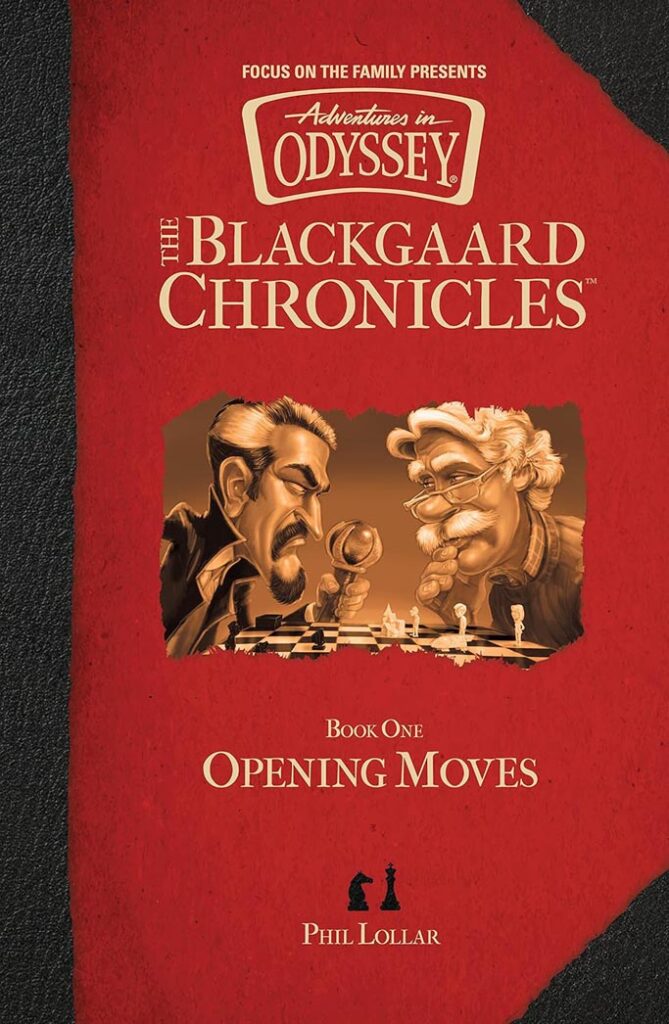
Opening Moves Blackgaard Chronicles book cover Christian adventure chapter book for kids from Adventures in Odyssey series

Opening Moves is the first book in The Blackgaard Chronicles, a series connected to the world of Adventures in Odyssey. The story follows the battle between good and evil as a dangerous plan begins to unfold in the town of Odyssey, putting familiar characters and new heroes to the test.

As the mystery grows, readers see how choices, courage, and faith affect the outcome of the story. The book explores themes of truth, temptation, and standing for what is right, while still keeping the fast-paced style kids enjoy.

This series is written for slightly older readers who are ready for longer chapter books with deeper storylines and stronger spiritual themes.

A great fit for:

Kids who enjoy Adventures in Odyssey stories
Readers who like suspense and mystery
Families looking for clean fiction with clear Christian values

Why parents like it:

Strong good-vs-evil themes without inappropriate content
Encourages thoughtful decisions and moral courage
Written by one of the creators of Adventures in Odyssey

You can read more about this book or see current pricing here:

6. The Outsider: Ruth — A Retelling

Bible Retellings Collection
by Katy Morgan
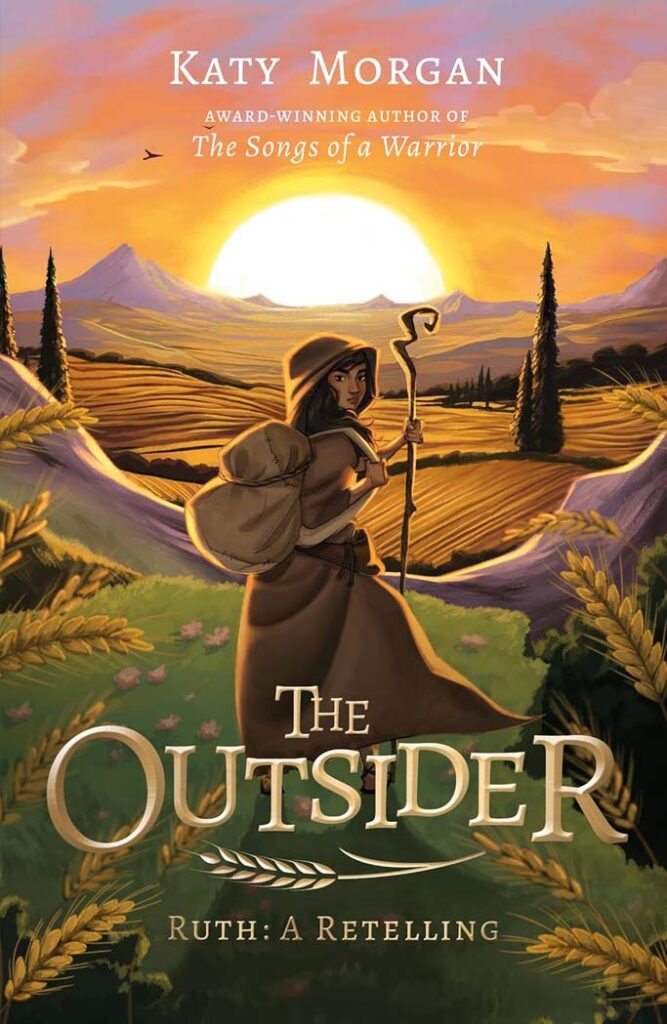
The Outsider Ruth retelling book cover Christian chapter book based on the Bible story of Ruth for kids

The Outsider: Ruth — A Retelling brings the biblical story of Ruth to life in a way that helps young readers understand the people, emotions, and struggles behind the events in Scripture. Instead of simply retelling the story, the book invites kids to step into Ruth’s world and see how faith, loyalty, and trust in God shaped her journey.

The story stays faithful to the message of the Bible while adding detail and dialogue that make the characters feel real. Readers see how God works through ordinary people and difficult situations, and how His plans can unfold even when life feels uncertain.

This book is written for kids who are ready for longer chapter books and want stories that connect closely to the Bible.

A great fit for:

Kids who enjoy stories based on the Bible
Readers who like historical fiction
Families looking for faith-based chapter books with depth

Why parents like it:

Stays true to the biblical story
Helps kids understand Scripture in a personal way
Encourages discussion about faith and character

You can read more about this book or see current pricing here:

7. The Songs of a Warrior: Saul and David — A Retelling

Bible Retellings Collection
by Katy Morgan
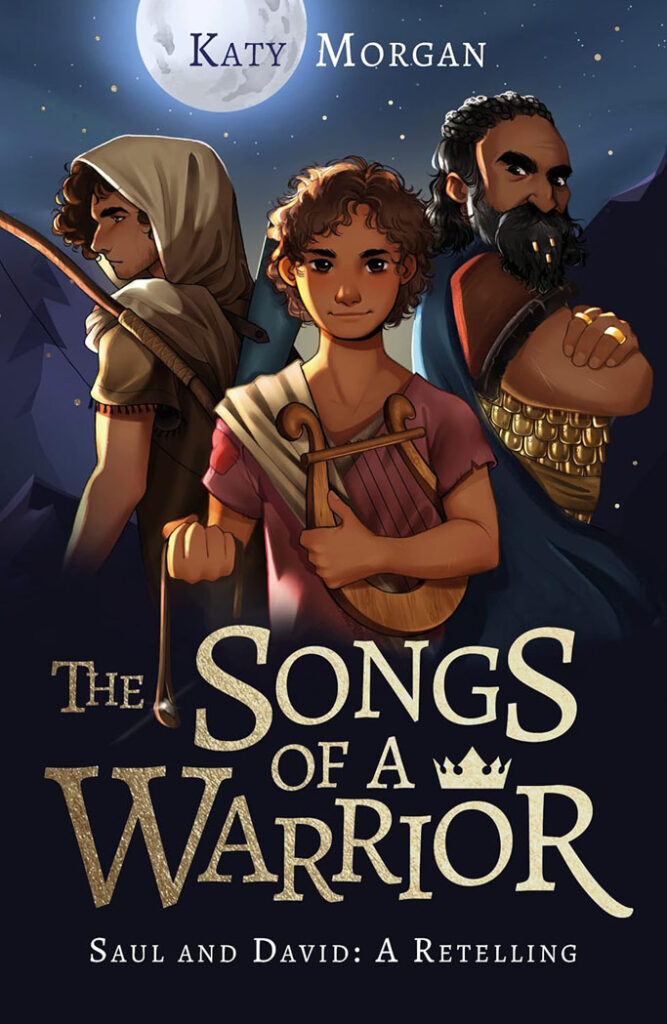
Songs of a Warrior Saul and David retelling book cover Christian chapter book based on the Bible story of David for kids

The Songs of a Warrior: Saul and David — A Retelling brings the story of Israel’s first kings to life in a way that helps young readers understand the people, struggles, and faith behind the events recorded in Scripture. The book follows the lives of Saul, David, and Jonathan, showing how their choices, fears, and trust in God shaped the history of Israel.

This retelling stays faithful to the message of the Bible while adding detail and dialogue that help kids connect with the story on a deeper level. Readers see how courage, obedience, and repentance matter, and how God works through imperfect people to accomplish His plans.

Written for middle-grade readers, the story has the depth of a longer chapter book while still being easy to follow.

A great fit for:

Kids who enjoy stories based on the Bible
Readers who like historical or realistic fiction
Families looking for faith-based chapter books with depth

Why parents like it:

Faithful to the biblical story
Encourages discussion about character and choices
Helps kids understand the Old Testament in a meaningful way

You can read more about this book or see current pricing here:

If your child enjoys stories like these, you may also like our list of Christian fantasy books for kids, where we share more adventure-style stories with strong faith themes.

How to choose the right book for your child

Every child is different, and even good books may not be right for every reader.

When choosing a faith based chapter book, it can help to think about:

  • Reading level

  • Sensitivity to scary or intense scenes

  • How direct you want the faith content to be

  • Whether your child prefers adventure, realistic stories, or non-fiction

Some kids love stories that talk openly about God, and others connect more with stories that show faith through actions. Both kinds of books can be valuable.

Why faith based stories matter for kids

Stories shape the way children see the world.

The books kids read teach them what is normal, what is good, what is brave, and what is worth believing in. When stories constantly show selfishness, disrespect, or moral confusion, kids start to think that is just how life is.

Faith based books remind children that truth exists, that choices matter, and that good is worth fighting for.

They also give kids something many modern stories do not give anymore. They give them hope.

Frequently Asked Questions

Are faith based books only for Christian families?

Not always. Some faith based books are specifically Christian, but others focus on universal values like kindness, sacrifice, truth, and perseverance.

Even families who are not religious sometimes prefer books with strong moral themes and clean content, especially for younger readers.


How do I know if a chapter book is appropriate for my child?

Every child is different, but some things to look for include:

  • Age-appropriate language

  • Clear sense of right and wrong

  • Respect for family and authority

  • Limited romance or mature themes

  • Positive character growth

Faith based chapter books often make this easier because they tend to be written with families in mind.


Why do many parents prefer clean and faith friendly books today?

Many modern children’s books include disrespectful behaviors, mature themes, or hidden agendas. Parents who want stories that support their family’s values often look for books that are more thoughtful and uplifting.

Faith based chapter books can give kids stories that encourage courage, honesty, responsibility, and trust in God, instead of confusion about what is right or wrong.


What age are chapter books best for?

Many chapter books are written for kids ages 7 to 12, but reading level matters more than age. Some children are ready earlier, while others prefer simpler stories.

The books in this list are best for kids who are ready for longer stories but still need content that is clean, safe, and meaningful.

Final Thoughts

The stories children read help shape the way they see the world. Books can teach kids what’s normal, what’s good, and what’s worth believing in. When stories are filled with confusion, sarcasm, or shallow messages, kids often absorb those ideas without even realizing it.

Faith based chapter books give children something different. They show that truth matters, that choices have meaning, and that courage, kindness, and faith are worth holding on to.

Whether you are looking for fully Christian books or simply stories with strong values, the titles in this list are a great place to start.

Let’s Be Friends!

Follow The Smartest Sprout on Facebook and Instagram! Discover the latest parenting tips, activity ideas, and more! Plus, get deal alerts on our favorite educational toys and healthy family essentials!
Pin It on Pinterest