9 Nugget Couch Slide Ideas That Burn Energy Indoors

9 Nugget Couch Slide Ideas That Burn Energy Indoors

9 Nugget Couch Slide Ideas That Burn Energy Indoors

This post contains affiliate links. Read our affiliate disclosure here.

Looking for nugget slide ideas that keep kids active, engaged, and having fun indoors? Nugget couch slide builds are a creative way to encourage climbing, movement, and confidence using soft foam pieces designed for everyday play.

From gentle slides for toddlers to more adventurous builds for older kids, these Nugget slide ideas offer plenty of options for active indoor play. Many of these builds can also be paired with forts or accessories to keep play fresh as kids grow.

Prefer cozy hideaways instead of active builds? You may also enjoy our full guide to Nugget Couch Fort Ideas.

What Is a Nugget Couch?

A Nugget couch is an infinitely configurable play couch made from six soft foam pieces zipped inside durable, washable covers. Families use Nugget couches for lounging, reading, climbing, and building imaginative play structures like slides, forts, and tunnels. Its open-ended design encourages creativity and movement while remaining soft enough for everyday indoor play.

The Nugget play couch is now also available on Amazon, making it easier for families to order and start building slide setups at home.

Educational Benefits of Nugget Couch Play

Nugget couch play supports learning through movement and creativity. Because builds can be changed and adjusted, kids naturally experiment, problem solve, and build confidence as they play.

Physical Benefits

  • Gross motor skill development
  • Muscle strength
  • Balance and coordination

Cognitive Benefits

  • Creativity and imagination
  • Logical thinking
  • Role play
  • Cooperation and shared play

Different Ways to Use a Nugget Play Couch

One of the reasons Nugget play couches work well for indoor play is their flexibility. The same foam pieces can be rearranged again and again to support different types of play as kids grow. On quieter days, children may enjoy building tunnels, forts, or cozy spaces for reading and pretend play. On more active days, those same pieces can be stacked and angled to encourage climbing, crawling, and sliding. Families who want even more everyday functionality may also appreciate these Nugget couch hacks that help extend how the play couch is used around the home.

Some families like to add fun accessories alongside their Nugget builds to introduce new play elements without changing the core setup. These additions can help keep familiar builds feeling fresh while supporting active movement and imaginative play.

Below, we are focusing specifically on the best Nugget slide ideas designed for active indoor play.

Graphic reading “9 Best Nugget Couch Slide Ideas” with illustrated Nugget play couch slide configurations

The Best Nugget Couch Slide Ideas

1. The Tree Fort Slide
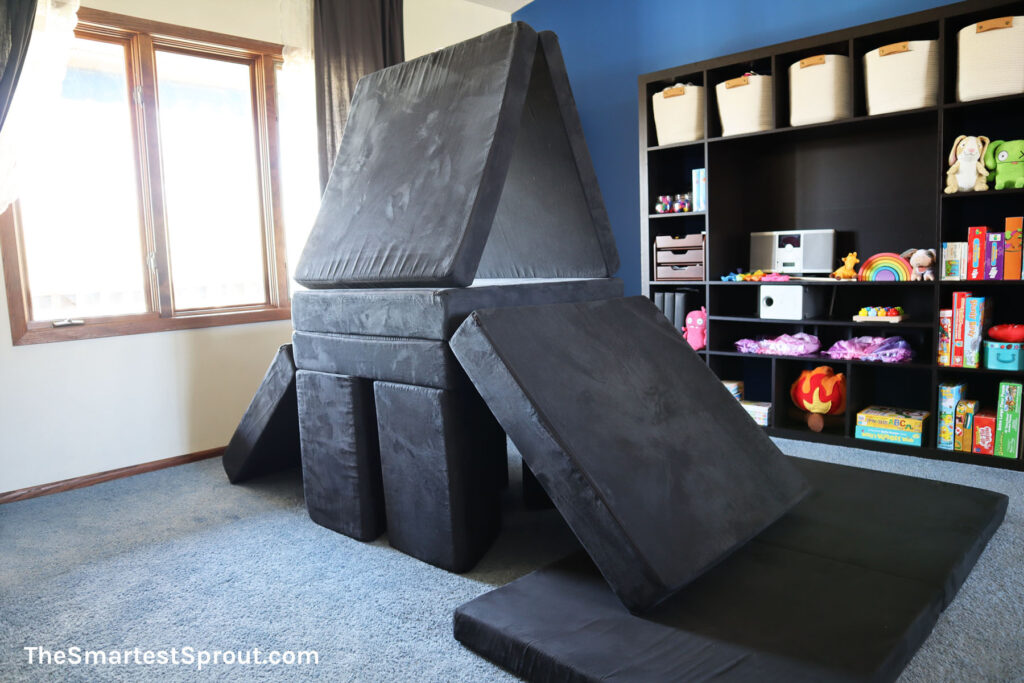
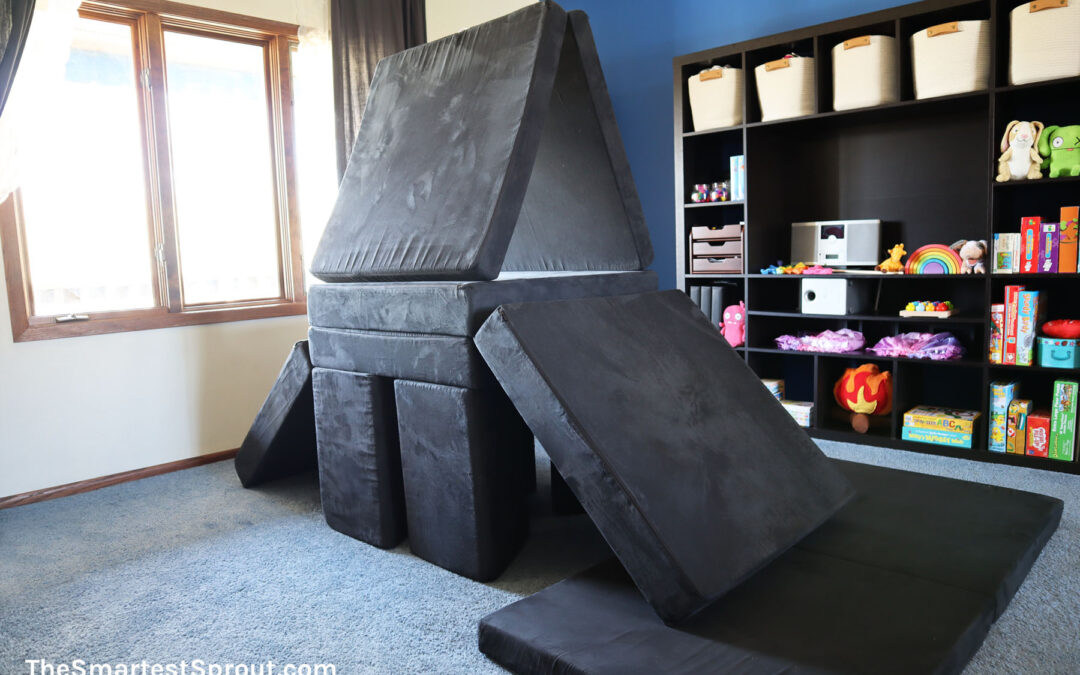
Tree Fort Nugget slide build with a Nugget play couch creating an indoor climbing and sliding structure

Two Nugget build

Best for kids ages 3 +

This sturdier-than-it-looks slide allows kids to climb up the back, enjoy a semi-private space at the top, and slide down to a cushioned landing.

2. The Twin Peaks Slide
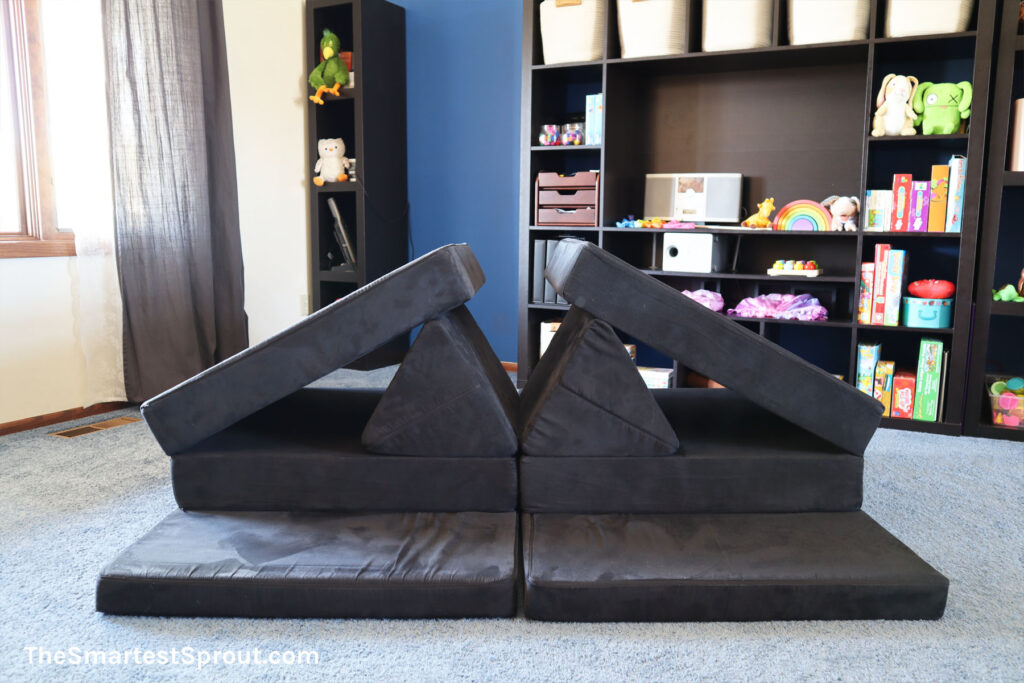
Twin Peaks Nugget slide build with two Nugget play couches creating side by side indoor climbing and sliding ramps

Two Nugget build

Best for advanced toddlers and older kids

Kids can climb the ramp, scale the center peak, and slide down either side. This build works well for siblings or friendly races.

3. The Crazy Crawler Slide
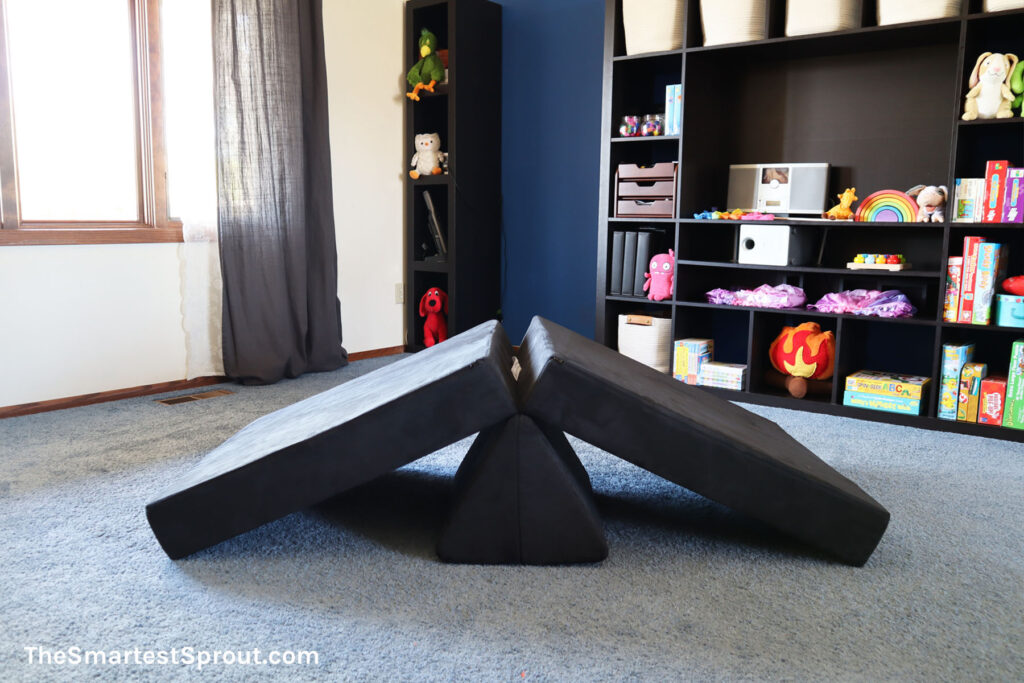
Crazy Crawler Nugget slide idea with angled Nugget play couch pieces creating a low indoor crawling and sliding ramp

One Nugget build

Best for advanced crawlers and toddlers

This gentle slide encourages crawling and scooting. Babies and toddlers can climb up one side and slide or scoot down the other.

4. Adventure Mountain Slide
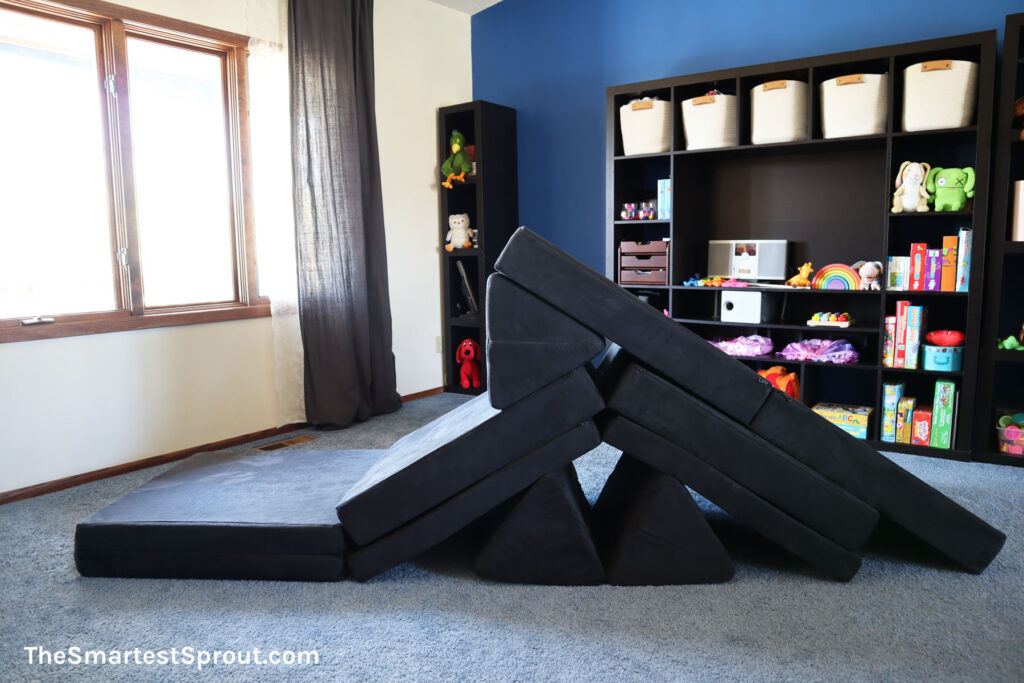
Adventure Mountain Nugget slide build with stacked Nugget play couch pieces creating a tall indoor climbing and sliding structure

Two Nugget build

Best for advanced toddlers and older kids

This build offers multiple play areas, allowing kids to climb, hide, slide, and explore different levels and angles.

5. The Spiral Staircase Slide
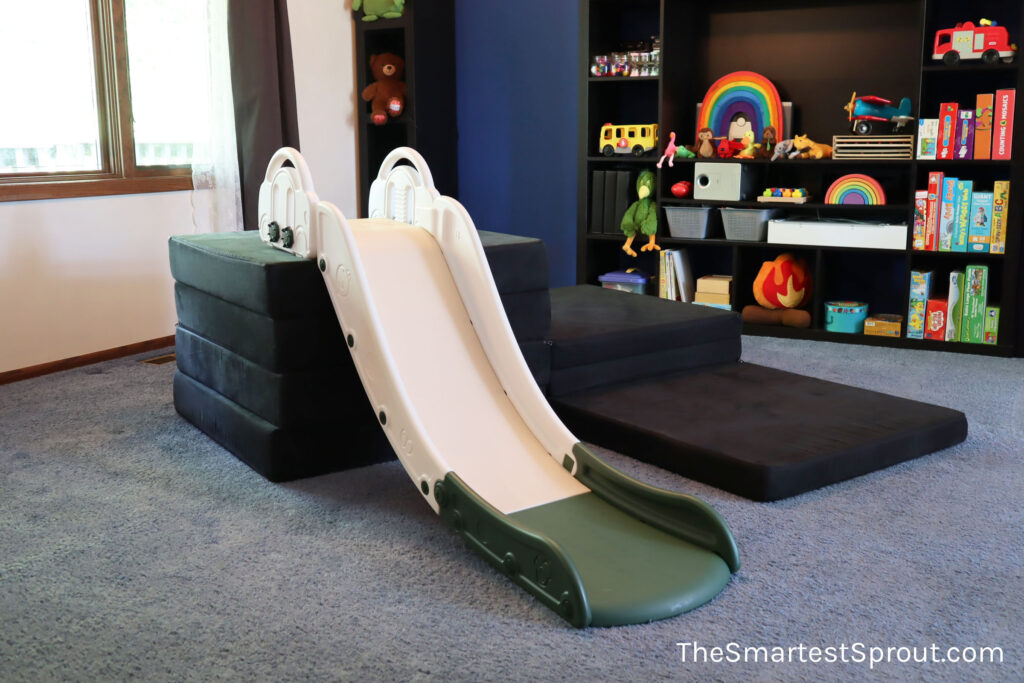
Spiral Staircase Nugget slide build with stacked Nugget play couch pieces and a portable slide creating an indoor climbing and sliding structure

Two Nugget build

Best for preschoolers and older kids

This build incorporates a portable couch slide* at the top of the staircase. Your kids can zoom to the bottom of the build and climb back up again and again for endless fun!
*Product in link may differ from item shown.

6. The Loop de Loop Slide

Loop de Loop Nugget slide build using Nugget play couch pieces to create a continuous indoor climbing and sliding path

Two Nugget build

Best for toddlers and preschoolers

This circular design keeps kids moving as they climb and slide through the loop again and again.

7. The Couch Climber Slide
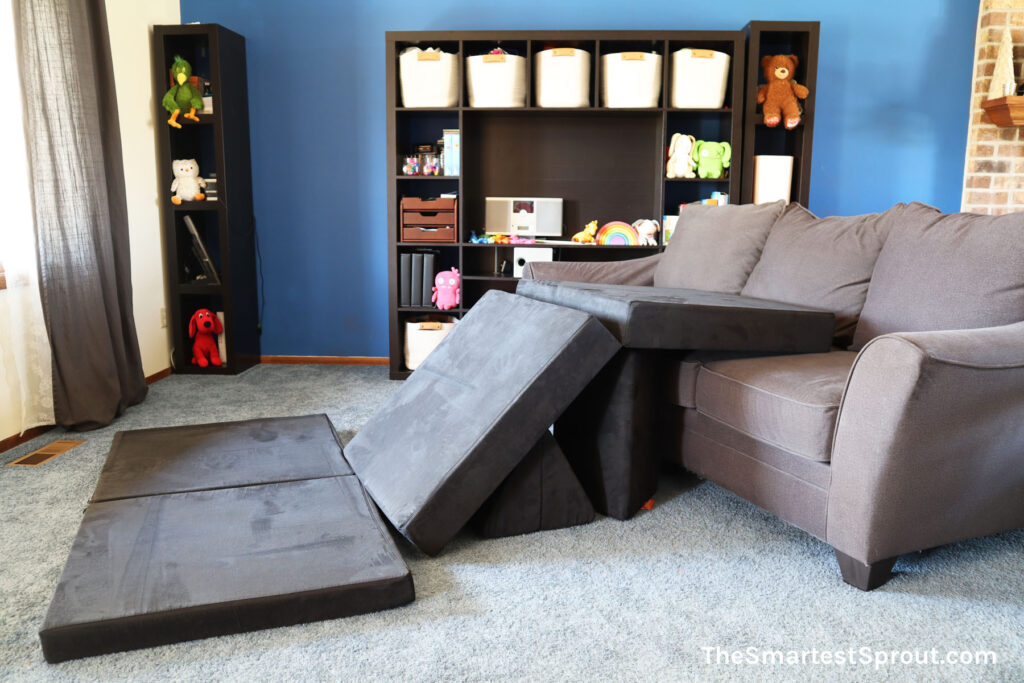
Couch Climber Nugget slide build using Nugget play couch pieces to create a low indoor climbing ramp leading onto a couch

One Nugget build

Best for toddlers and older kids

This slide helps younger kids build strength as they pull themselves up onto the couch before sliding down to a padded mat.

8. The Topsy Turvy Slide
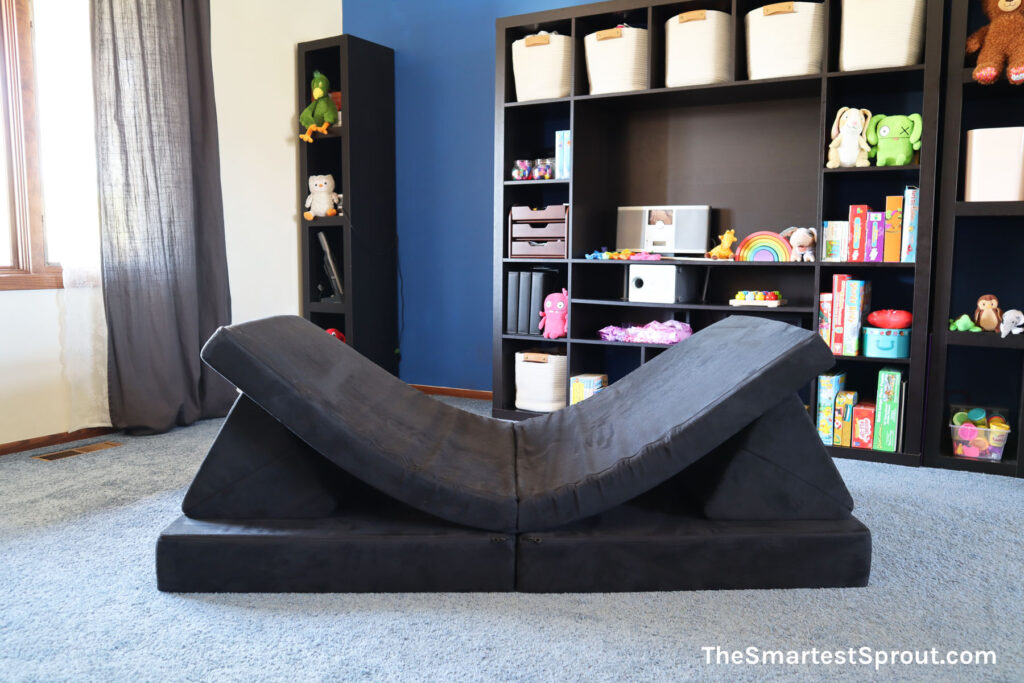
Topsy Turvy Nugget slide build with curved Nugget play couch pieces creating a low indoor slide for toddlers

One Nugget build

Best for toddlers

A playful twist on a standard slide. Kids can climb up either side and roll or scoot back down toward the center.

9. The Tripple Tumbler
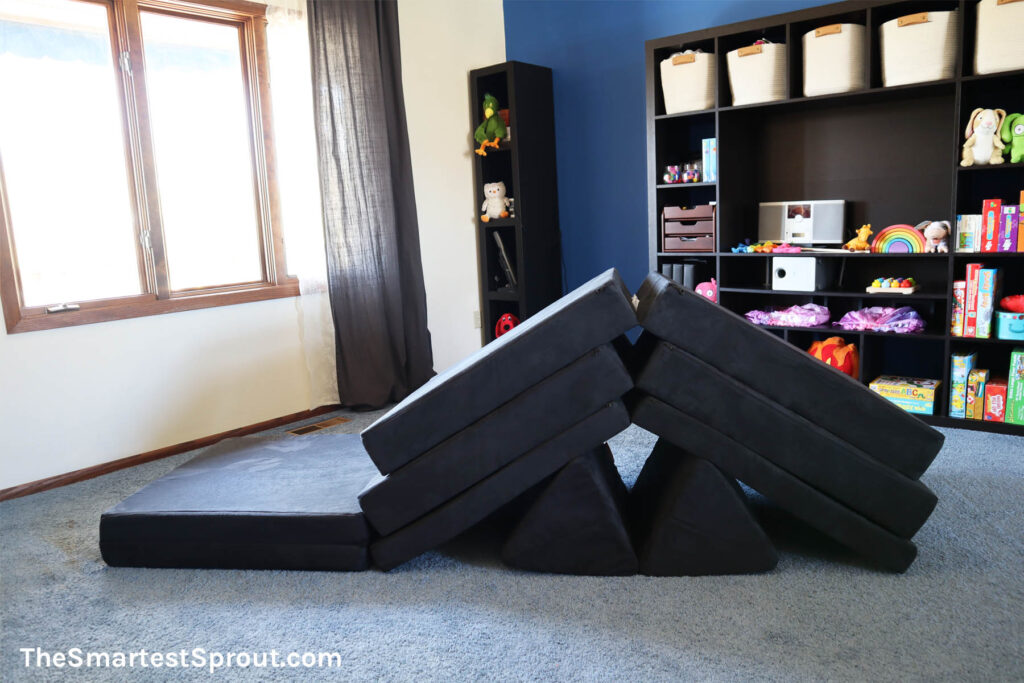
Triple Tumbler Nugget slide build with two Nugget play couches creating dual indoor sliding paths

Two Nugget build

Best for preschoolers and older kids

This build gives kids two slide options, one with added padding and one without, letting them choose their level of adventure.

Make the Most of Nugget Slide Play

Nugget slide builds give kids a safe way to move, explore, and build confidence indoors. As children grow, the same pieces can be rearranged to create new challenges or gentler setups that match their abilities. Whether your child prefers slow, careful climbs or energetic sliding, Nugget slide play offers flexible options that adapt over time.

A Quick Safety Note: Play at your own risk. Play couches and Nugget slides are designed for imaginative indoor play. Always supervise children, build on soft flooring, and adjust builds based on your child’s age and abilities. The Smartest Sprout is not responsible for any damages, injuries, or death, caused by using any indoor play couch or the slide builds shown above.  

Let’s Be Friends

Follow The Smartest Sprout on Facebook and Instagram! Discover the latest parenting tips, activity ideas, and more! Plus, get deal alerts on our favorite educational toys and healthy family essentials!


What to Say When Kids Ask Questions About God

What to Say When Kids Ask Questions About God

What to Say When Kids Ask Questions About God

Sooner or later, most parents find themselves wondering what to say when kids ask questions about God. It often happens in an ordinary moment, when a child asks something that suddenly feels much bigger than expected.

“Why does God let bad things happen?”
“How do we know God is real?”
“Why doesn’t God answer my prayers?”

These questions can feel very intimidating. Parents often worry about saying the wrong thing, confusing their child, or even damaging their faith. Some feel caught off guard and pressured to have a perfect answer right away, and that isn’t always realistic.

The good news is that the Bible gives parents a solid foundation for responding to these moments with wisdom, truth, and reassurance.

Why Kids Ask Questions About God

Children ask questions about God for many reasons, and these questions are often a sign of healthy growth and developing faith.

Kids question because:

  • Their thinking is becoming more mature

  • They are learning to connect faith with real life

  • They are processing fear, sadness, or uncertainty

  • They want to understand why they believe what they believe

The Bible shows that asking questions can be beautiful part of spiritual growth. Many faithful people mentioned in the Bible asked God honest questions while still trusting Him. Questions do not automatically signal doubt or rebellion. Often, they signal a genuine curiosity and a desire to understand.

How the Bible Guides Parents to Respond

The Bible encourages honesty, humility, and trust in God’s character. Parents are not called to have every answer, but they are called to seek God’s truth faithfully and point their children toward what Scripture teaches.

When kids ask questions about God, Scripture supports two important ideas at the same time.

  • God welcomes sincere questions.

  • God calls believers to seek truth and grow in wisdom.

  • God calls His people to trust Him even when they do not fully understand what’s going on.

Parents can respond wisely by holding all three together, seeking biblically accurate answers while teaching their children to trust God even when answers take time.

What to Say When Kids Ask Questions About God

Here are biblically grounded ways parents can respond to big questions that keep faith strong and conversations open.

1. Start by Listening

Before answering, listen carefully to what your child is really asking. Sometimes the question is less about theology and more about fear, sadness, or confusion.

You can say:

  • “That’s a really thoughtful question.”

  • “What made you think about that?”

Listening communicates care and respect.

2. Be Honest About What You Know and Don’t Know

Parents don’t have all the answers, and honesty matters when something is hard to explain.

If you don’t know the answer, you can say:

  • “That’s a really good question. Let’s read about it together.”
  • “I’m not quite sure, but I can look into it and I’ll share with you what I learn.

Honest humility builds trust and models a healthy faith.

3. Point Back to God’s Character

When answers are unclear, Scripture consistently directs us back to who God is.

You can remind your child:

  • God is loving

  • God is good

  • God is faithful

  • God is wise

The Bible teaches that even when circumstances are confusing, God’s character remains trustworthy. This helps children anchor their faith in who God is, not just in explanations.

4. Teach That Trust Matters Even When Answers Are Hard

Christian faith is not based on having every answer. It is based on trusting God.

You can say:

  • “We may not understand everything right now, but we can choose to trust God.”

  • “God sees the whole picture, even when we can’t.”

This reflects the biblical truth that faith includes trust, especially in moments of uncertainty.

5. Keep the Conversation Going

Faith conversations should not be one-time events. Let your child know it is okay to keep asking questions.

You can say:

  • “We can keep talking about this anytime.”

  • “God is not upset when we ask honest questions.”

Ongoing dialogue helps children see faith as a relationship, not a list of perfect answers.

Supporting Kids While Teaching Biblical Truth

Children need reassurance that asking questions does not push God away. At the same time, they need guidance that faith ultimately involves trust in God’s authority and wisdom.

Christianity does not call for blind faith without thought, nor does it encourage questioning without trust. It calls believers to seek understanding while resting in God’s faithfulness.

Parents can model this balance by welcoming questions while gently guiding children toward confidence in God.

When Parents Want Extra Support

Many parents want to respond well to their child’s questions but feel unsure how to explain deep spiritual ideas in a way that is age-appropriate, biblically sound, and reassuring.

Some families find it helpful to use question-based Christian resources created specifically for children, which are designed to encourage conversation while pointing kids back to Scripture and trust in God.

One great resource is a book called The Wondering Place, which thoughtfully addresses common questions kids ask about God, Jesus, and the Bible. Resources like this can help parents feel more confident and supported as they guide meaningful faith conversations at home.

You can learn more about The Wondering Place here →

A Final Encouragement for Parents 

If your child is asking questions about God, it doesn’t mean their faith is failing or that you are doing something wrong.

Often, it means they are learning how to think, trust, and grow.

The Bible doesn’t call parents to silence questions. It calls them to walk patiently with their children, offering truth, reassurance, and trust in a faithful God.

You do not need all the answers. You simply need to keep pointing your child back to God who is worthy of trust, even when understanding takes time.

Let’s Be Friends!

Follow The Smartest Sprout on Facebook and Instagram! Discover the latest parenting tips, activity ideas, and more! Plus, get deal alerts on our favorite educational toys and healthy family essentials!
The 7 Best Christian Chapter Books for Kids Ages 8–12

The 7 Best Christian Chapter Books for Kids Ages 8–12

The 7 Best Christian Chapter Books for Kids Ages 8–12

This post contains affiliate links. Read our affiliate disclosure here.

Finding the best Christian chapter books for kids ages 8–12 can feel harder than it should be. At this stage, children are becoming stronger readers and deeper thinkers. They are beginning to ask bigger questions about faith, truth, and the world around them.

Parents often want books that do more than simply entertain. The stories children read during these years can shape how they think about courage, sacrifice, forgiveness, and what it means to follow God. The right book can spark meaningful conversations and help children see how faith connects to everyday life.

The books highlighted below represent standout Christian chapter books for kids. Each one reflects a clear Christian worldview while engaging young readers through story, imagination, or thoughtful exploration of faith.

Rather than focusing on only one style of storytelling, these selections represent several different ways Christian books can support a child’s spiritual growth. Some introduce biblical truths through allegory or adventure, while others encourage thoughtful reflection on faith and belief.

Together, they offer a strong starting point for families looking for Christian chapter books that are both meaningful and engaging for upper elementary readers.

What Makes a Chapter Book “Christian”?

Not every clean or family-friendly book is necessarily a Christian book. While many excellent stories promote kindness and good character, Christian chapter books intentionally reflect a biblical worldview or communicate themes rooted in Christian faith.

For this list, we focused on books that include at least one of the following:

• Clear Christian themes such as redemption, sacrifice, faith, or forgiveness
• Stories intentionally written from a Christian perspective
• Symbolism or allegory that reflects biblical truths
• Opportunities for meaningful discussion about faith and belief

All of the books featured here are written at a reading level appropriate for kids ages 8–12, making them ideal for independent reading, family read-aloud time, or homeschool settings.

Why Ages 8–12 Are an Important Reading Window

The upper elementary years are a powerful time in a child’s development as a reader and thinker.

Children in the 8–12 age range are transitioning from early readers into more confident independent readers. At the same time, they are beginning to think more deeply about right and wrong, truth and belief, and the meaning behind the stories they encounter.

Chapter books are especially valuable during this stage because they allow stories to explore ideas with greater depth while still remaining accessible and engaging.

For Christian families, these years provide a meaningful opportunity to introduce books that help children:

• Develop a thoughtful understanding of faith
• See examples of courage and sacrifice
• Explore biblical ideas through story
• Ask honest questions about God and truth

A well-chosen Christian chapter book can open the door to conversations that continue long after the final page.

The Best Christian Chapter Books for Kids Ages 8–12

The books below represent different types of Christian storytelling that resonate with readers in the upper elementary years. Each one offers something unique while still reflecting meaningful Christian themes.

Pinterest graphic showing the 7 best Christian chapter books for kids ages 8–12

The Best Classic Christian Fantasy Chapter Book for Kids

The Lion, the Witch and the Wardrobe

by C.S. Lewis

The Lion, the Witch and the Wardrobe book cover by C. S. Lewis featuring Aslan and the White Witch

Recommended age: 8–12
Format:
Fantasy chapter book

This beloved classic introduces readers to the magical world of Narnia, where adventure, sacrifice, and redemption play central roles. While written as a fantasy story, the book contains clear Christian themes woven naturally into the narrative.

The Lion, the Witch and the Wardrobe appeals to imaginative readers and offers families an opportunity to talk about faith, courage, and good versus evil through story and symbolism.

Best for:

  • Kids who love fantasy and adventure

  • Readers who enjoy imaginative world

Why parents like it:

  • Timeless storytelling

  • Strong moral and faith-based theme

The Best Christian Historical Chapter Book for Kids

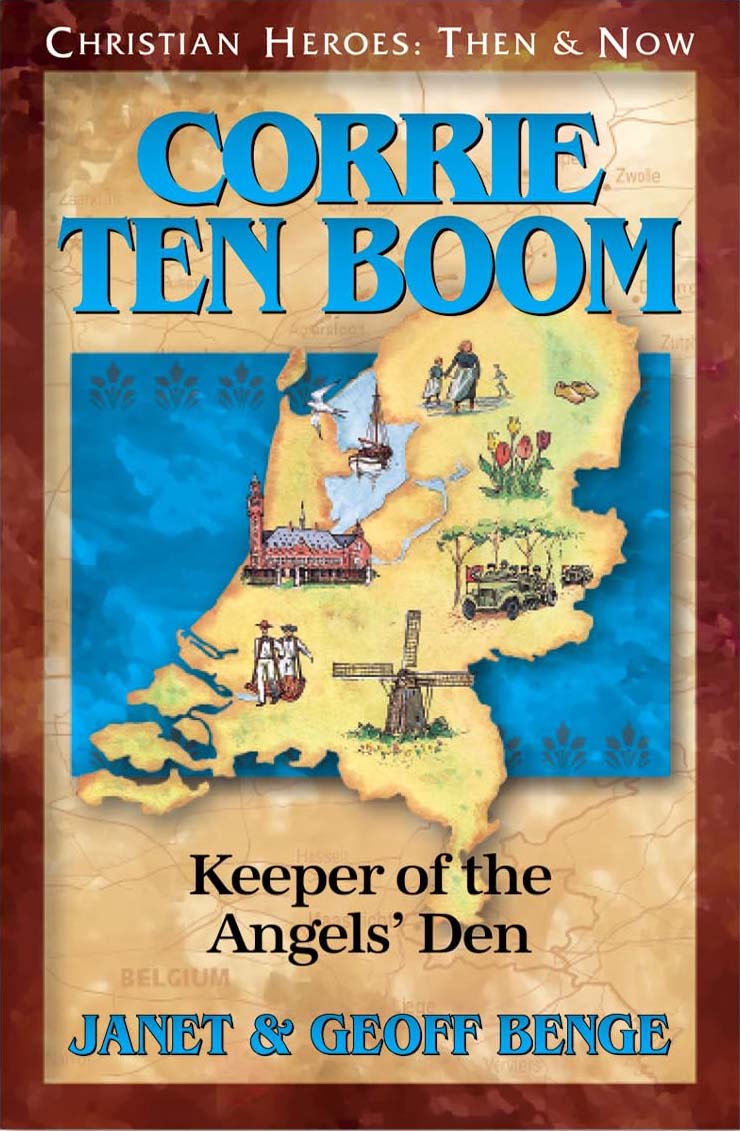
Corrie ten Boom: Keeper of the Angels’ Den

by Janet and Geoff Benge

Corrie ten Boom Keeper of the Angels' Den Christian Heroes Then and Now historical Christian chapter book for kids

Recommended age: 8–12
Format:
Historical chapter book

Corrie ten Boom: Keeper of the Angels’ Den tells the remarkable true story of a Christian family who helped hide Jewish people during World War II. As danger grew around them, Corrie and her family chose to follow their faith and protect others, even when it meant risking their own lives.

Written in an engaging narrative style for younger readers, this book introduces children to a powerful example of courage, sacrifice, and trust in God during one of history’s darkest times.

Best for:

• Kids who enjoy true stories
• Readers interested in history and World War II
• Families who want inspiring real-life examples of faith

Why parents like it:

• Based on the true story of Corrie ten Boom
• Strong example of faith and courage under pressure
• Introduces important historical events in an age-appropriate way

The Best Christian Fantasy Chapter Book Series for Kids

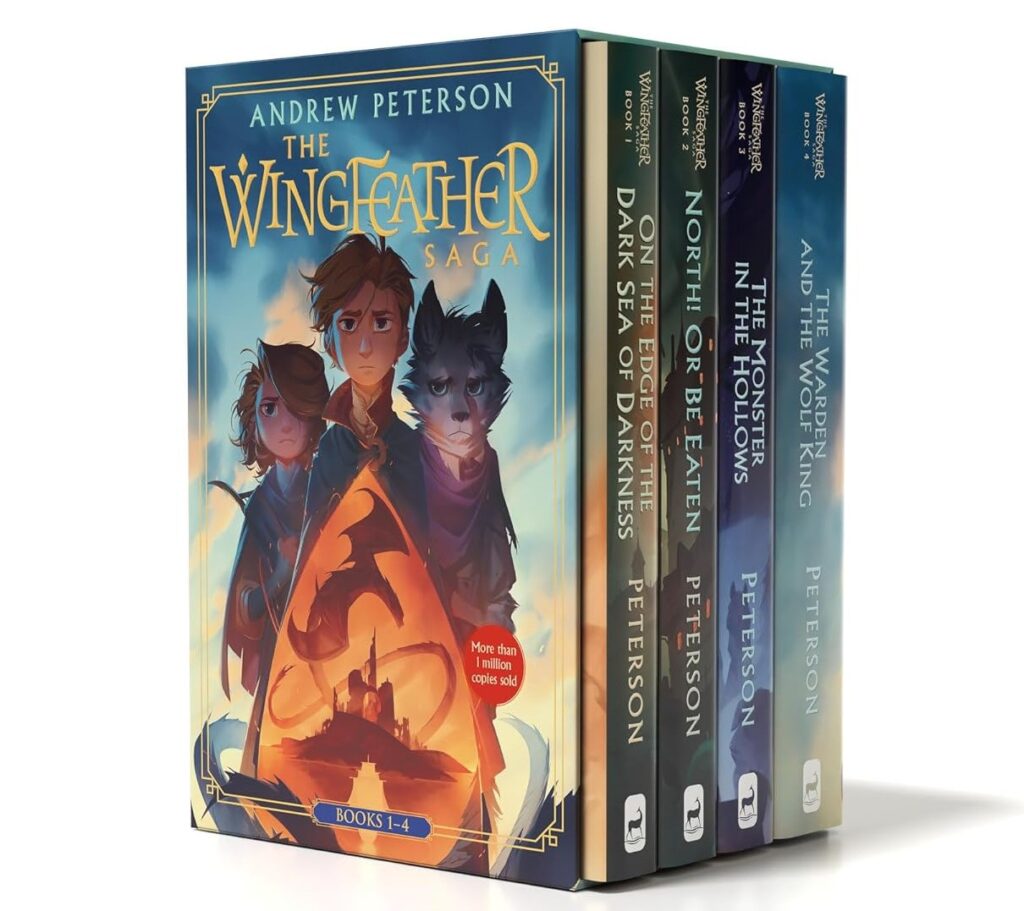
The Wingfeather Saga

by Andrew Peterson

The Wingfeather Saga boxed set by Andrew Peterson, Christian fantasy chapter books for kids ages 8–12

Recommended age: 8–12
Format:
Fantasy chapter book series

The Wingfeather Saga is a richly written Christian fantasy series that follows the Igiby siblings as they navigate danger, courage, loyalty, and hope in a world filled with mystery and meaning. While the story is imaginative and adventurous, it is deeply shaped by a Christian worldview that emphasizes sacrifice, family, and redemption.

The series is especially well suited for upper-elementary readers who enjoy immersive stories and complex characters. Faith themes are woven naturally into the narrative rather than explained directly, making it a strong option for kids who are ready to think more deeply while still enjoying an engaging fantasy world.

Best for:

  • Kids who love long adventure stories

  • Strong or confident readers

  • Families looking for faith themes without heavy instruction

Why parents like it:

  • Rich storytelling with clear moral depth

  • Strong emphasis on family, courage, and hope

  • Christian themes presented naturally through story

The Best Christian Fiction Chapter Book for Kids

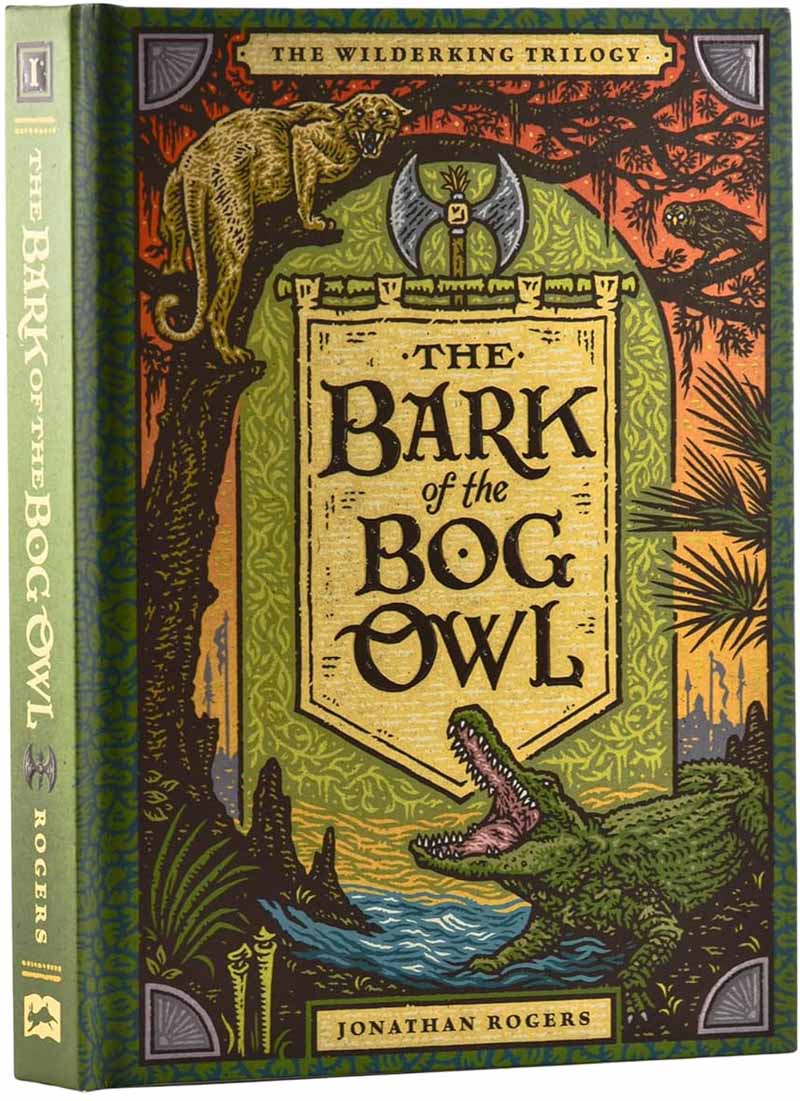
The Bark of the Bog Owl

by Jonathan Rogers

The Bark of the Bog Owl book cover by Jonathan Rogers, Wilderking Trilogy Book 1

Recommended age: 8–12
Format:
Fiction adventure chapter book

The Bark of the Bog Owl introduces readers to Aidan Errolson, a boy who comes from a long line of legendary adventurers but has never experienced an adventure of his own. When he hears the mysterious bark of the bog owl and meets Dobro Turtlebane of the Feechiefolk, Aidan begins a journey that will lead him far beyond the quiet life he expected. Along the way, he encounters strange lands, unforgettable characters, and the growing rumors of the long-prophesied Wilderking.

Written with humor, imagination, and thoughtful storytelling, this novel blends adventure with deeper themes of courage, humility, and leadership. While the story unfolds in a fictional world, its values are shaped by a clear Christian worldview, making it a meaningful option for families who want engaging fiction that also encourages reflection on faith and character.

Best for:

• Kids who enjoy adventurous fiction stories
• Readers who love imaginative worlds and memorable characters
• Families looking for faith-shaped storytelling without heavy instruction

Why parents like it:

• Engaging story that keeps kids turning pages
• Strong themes of humility, courage, and servant leadership
• Christian worldview woven naturally into the narrative

The Best Christian Adventure Chapter Book for Kids

The Prince Warriors

by Priscilla Shirer

The Prince Warriors book cover by Priscilla Shirer Christian fantasy book for kids ages 8–12

Recommended age: 8–12
Format:
Adventure chapter book

The Prince Warriors follows brothers Xavier and Evan as they begin to discover that the world around them is part of a much larger spiritual battle. When they are drawn into the unseen realm called Ahoratos, they learn that courage, wisdom, and faith are essential weapons in a conflict far greater than they imagined.

Inspired by the biblical teaching of the Armor of God in Ephesians 6, the story blends fast-paced adventure with meaningful spiritual themes. The book introduces young readers to the idea of spiritual strength and perseverance while delivering an exciting story filled with action, friendship, and discovery.

Best for:

• Kids who enjoy fast-paced adventure stories
• Readers who like battles, quests, and heroic challenges
• Families looking for fiction that introduces biblical themes in an engaging way

Why parents like it:

• Clear connection to biblical teaching about spiritual warfare
• Exciting story that keeps kids engaged
• Encourages conversations about faith and perseverance

The Best Christian Allegory Chapter Book for Kids

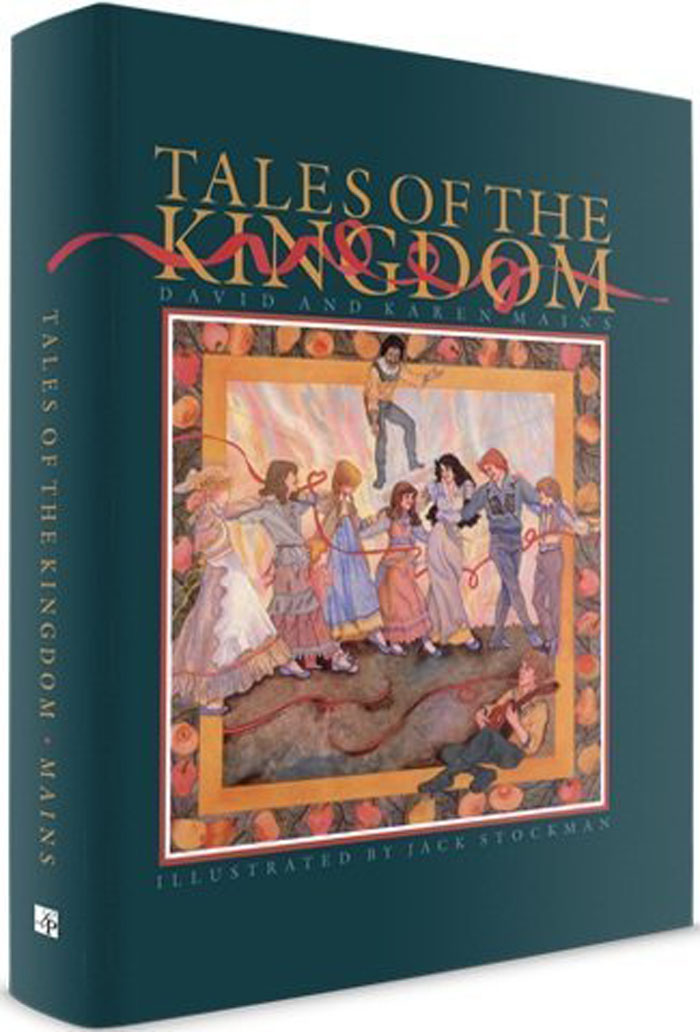
Tales of the Kingdom

by David and Karen Mains

Tales of the Kingdom book cover by David and Karen Mains with illustrated biblical scenes

Recommended age: 8–12
Format:
Allegorical chapter book

Tales of the Kingdom presents Christian truths through imaginative storytelling and allegory. Using parable-like stories, the book helps children understand biblical concepts in a way that is accessible and memorable.

This book works especially well for families who want clear faith teaching woven into story rather than direct instruction.

Best for:

  • Families seeking explicit Christian teaching

  • Kids who enjoy story-based lessons

Why parents like it:

  • Clear Christian worldview

  • Encourages discussion and reflection

The Best Christian Apologetics Chapter Book for Kids

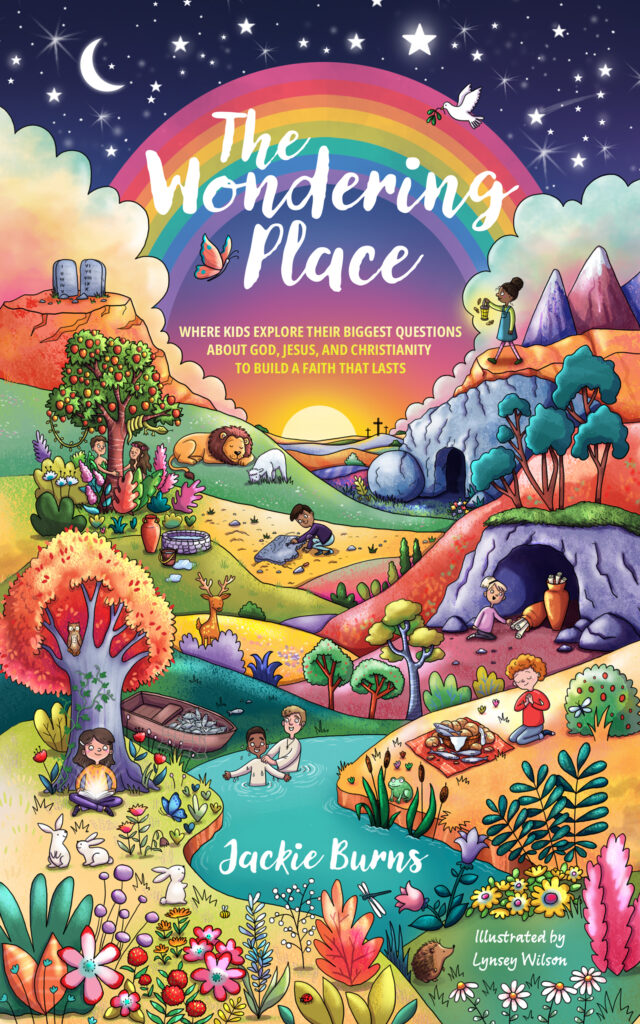
The Wondering Place

by Jackie Burns

The Wondering Place book cover by Jackie Burns showing children exploring a colorful landscape under a rainbow

Recommended age: 8–12
Format:
Chapter book

The Wondering Place is a Christian chapter book created especially for kids who ask big questions about God, faith, and truth. Rather than rushing children through simple answers, the book gently invites them to explore what they believe and why, using clear language and emotionally reassuring explanations.

Designed as a soft introduction to Christian apologetics for kids, The Wondering Place encourages thoughtful discussion and curiosity while remaining firmly grounded in biblical truth. Each chapter is written to support meaningful conversations between kids and parents, making it a natural fit for families and homeschool settings.

Best for:

  • Curious kids who ask big faith questions

  • Families who want gentle, biblically grounded discussion

  • Homeschool or family read-aloud time

Why parents like it:

  • Encourages questions instead of shutting them down

  • Calm, reassuring tone for sensitive readers

  • Designed to spark meaningful conversations

How to Choose the Right Christian Chapter Book

Every child connects with books differently. Some readers are drawn to imaginative fantasy worlds, while others prefer stories that explore faith more directly.

When choosing a Christian chapter book for kids ages 8–12, consider:

• Your child’s reading confidence
• Whether they enjoy adventure, fantasy, or reflective stories
• Whether you plan to read the book together or independently
• The kinds of questions your child is already asking about faith

Some children may be ready for deeper discussions about belief, while others simply enjoy stories that quietly reflect Christian values through adventure and character.

The most meaningful books are often the ones that naturally invite conversation.

Frequently Asked Questions

What age are chapter books best for?

Most children begin reading chapter books between ages 7 and 9, but the 8–12 age range is when many readers become comfortable with longer stories and deeper themes. During these years, children are often ready for stories with richer characters, longer plots, and ideas that invite thoughtful discussion.

Are Christian chapter books only for homeschool families?

Not at all. Christian chapter books are enjoyed by families in many different settings. Some parents use them as part of homeschool reading, while others simply enjoy sharing faith-centered stories during family reading time or encouraging independent reading.

How do I know if a chapter book is appropriate for my child?

Parents often consider a few factors when choosing books for kids ages 8–12, including reading level, maturity of themes, and the overall tone of the story. Previewing a book, reading reviews, or reading the first chapter together can help families decide whether a story will be a good fit for their child.

Final Thoughts

The chapter books children read during the 8–12 years can shape how they think about faith, truth, and the world around them. Stories have a unique ability to help children imagine courage, wrestle with difficult ideas, and explore what it means to live with integrity and faith.

The books featured above represent several different approaches to Christian storytelling. Some focus on thoughtful questions about belief, while others explore faith themes through imaginative adventure or symbolic storytelling.

For families looking for the best Christian chapter books for kids ages 8–12, these titles provide a strong place to begin and can open the door to meaningful conversations about faith that last far beyond the story itself.

Let’s Be Friends!

Follow The Smartest Sprout on Facebook and Instagram! Discover the latest parenting tips, activity ideas, and more! Plus, get deal alerts on our favorite educational toys and healthy family essentials!

Best Nugget Couch Accessories: 8 Products to Enhance Your Builds

Best Nugget Couch Accessories: 8 Products to Enhance Your Builds

Best Nugget Couch Accessories: 8 Products to Enhance Your Builds

This post contains affiliate links. Read our affiliate disclosure here.

The Nugget play couch is one of the most creative toys families can own. With endless ways to build, climb, slide, and imagine, it’s easy to see why kids love it. But the right Nugget accessories can take those builds even further, turning simple couch forts into full obstacle courses, castles, and adventure zones.

Below, we’re sharing the best Nugget couch accessories that pair well with Nugget builds and Nugget-style play couches. These add-ons are parent-approved, kid-tested, and chosen to enhance creativity, movement, and long-lasting play.

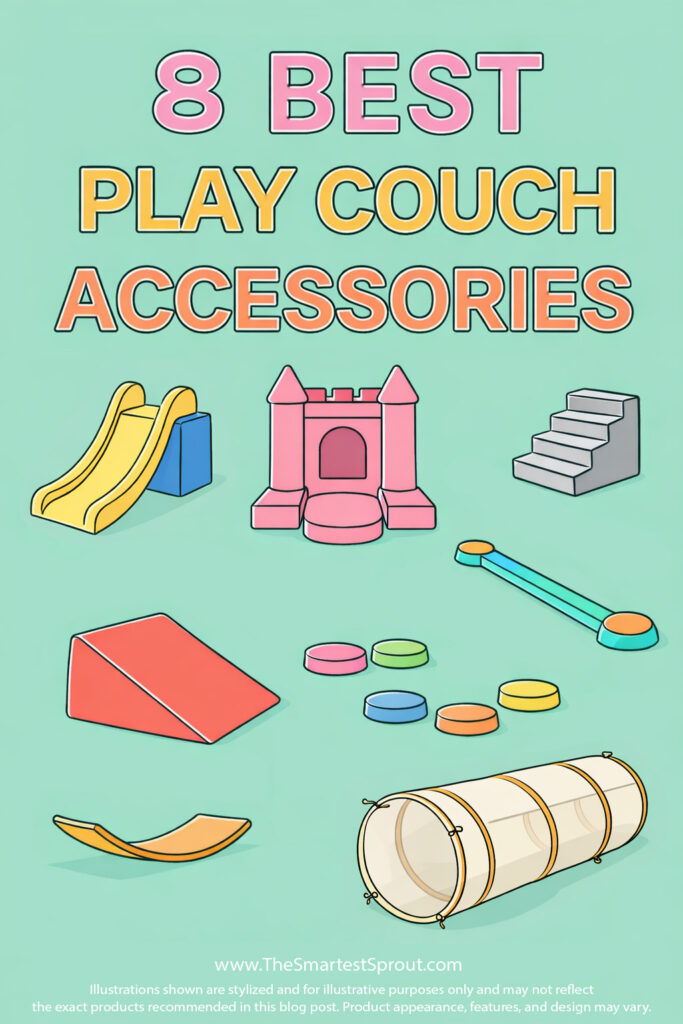
Illustrations shown are stylized and for illustrative purposes only and may not reflect the exact products recommended in this blog post. Product appearance, features, and design may vary.

What is a Nugget Couch?

A Nugget play couch is a modular foam couch made up of six pieces inside a washable fabric cover. Kids can stack, slide, climb, and rearrange the cushions to create endless play structures. Many families also discover creative everyday uses beyond forts and builds.

Nugget couches can be paired with compatible accessories or similar foam play couches to expand what kids can build. The accessories below work well with many foam play couches, not just Nugget-branded couches.

Why Use Nugget Accessories?

Play couch accessories can provide additional benefits that surpass your standard Nugget builds. They encourage extra creativity, imagination, and critical thinking skills. Plus, they make play time more fun overall!

Physical Benefits

  • Gross motor skill development
  • Muscle growth
  • Coordination
  • Balance

Cognitive Benefits

  • Creativity
  • Logical thinking
  • Role play
  • Cooperation skills

Many Nugget accessories also allow kids to play independently or together, encouraging confidence and teamwork.

Different Ways to Use Nugget Accessories

There are many different ways to use Nugget couch accessories. You can use them to add slickness to your slide builds, create adventurous pathways between structures, and improve your forts. Plus, you can use them as stand-alone toys without incorporating your Nugget at all!

The Best Nugget Couch Accessories

Please note: None of the accessories below are made or endorsed by Nugget Comfort. These are third-party products that may work well with Nugget couch builds.

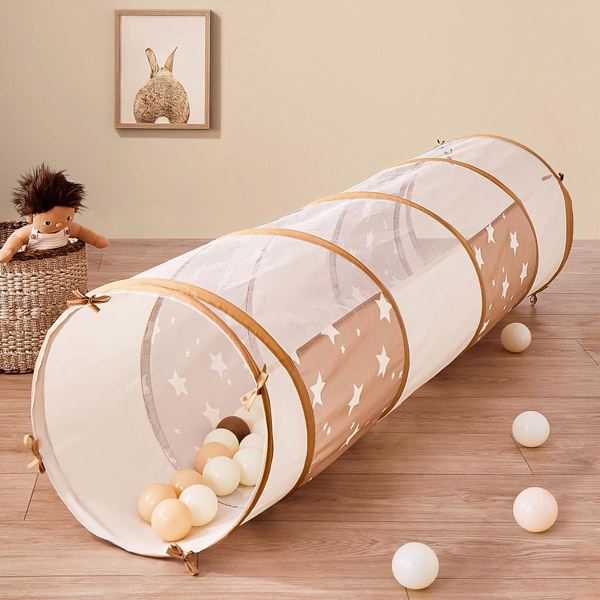
Pop-up play tunnel for toddlers used as a Nugget couch accessory for crawling and imaginative play

1. Pop-Up Play Tunnel

Best Nugget Couch Accessory for Crawling

This soft, pop-up play tunnel adds a whole new layer of movement and imagination to Nugget couch builds. Kids can crawl through it, connect it to forts, or use it as a stand-alone obstacle for active indoor play.

Key benefits:

  • Encourages crawling, coordination, and gross motor skill development

  • Breathable mesh sides improve airflow and visibility during play

  • Lightweight, foldable design makes it easy to store or take outdoors

  • Soft, durable fabric keeps playtime safe and comfortable

  • Works well with Nugget couch forts, obstacle courses, and sensory play setups

Very Good 4.5 Star Rating
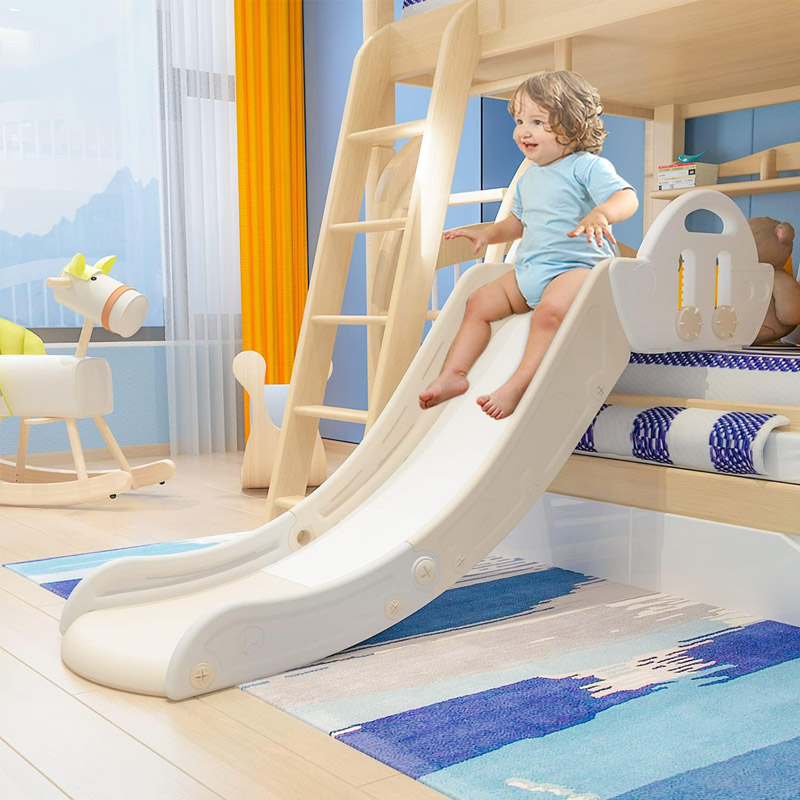
Indoor toddler slide attached to a bed and used as a Nugget couch slide accessory for active play and motor skill development

2. Space-Saving Bed & Sofa Slide

Best Nugget Slide for Small Spaces

This slide pairs easily with Nugget builds, beds, and couches while remaining compact enough to store under furniture.

Why it works well:

  • Fits under beds and in closets

  • Encourages gross motor development

  • Easy for kids to use independently

Very Good 4.5 Star Rating
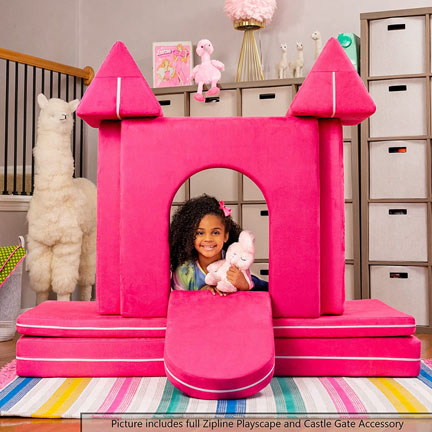
Best Play Couch Accessories: Castle Gate

3. Castle Gate Accessory

Best Nugget Accessory for Imaginative Play

This accessory adds a working gate or drawbridge to Nugget builds, instantly upgrading forts into castles.

Good to know:

  • Enhances role-play and storytelling

  • Compatible with many play couch builds

  • Images may show additional pieces not included

Very Good 4.5 Star Rating
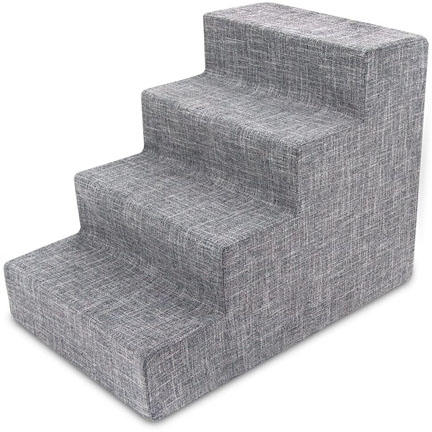
Foam Couch Stairs

4. Foam Couch Stairs

Best Nugget Accessory for Climbing

Originally designed for pets, these foam stairs are a favorite among Nugget families for climbing and step-based builds.

Why parents recommend them:

  • Works with beds, couches, and Nugget builds

  • Available in multiple heights

  • Made with CertiPUR-US certified foam

Very Good 4.5 Star Rating
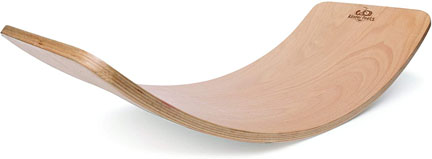
Nugget Couch Accessory: Balance Board

5. Wooden Balance Board

Best Nugget Accessory for Balance & Coordination

This multi-use balance board supports toddlers through adults and works beautifully with Nugget couch configurations.

Why it’s so versatile:

  • Can be used as a slide, tunnel, or bridge

  • Supports up to 450 lbs

  • Meets international safety standards

Excellent 5 Star Rating
Best Play Couch Accessories: Foldable Foam Wedge

6. Foldable Foam Wedge

Best Nugget Accessory for Creative Builds

This foldable wedge adds new angles and shapes to Nugget builds and easily transforms from wedge to cube.

Why kids love it:

  • Adds height and variety to builds

  • Encourages imaginative play

  • Lightweight and easy to reposition

Very Good 4.5 Star Rating
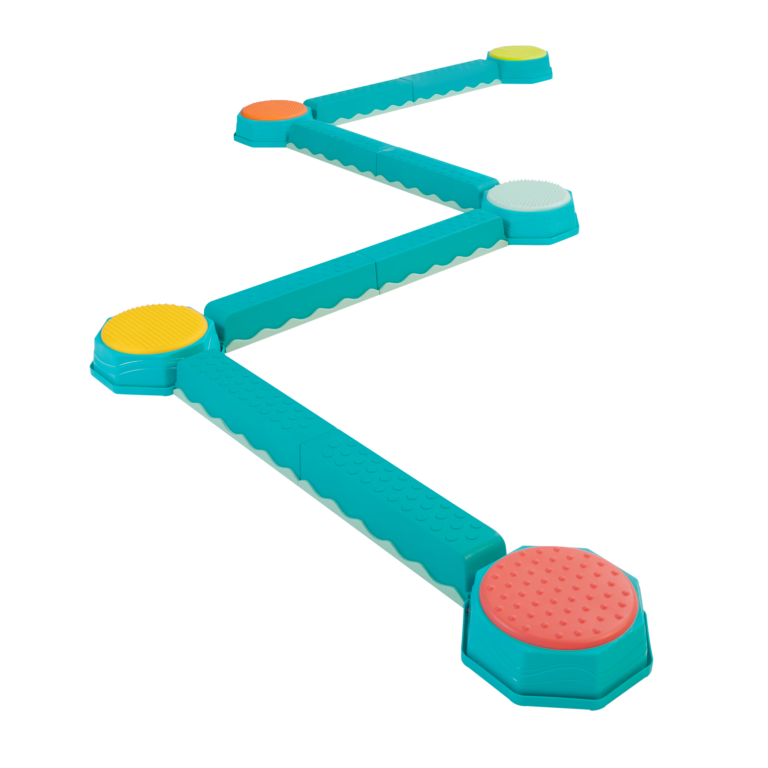
Interlocking balance beam set for kids with colorful sensory stepping pads, used as a Nugget couch obstacle course accessory

7. Modular Balance Beam Set

Best Nugget Accessory for Obstacle Courses

This interlocking balance beam set lets kids build custom obstacle courses that connect easily to Nugget couch setups. With multiple beam pieces and sensory stepping pads, children can design new paths every time they play.

Key benefits:

  • Improves balance, coordination, and gross motor skills

  • Modular design allows endless configurations and creative builds

  • Includes textured sensory pads for added movement and stability

  • Encourages active, full-body play for toddlers and young kids

  • Easy to assemble and reconfigure without tools

Excellent 5 Star Rating
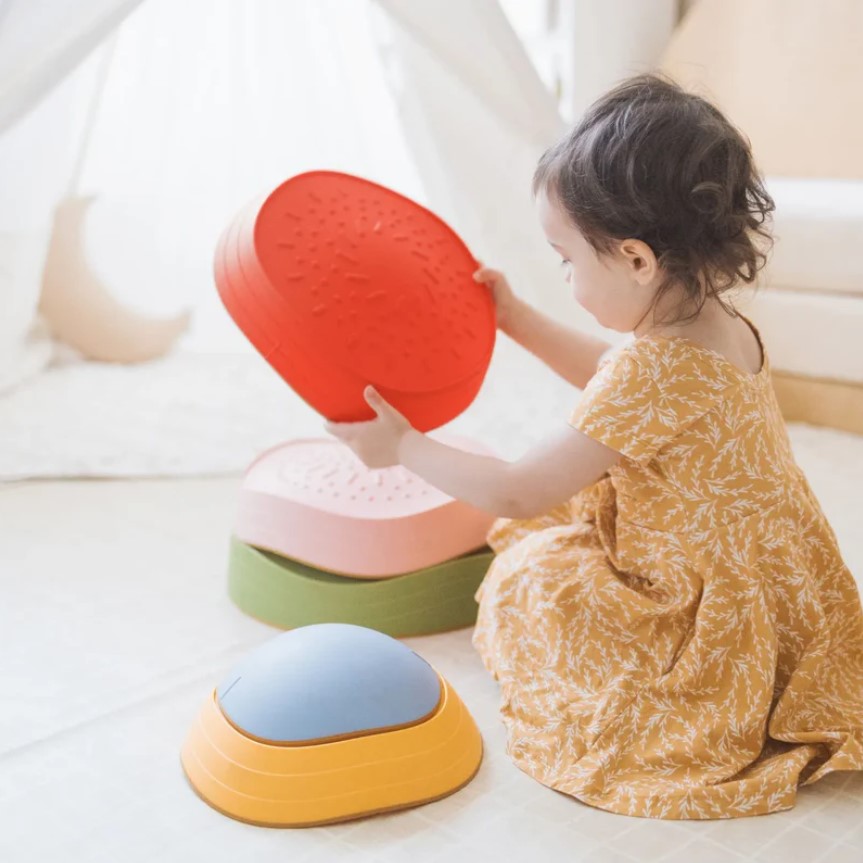
Toddler playing with colorful non-slip stepping stones, a Nugget couch accessory for balance and coordination play

8. Stepping Stones

Best Nugget Accessory for Pathway Builds

Lightweight stepping stones let kids design their own obstacle paths between Nugget cushions.

Why they’re a favorite:

  • Easy for kids to move and arrange

  • Encourages imagination and physical movement

  • Durable and long-lasting

4.75 Star Rating

Play at your own risk. The Smartest Sprout is not responsible for any damages, injuries, or death, caused by using any indoor play couch or the accessories shown above.  

Let’s Be Friends

Follow The Smartest Sprout on Facebook and Instagram! Discover the latest parenting tips, activity ideas, and more! Plus, get deal alerts on our favorite educational toys and healthy family essentials!
How to Comment on Children’s Artwork: 8 Motivating Ways

How to Comment on Children’s Artwork: 8 Motivating Ways

How to Comment on Children’s Artwork: 8 Motivating Ways

As a child, there’s no right or wrong way to create art. Every piece or artwork is special and unique in its own way. On the other hand, there is a right way and a wrong way to comment on your child’s art. Keep reading to learn how to comment on children’s artwork in a way that will please them, while encouraging additional creativity and exploration with art.

How to Comment on Children's Artwork

How to Comment on Children’s Artwork ‘The Wrong Way’

According to Grand Valley State University, generic praise influences goals for achievement by conveying to the child that outperforming others is more important than self-improvement. A performance goal is associated with negative outcomes for children such as the development of helpless responses, which lead to decreased motivation in failure situations. (1)

Use Generic Comments in Moderation

Saying “Good job!” or “That looks great!” has a nice ring to it, but it’s not the ideal way to praise a child’s work of art. If all your child hears is generic praise, they may begin to think that everything they do is perfect. As a result, they may experience amplified disappointment when things don’t look the way they want. This may also discourage them from raising their own expectations of themself. Below are examples of generic comments to use sparingly.

  • “Great job!”
  • “That looks amazing!”

Avoid Definitive Comments

In addition, you should avoid the use of definitive phrases. Definitive phrases use words like “best” or “always”. These types of comments sound nice at the time, but they set your child on a pedestal that is impossible to maintain. Your child may feel great about their art ability during their toddler and preschool years. However, once they get to elementary school, they may be so focused on comparing their work to others that they’ll lose sight of what art is really about. Avoid using any of the below phrases when commenting on your child’s art.

  • “You’re the best artist in the whole world!”
  • “This is the greatest picture I’ve ever seen!”
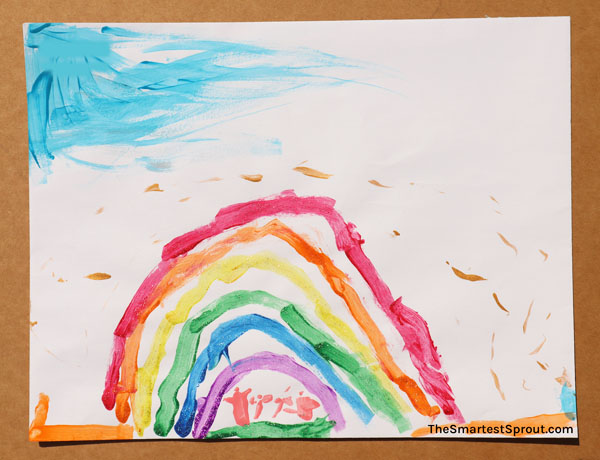
Child's Artwork: Rainbow Painting

How to Comment on Children’s Artwork ‘The Right Way’

Children who are praised non-generically using more detailed phrases are more likely to hold learning goals. This type of goal is associated with positive outcomes such as the development of genius responses and success efforts. Moreover, this leads to increased motivation in failure situations. (1)

Use Encouraging Statements

Using detailed phrases while commenting on children’s artwork can motivate your child. In addition, words of encouragement will make them feel accomplished while inspire them to better their skills even more.

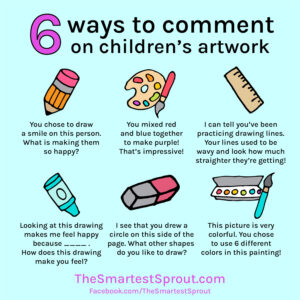
  • “This picure is very colorful! You chose to use 6 different colors in this painting!”
  • “I can tell you’ve been practicing drawing lines. Your lines used to be wavy and look how much straighter they’re getting!”
  • “I’m impressed that you mixed red and blue together to make purple!”

Ask Open Ended Questions

Kids love to talk about their choices and accomplishments. Asking them open ended questions will encourage conversation, bonding time, and creativity.

  • “I see you chose to draw a smile on this person. What is making him/her so happy?”
  • “You drew a circle on this side of the page. What other shapes do you like to draw?”

Express Your Feelings

Professional artwork is created to release emotions from people who view it. Your toddler’s artwork should be no different. Your kid’s artwork may make you feel happy or laugh when you look at it. On the other hand, it may make you feel sleepy or scared. Tell them how it makes you feel using one of the phrases below.

  • “Looking at this drawing makes me feel happy because _______. How does this drawing make you feel?”
  • “The wavy lines in this picture look so peaceful. Looking at them makes me feel very calm and relaxed.”
  • “I love watching you create new drawings. I’m excited to see what you make next!”
6 ways to comment on children's artwork

Final Thoughts

Luckily, you now have a better understanding on how to comment on children’s artwork. Use generic phrases in moderation and compliment specific elements of the artwork using details. Constructive criticism is not a bad thing if you know your child didn’t try their best. As long as you’re showing interest in your child’s art, you’re showing them love and encouragement. 

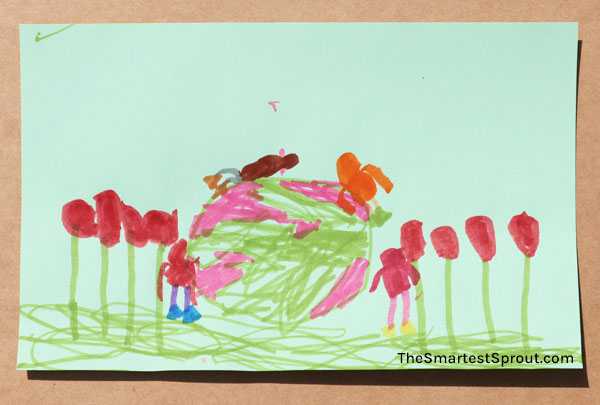
Child's Artwork: Drawing of a Flower Garden

Sources:

(1) https://scholarworks.gvsu.edu/mcnair/vol15/iss1/8/

Let’s Be Friends

Follow The Smartest Sprout on Facebook and Instagram! Discover the latest parenting tips, activity ideas, and more! Plus, get deal alerts on our favorite educational toys and healthy family essentials!
Pin It on Pinterest

Shares
Share This