The 7 Best Christian Fantasy Books for Kids (Ages 8–12)

The 7 Best Christian Fantasy Books for Kids (Ages 8–12)

The 7 Best Christian Fantasy Books for Kids (Ages 8–12)

This post contains affiliate links. Read our affiliate disclosure here.

Fantasy stories capture children’s imaginations in a powerful way. Epic adventures, mysterious lands, courageous heroes, and memorable villains invite young readers into imaginative worlds where good and evil collide and courage matters.

Like many fantasy stories, the books on this list include imaginative elements such as dragons, magical worlds, or symbolic battles between good and evil.

When stories like these reflect meaningful faith themes, they can help children explore deeper ideas about truth, sacrifice, courage, and hope.

For kids ages 8–12, fantasy chapter books can be especially engaging. At this stage, many readers are ready for longer stories and richer fictional worlds while still enjoying adventure and imagination.

The books below represent some of the fantasy stories most often recommended among Christian families. Many are written by Christian authors, and many Christian parents feel comfortable sharing them with their children because the stories generally encourage virtues such as courage, sacrifice, truth, and redemption within a moral framework that reflects a Christian worldview.

These are fictional fantasy adventures, not Bible stories or retellings of biblical events. However, many readers describe them as Christian fantasy because of the faith perspective of the authors, the themes explored in the stories, or the symbolism that reflects Christian ideas about good, evil, and the importance of choosing what is right.

Why Fantasy Stories Can Be Powerful for Kids

Fantasy stories allow children to explore important ideas in ways that feel exciting and memorable.

Through imaginative adventures, young readers can encounter characters who face difficult choices, demonstrate courage in the face of danger, and learn to stand for what is right.

Many beloved fantasy stories also explore themes that resonate with biblical ideas, such as:

• The battle between good and evil
• Sacrifice and redemption
• Courage in the face of fear
• Loyalty, friendship, and truth

Because these ideas appear within compelling stories, children often remember them long after finishing the book.

Stories like these can also spark deeper questions about faith and truth. If your child enjoys exploring big questions about God and the Bible, you might also enjoy our list of the best apologetics books for kids.

What Makes a Fantasy Book “Christian”?

Not every fantasy story is written from a Christian perspective. Some books simply include positive messages or moral lessons.

Christian fantasy stories typically include at least one of the following:

• Stories written intentionally from a Christian worldview
• Symbolism or allegory that reflects biblical ideas
• Themes such as redemption, sacrifice, truth, and hope
• Characters who demonstrate courage, faith, and integrity

Sometimes these themes appear clearly in the story. Other times they are woven into the narrative through symbolism or allegory.

Either way, these stories can open the door to meaningful conversations about faith and character.

A Note for Parents About Fantasy and Magic

Some Christian parents wonder whether fantasy stories that include magic or imaginary powers are appropriate for children.

The Bible clearly warns against real-world occult practices such as sorcery, divination, or seeking spiritual power apart from God. At the same time, many fantasy stories use imaginative elements like dragons, magical creatures, or fictional powers simply as storytelling devices within imaginary worlds.

For this reason, Christian families often approach fantasy books in different ways. Some choose to avoid fantasy altogether, while others feel comfortable with stories that clearly portray the triumph of good over evil and encourage virtues like courage, loyalty, sacrifice, and truth.

As with any books children read, parents may want to review stories individually and decide what best fits their family’s values and convictions.

The Best Christian Fantasy Books for Kids
Christian fantasy books for kids Pinterest graphic showing a dragon flying over a castle valley illustration promoting a list of Christian fantasy books kids can’t put down

The books below represent some of the most popular Christian fantasy stories for kids ages 8–12. Each one offers imaginative adventure while exploring themes that resonate with Christian families.

1. The Wingfeather Saga

On the Edge of the Dark Sea of Darkness (Book 1)
by Andrew Peterson
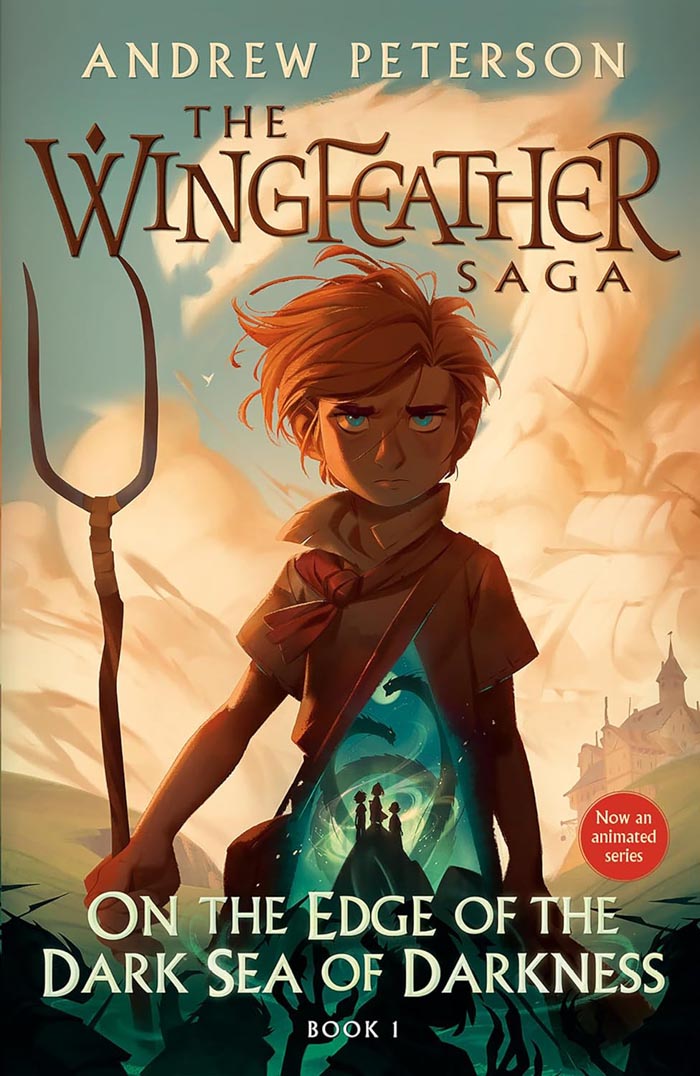
On the Edge of the Dark Sea of Darkness book cover by Andrew Peterson, Wingfeather Saga Book 1

On the Edge of the Dark Sea of Darkness is the first book in the beloved Wingfeather Saga, a richly imagined Christian fantasy series that follows the Igiby siblings as they navigate danger, mystery, and discovery in the strange land of Aerwiar.

What begins as a quiet life in a seaside cottage quickly turns into a larger adventure as the children learn that their family carries a secret tied to the future of their world. Along the way they encounter strange creatures, dangerous enemies, and surprising allies. Beneath the adventure and humor, the story explores themes of courage, sacrifice, loyalty, and hope.

Many Christian families appreciate the way the series weaves meaningful ideas about truth, redemption, and identity into an imaginative fantasy story. While the narrative is filled with creativity and adventure, the deeper themes resonate with a Christian worldview, making it a favorite among homeschool families and Christian readers.

A great fit for:

• Kids who enjoy imaginative fantasy worlds
• Readers ready for longer chapter books and rich storytelling
• Families looking for adventure stories with meaningful themes

Why parents like it:

• Engaging story with humor and memorable characters
• Themes of courage, sacrifice, and redemption
• Thoughtful storytelling that encourages deeper conversations

You can read more about this book or see current pricing here:

2. The Green Ember

The Green Ember (Book 1)
by S.D. Smith
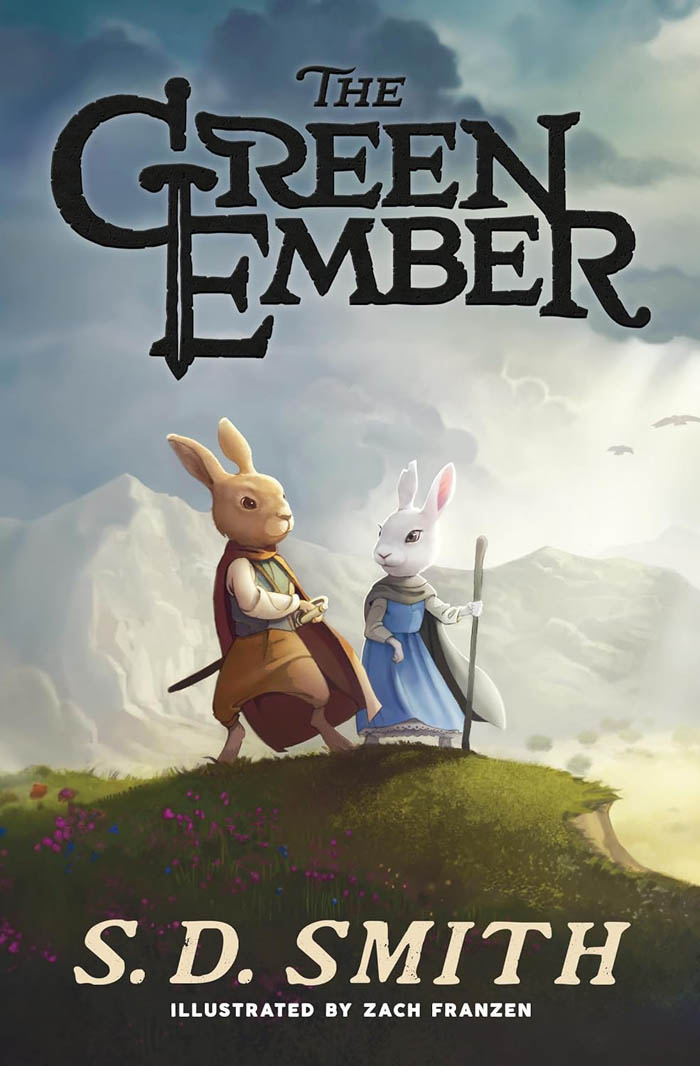
The Green Ember book cover by S. D. Smith, Christian fantasy adventure for kids

The Green Ember is the first book in a popular Christian fantasy adventure series that follows two young rabbits, Heather and Picket, whose peaceful lives change suddenly when danger forces them into a much larger world.

As they journey through forests, hidden strongholds, and dangerous territories, the siblings discover a growing resistance fighting to restore their rightful king. Along the way they encounter brave allies, powerful enemies, and a story filled with loyalty, courage, and sacrifice.

Many Christian families appreciate The Green Ember for its strong themes of honor, truth, and perseverance. While the story unfolds as an exciting animal fantasy adventure, the deeper themes of hope, redemption, and faithful leadership resonate strongly with a Christian worldview, making it a favorite among homeschool families and young readers who enjoy heroic stories.

A great fit for:

• Kids who enjoy animal fantasy stories
• Readers who like adventure and heroic quests
• Families looking for stories that emphasize courage and character

Why parents like it:

• Strong themes of honor, courage, and loyalty
• Engaging adventure with memorable characters
• Encourages conversations about leadership, sacrifice, and truth

You can read more about this book or see current pricing here:

3. The Bark of the Bog Owl

Wilderking Trilogy (Book 1)
by Jonathan Rogers
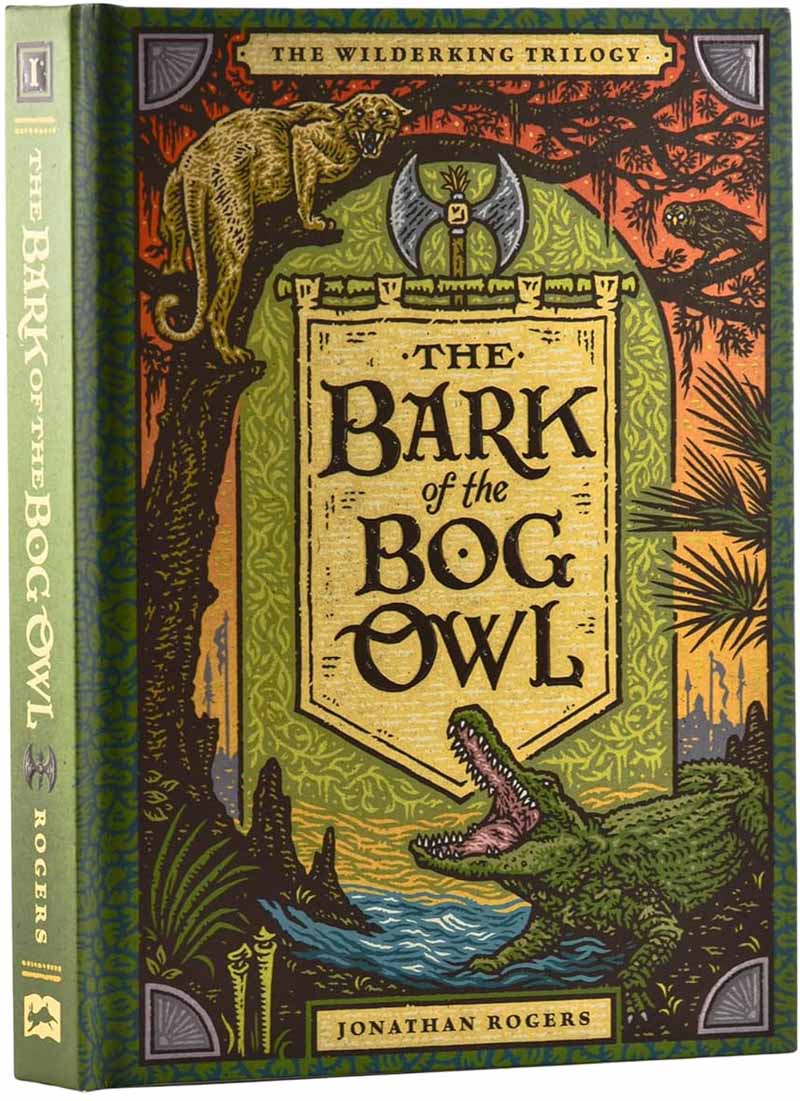
The Bark of the Bog Owl book cover by Jonathan Rogers, Wilderking Trilogy Book 1

The Bark of the Bog Owl is the first book in the Wilderking Trilogy, a Christian fantasy adventure set in the mysterious land of Corenwald. The story follows Aidan Errolson, a boy who dreams of having the kind of grand adventures his ancestors once experienced.

Everything changes when Aidan hears the strange bark of the bog owl and meets Dobro Turtlebane, a member of the Feechiefolk—an unusual group of swamp dwellers known for their loud laughter, fierce tempers, and unforgettable personalities. Soon afterward, the arrival of Bayard the Truthspeaker brings a surprising prophecy about the coming of the Wilderking, a mysterious figure destined to rise from the deep forests and swamps of Corenwald to restore the kingdom.

Many Christian families appreciate this series for its imaginative storytelling, memorable characters, and deeper themes about truth, courage, and humility. The story blends humor, adventure, and meaningful lessons about character, making it a favorite among young readers who enjoy rich fantasy worlds.

A great fit for:

• Kids who enjoy humorous fantasy adventures
• Readers who like imaginative worlds and memorable characters
• Families looking for stories that emphasize courage and character

Why parents like it:

• Engaging story with humor and creative world-building
• Strong themes about truth, humility, and leadership
• Encourages thoughtful conversations about character and integrity

You can read more about this book or see current pricing here:

4. The Dragon and the Stone

The Dream Keeper Saga (Book 1)
by Kathryn Butler
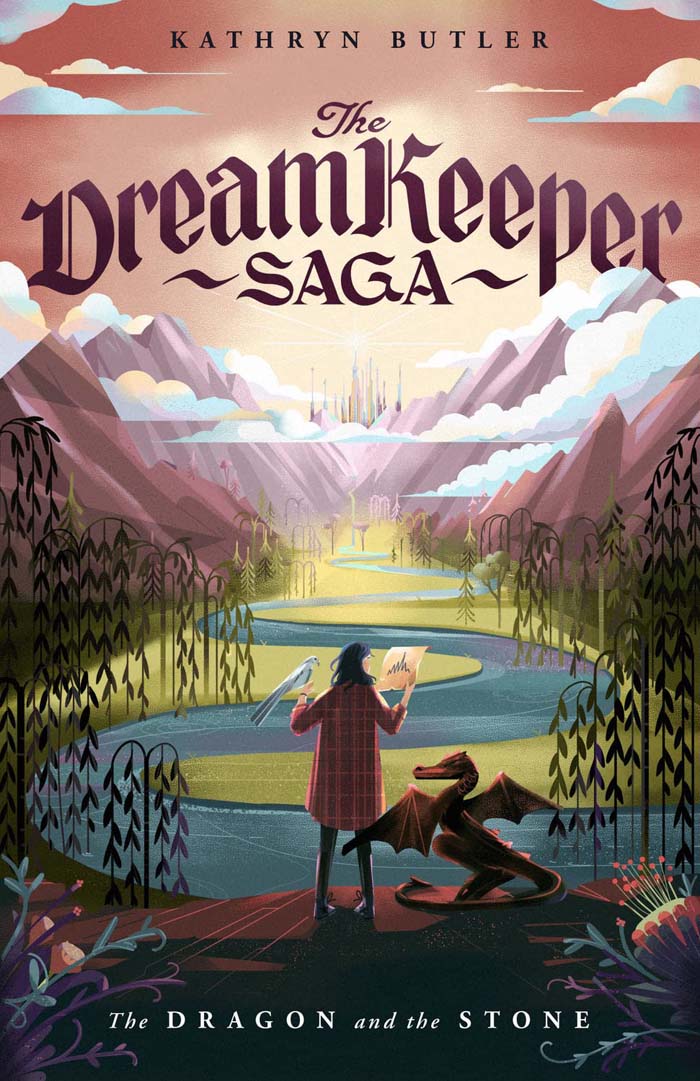
The Dragon and the Stone book cover by Kathryn Butler, Dream Keeper Saga Book 1

The Dragon and the Stone is the first book in the Dream Keeper Saga, a Christian fantasy adventure that follows twelve-year-old Lily McKinley as she wrestles with grief, hardship, and questions about hope in the real world.

When Lily is unexpectedly drawn into a mysterious realm called Somnium, she discovers a land threatened by darkness and deception. With the help of new companions, Lily begins a dangerous journey through forests, castles, and hidden passages as she searches for truth and learns what it means to stand against evil.

Many Christian families appreciate The Dragon and the Stone for the way it weaves themes of faith, redemption, sacrifice, and hope into an imaginative fantasy story. The adventure invites young readers to think about courage and perseverance while reflecting deeper Christian ideas about restoration and truth.

A great fit for:

• Kids who enjoy fantasy adventures with dragons and magical worlds
• Readers who like stories with deeper emotional themes
• Families looking for faith-inspired fantasy stories

Why parents like it:

• Clear Christian themes woven naturally into the story
• Encourages conversations about hope, redemption, and courage
• Engaging adventure that keeps middle-grade readers interested

You can read more about this book or see current pricing here:

5. The Prince Warriors

The Prince Warriors (Book 1)
by Priscilla Shirer
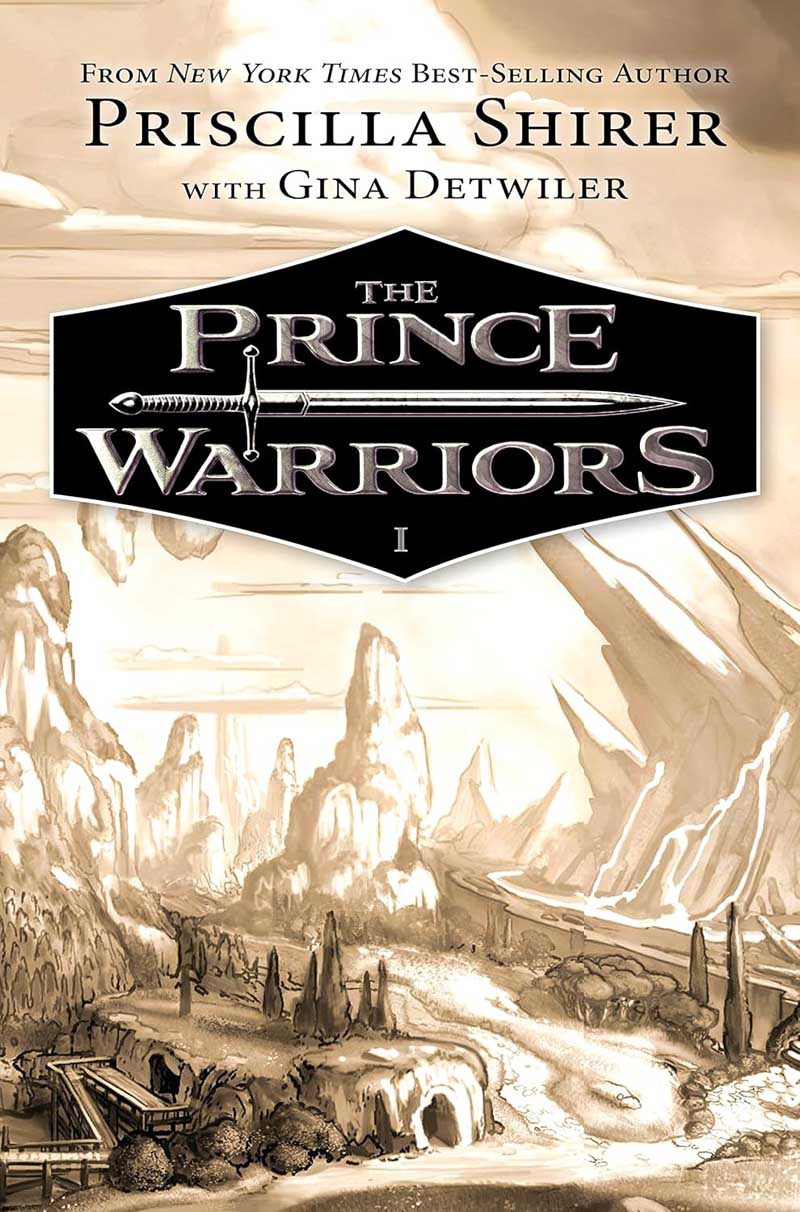
The Prince Warriors book cover by Priscilla Shirer Christian fantasy book for kids ages 8–12

The Prince Warriors is a Christian fantasy adventure that helps kids understand the spiritual battle between good and evil in a way that feels exciting rather than heavy. The story follows brothers Xavier and Evan as they discover that the struggles they face in everyday life reflect a much larger unseen battle.

When they are pulled into a mysterious realm called Ahoratos, the boys meet a group of young warriors who are learning how to stand against darkness using truth, courage, and faith. Guided by wise mentors and equipped with powerful armor, the children begin training to recognize deception and fight the forces that threaten their world.

Priscilla Shirer weaves biblical themes throughout the story, drawing inspiration from the Armor of God in Ephesians 6. The result is an imaginative adventure that helps kids understand spiritual truths while staying deeply engaging and fun to read.

Many Christian families love this series because it gives children language to talk about faith, courage, and resisting temptation without feeling like a sermon.

A great fit for:

• Kids who enjoy epic adventures and heroic quests
• Readers who like stories about spiritual battles and courage
• Families looking for books that connect fantasy with biblical truth

Why parents like it:

• Introduces kids to the concept of spiritual warfare in a kid-friendly way
• Strong themes of faith, truth, and perseverance
• Encourages meaningful conversations about trusting God

You can read more about this book or see current pricing here:

6. The Door Within

The Door Within Trilogy (Book 1)
by Wayne Thomas Batson
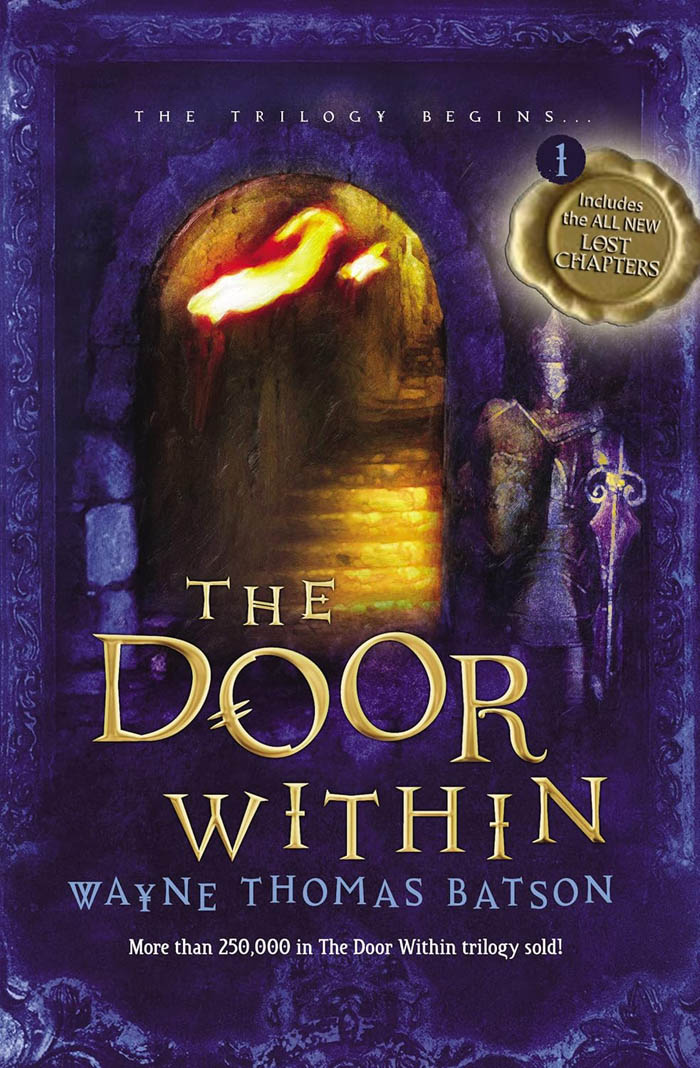
The Door Within book cover by Wayne Thomas Batson Christian fantasy book for kids

The Door Within is a fast-paced Christian fantasy adventure that introduces young readers to a hidden world where the battle between good and evil is very real.

The story follows Aidan Thomas, a boy who feels out of place after moving to a new town. While exploring his grandfather’s basement, Aidan discovers three ancient scrolls and a mysterious doorway that leads to another realm called Alleble. In this world, warriors serve a good King and stand against the forces of darkness threatening their land.

As Aidan begins training with the King’s warriors, he must learn courage, loyalty, and faith while facing powerful enemies. Along the way, he discovers that the choices he makes in this new world matter deeply.

Wayne Thomas Batson crafts an exciting fantasy story that clearly reflects biblical themes. The battle between light and darkness mirrors the spiritual battle described in Scripture, while the character of the King points readers toward the ultimate authority of Christ.

Kids who enjoy epic adventures, knights, and heroic quests often find this series hard to put down.

A great fit for:

• Kids who love epic fantasy worlds and heroic battles
• Readers who enjoy stories similar to The Chronicles of Narnia
• Families looking for adventure stories with clear Christian themes

Why parents like it:

• Strong themes of courage, faith, and standing for what is right
• Engaging story that keeps kids reading longer chapter books
• Introduces spiritual truths through an exciting fantasy world

You can read more about this book or see current pricing here:

7. The Lion, the Witch and the Wardrobe

The Chronicles of Narnia
by C.S. Lewis
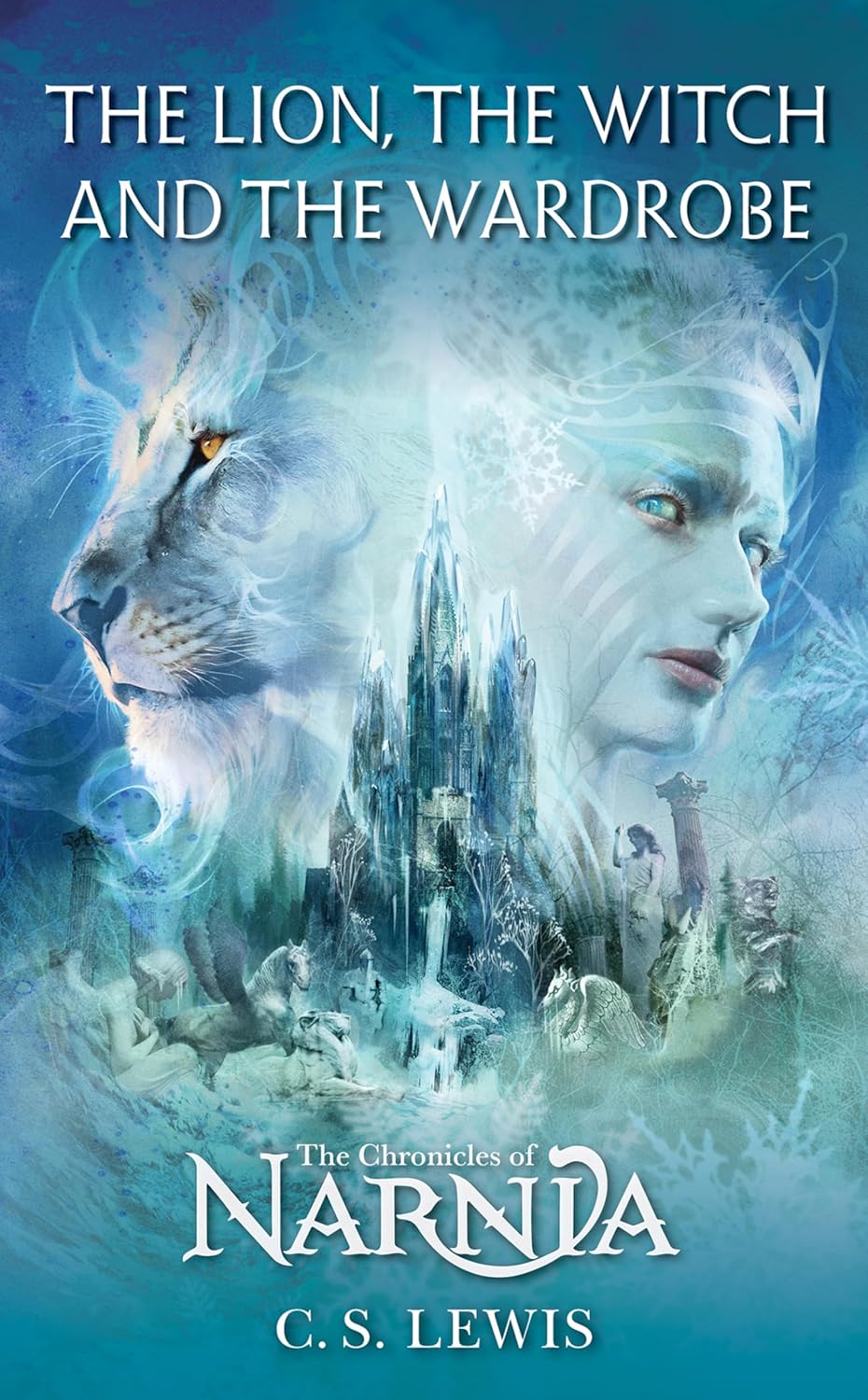
The Lion, the Witch and the Wardrobe book cover by C. S. Lewis featuring Aslan and the White Witch

The Lion, the Witch and the Wardrobe is one of the most beloved Christian fantasy stories ever written. First published in 1950, this classic tale has introduced generations of young readers to a magical world that reflects powerful biblical truths.

The story begins when four siblings discover a wardrobe that leads to the hidden land of Narnia. Once inside, they learn that the kingdom is trapped in an endless winter under the rule of the cruel White Witch.

As the children explore this mysterious land, they encounter talking animals, brave allies, and the majestic lion Aslan, the true King of Narnia. Through sacrifice, courage, and redemption, the story reveals deeper themes of forgiveness, restoration, and the triumph of good over evil.

While the story stands on its own as an exciting fantasy adventure, C. S. Lewis intentionally filled it with Christian symbolism. The character of Aslan reflects the sacrificial love and kingship of Christ, making the book both meaningful and memorable for Christian families.

Even decades after its release, The Lion, the Witch and the Wardrobe remains one of the most influential faith-inspired fantasy books for children.

A great fit for:

• Kids who love magical worlds and classic adventure stories
• Families looking for meaningful Christian symbolism in fiction
• Readers who enjoy talking animals, epic battles, and heroic quests

Why parents like it:

• Introduces deep spiritual themes through an engaging story
• Encourages discussions about sacrifice, forgiveness, and redemption
• A timeless classic many parents enjoyed as children themselves

You can read more about this book or see current pricing here:

If your child enjoys stories like these, you might also like our top choices for Christian chapter books for kids, where we share more engaging adventure stories and faith-friendly books for growing readers.

How to Choose a Good Fantasy Book for Kids

Every child connects with stories differently. Some readers enjoy epic adventures with complex fantasy worlds, while others prefer shorter stories with clearer symbolism and lessons.

When choosing a fantasy book for kids ages 8–12, parents may want to consider:

• Their child’s reading confidence
• Whether the book is part of a longer series
• The themes explored in the story
• Whether the story encourages thoughtful discussion

Some children may enjoy fantasy stories that explore faith themes directly, while others connect more naturally with stories that reflect those ideas through adventure and character development.

Frequently Asked Questions

What are Christian fantasy books?

Christian fantasy books are stories set in imaginative worlds that reflect Christian ideas such as courage, sacrifice, redemption, and the battle between good and evil. Some are written directly from a Christian worldview, while others use symbolism or allegory to explore similar themes.

Are fantasy books appropriate for Christian kids?

Many Christian families enjoy fantasy stories because they allow children to explore themes like courage, sacrifice, and the battle between good and evil through imaginative storytelling.

As with any genre, parents may want to review books beforehand to make sure the themes and content align with their family’s values. Many Christian fantasy stories intentionally reflect biblical ideas through allegory, symbolism, or a clearly Christian worldview.

What age are Christian fantasy chapter books best for?

Many Christian families enjoy fantasy stories because they explore moral choices, courage, and the struggle between good and evil. Some fantasy books are written intentionally from a Christian perspective, while others are simply clean adventure stories with positive themes.

What is the most popular Christian fantasy series for kids?

One of the most widely recommended Christian fantasy series for kids is The Wingfeather Saga by Andrew Peterson, which follows siblings on an adventurous journey filled with courage, loyalty, and hope.

Final Thoughts

Fantasy stories have a unique way of capturing a child’s imagination while exploring meaningful ideas about courage, sacrifice, truth, and hope.

The books listed above combine imaginative storytelling with themes that resonate with many Christian families. For children who enjoy adventure and creative worlds, these stories can provide exciting reading experiences while also encouraging deeper conversations about faith and character.

If your child enjoys imaginative stories filled with courage, adventure, and meaningful themes, these Christian fantasy books for kids are a wonderful place to start.

Let’s Be Friends!

Follow The Smartest Sprout on Facebook and Instagram! Discover the latest parenting tips, activity ideas, and more! Plus, get deal alerts on our favorite educational toys and healthy family essentials!
The 5 Best Christian Apologetics Books for Kids Ages 8–12

The 5 Best Christian Apologetics Books for Kids Ages 8–12

The 5 Best Christian Apologetics Books for Kids Ages 8–12

This post contains affiliate links. Read our affiliate disclosure here.

The demand for strong Christian apologetics books for kids ages 8–12 is growing for a reason. Elementary-aged children are thinking more critically than ever. They’re hearing new ideas at school, online, and from friends, and they want real answers.

By this stage, many kids aren’t satisfied with “just believe.” They’re asking why Christianity is true, whether the Bible can be trusted, and how faith fits in with science, suffering, and other religions.

Those questions don’t need to be a threat to their faith. They can be an opportunity to strengthen it.

The right apologetics book can help your child:

  • Build confidence in their faith

  • Understand evidence for Christianity

  • Think critically instead of reacting emotionally

  • Respond thoughtfully to life’s challenges

  • See that Christianity is rooted in real history and truth

Below is a carefully selected list of Christian apologetics books written specifically for elementary-aged children. These aren’t just devotional books or Bible stories. They’re designed to help kids understand why Christianity is true in clear, thoughtful, and age-appropriate ways.

What Is Christian Apologetics for Kids?

“Apologetics” simply means giving a reasoned explanation or defense of the Christian faith.

For adults, apologetics can involve philosophy, theology, or historical scholarship. For kids ages 8–12, it looks different, but it’s no less important.

Christian apologetics books for kids may include:

  • Evidence that Jesus was a real historical person

  • Reasons we can trust the Bible

  • Simple explanations of the resurrection

  • Answers to common objections

  • Discussions about other worldviews

  • Age-appropriate conversations about science and faith

Not every Christian children’s book is designed to do this. Many focus on teaching Bible stories, shaping character, or encouraging daily faith. Those are important in their own way, but apologetics books simply serve a different purpose. They focus on building a reasoned foundation for belief.

They help children move from:

“I believe because my parents believe”

to

“I believe because it makes sense.”

That shift can shape the way they understand both faith and the world around them.

Why Ages 8–12 Are So Formative

Late elementary school is often when children first encounter:

  • Evolution and naturalistic explanations of life

  • The idea that all religions are equally true

  • Skepticism about the Bible

  • Questions about suffering and evil

  • Cultural pressure to keep faith private

Even if these ideas aren’t presented aggressively, they’re present in the background. If children aren’t equipped to process them thoughtfully, confusion can eventually take root.

This doesn’t mean overwhelming children with adult-level arguments, but giving them sturdy, age-appropriate building blocks instead.

When apologetics is introduced early and gently, their faith becomes steady and resilient instead of fragile.

What to Look for in Christian Apologetics Books for Kids Ages 8–12

Not all “Christian books” are truly apologetics-focused.

When evaluating Christian apologetics books for kids ages 8–12, look for:

1. Real Questions

Does the book address actual doubts children are asking?

2. Biblical Faithfulness

Are Scripture and theology handled carefully and accurately?

3. Evidence and Reasoning

Does the book introduce historical or logical support in understandable ways?

4. Age-Appropriate Depth

Is it intellectually honest without being overwhelming?

5. A Calm, Confident Tone

The best apologetics books are reassuring, not combative.

Children at this age are capable of surprising depth. They don’t need watered-down answers. But they do need clarity, warmth, and careful explanation.

The strongest Christian worldview books for kids balance truth with encouragement.

The Best Christian Apologetics Books for Kids Ages 8–12

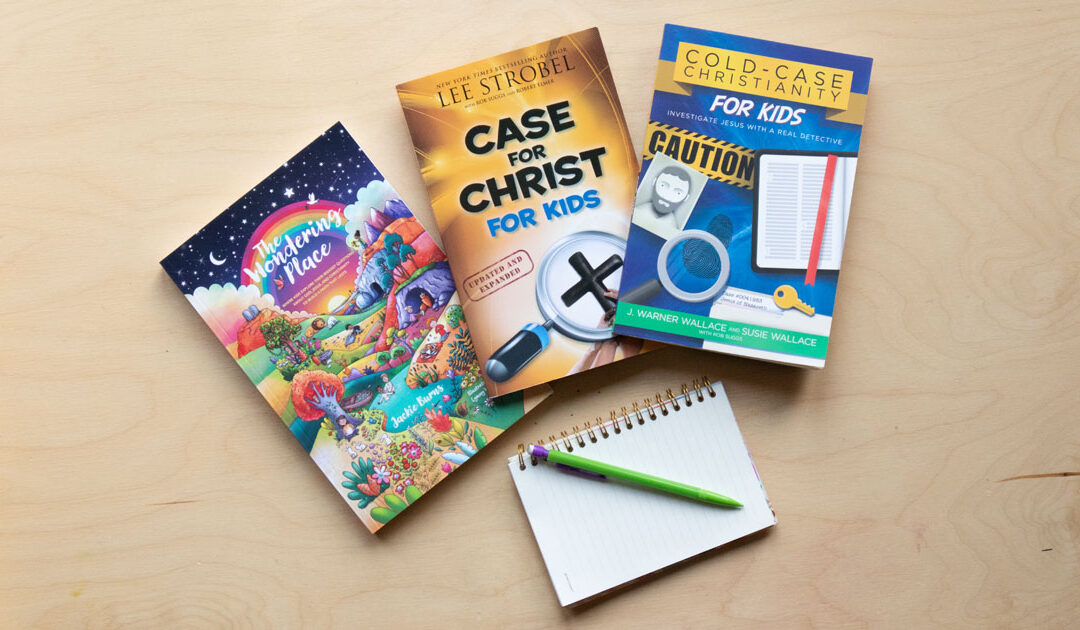
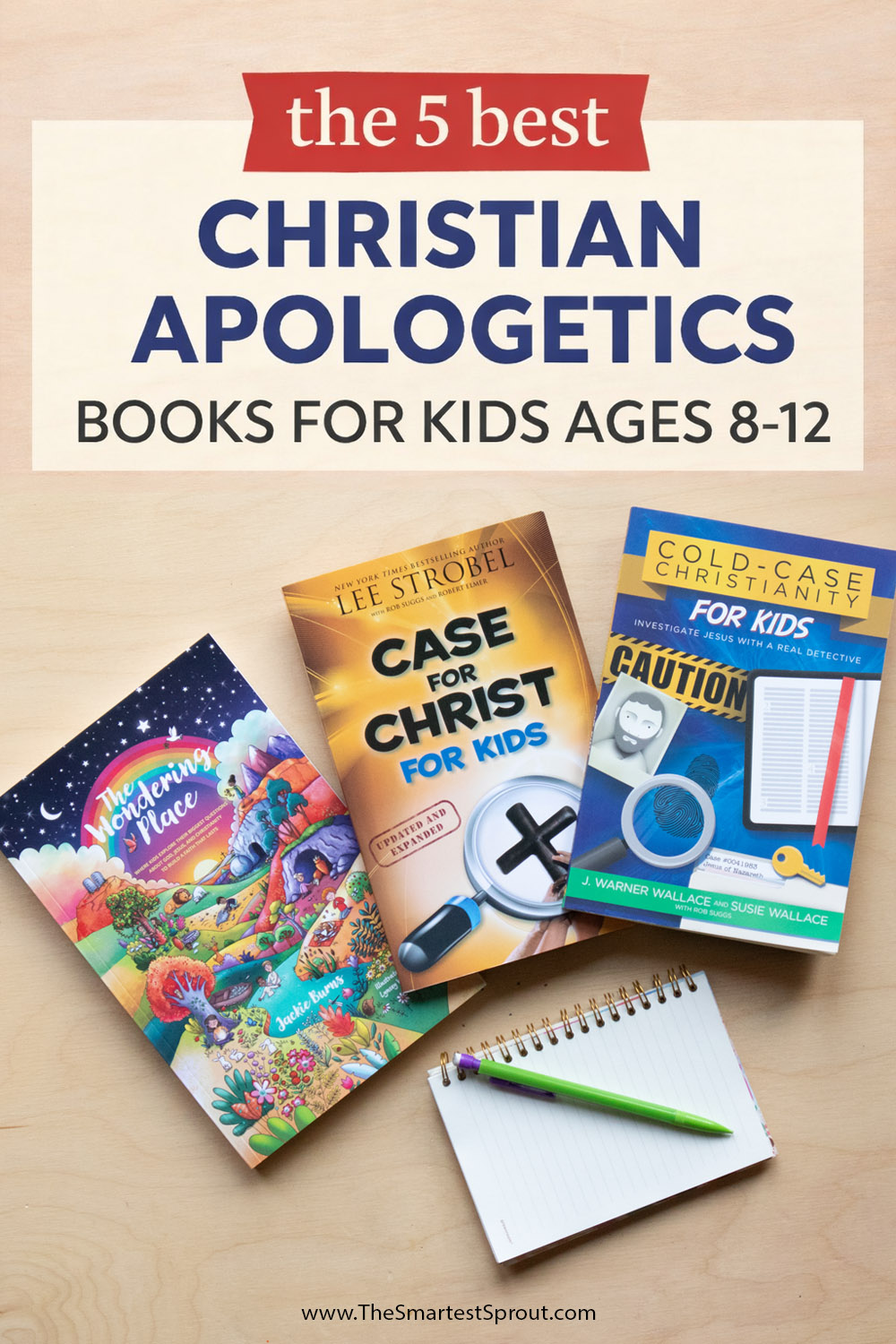
Flat lay of Christian apologetics books for kids ages 8–12 including The Wondering Place, Case for Christ for Kids, and Cold-Case Christianity for Kids on a wooden desk.

Below are several thoughtfully selected titles that help elementary-aged children wrestle with big questions in healthy, constructive ways.

1. Case for Christ for Kids

by Lee Strobel

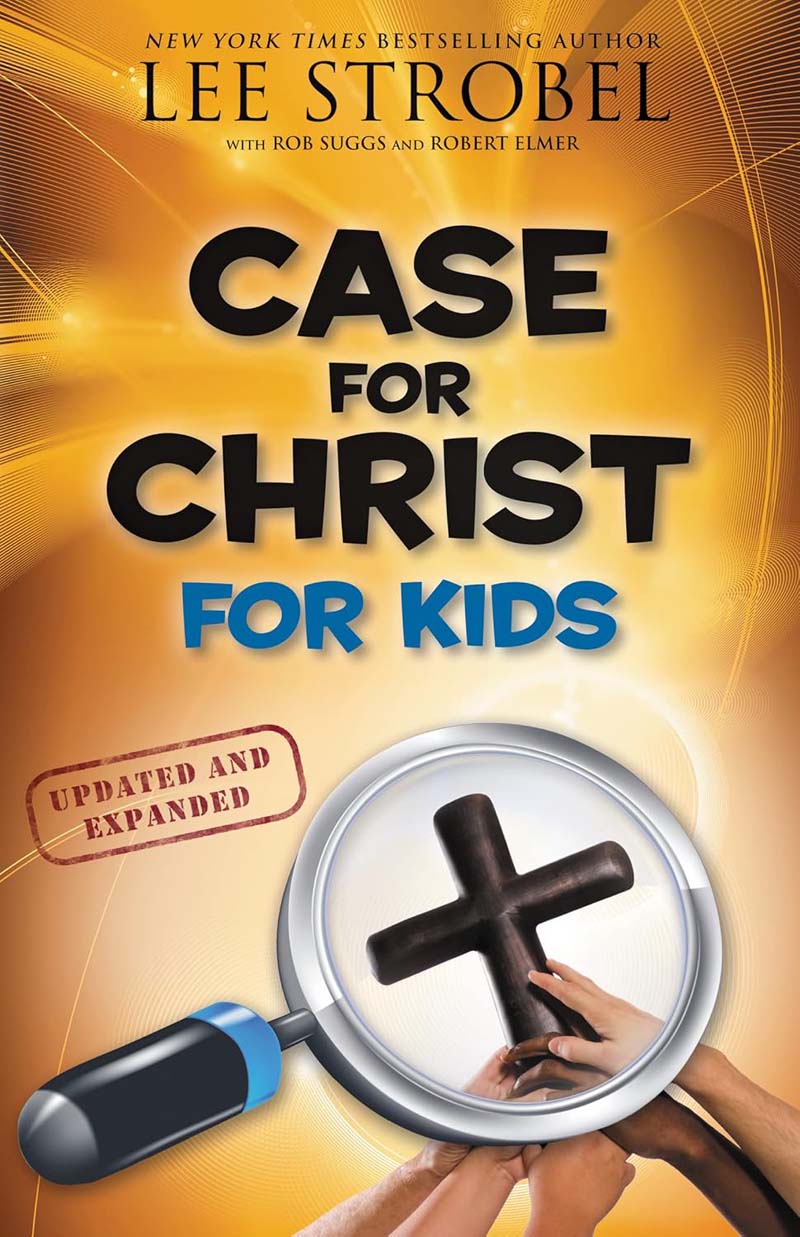
Cover of Case for Christ for Kids by Lee Strobel, an apologetics book introducing children to historical evidence for Jesus.

Case for Christ for Kids adapts Lee Strobel’s bestselling adult investigation into a format younger readers can understand. Written in a journalistic, research-driven style, it walks children through the historical evidence surrounding the life, death, and resurrection of Jesus.

Instead of focusing primarily on spiritual formation or devotional reflection, this book leans into investigation. It introduces readers to expert testimony, manuscript evidence, scientific discussion, and logical reasoning that support the reliability of the Gospels. The tone feels more like a guided case study than a story-based chapter book.

For kids who love facts, research, and concrete answers, this approach can be especially compelling. It helps them see that Christianity is not based on blind faith but on historical claims that can be examined and evaluated.

A great fit for:

  • Kids who enjoy facts, research, and investigative learning

  • Families who want a strong focus on historical evidence for Jesus

  • Homes, classrooms, or church groups exploring apologetics in a structured way

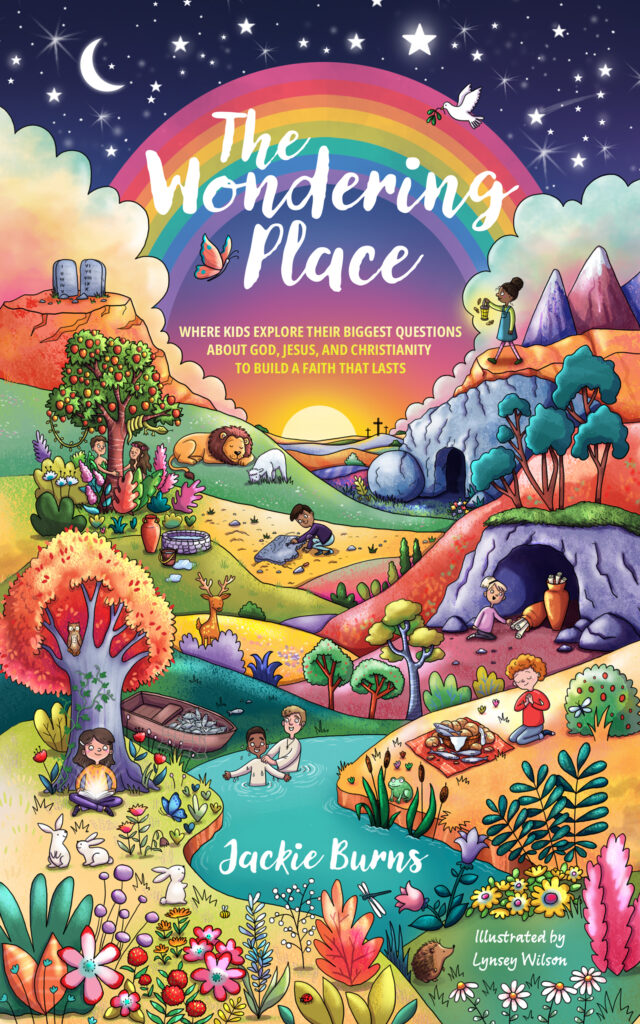
2. The Wondering Place

by Jackie Burns

The Wondering Place book cover by Jackie Burns showing children exploring a colorful landscape under a rainbow

The Wondering Place is built around the real questions children are already asking. Instead of organizing chapters by Bible themes or character lessons, each of the 37 chapters tackles one specific spiritual question. That structure makes it especially helpful for kids who think in concrete, question-driven ways.

Topics include the reliability of the Bible, the existence of God, suffering, doubt, forgiveness, spiritual warfare, and what happens when Jesus returns. The explanations are clear and direct without being overwhelming. Biblical teaching is woven together with historical context and simple reasoning so children begin to understand not just what Christians believe, but why those beliefs are trustworthy.

The book also balances apologetics with discipleship. It does not stop at evidence. Each chapter invites reflection and spiritual growth, helping children connect truth with everyday life. Full-page illustrations throughout keep readers engaged and make complex ideas feel approachable.

Because of its structure and tone, this book works equally well for independent readers and for family discussion. Parents can read one chapter at a time and use the built-in reflection questions to guide meaningful conversations.

A great fit for:

  • Kids who ask thoughtful or skeptical questions about God

  • Families who want to build a strong biblical worldview early

  • Homeschool, Sunday school, church settings, or any home that values thoughtful faith conversations

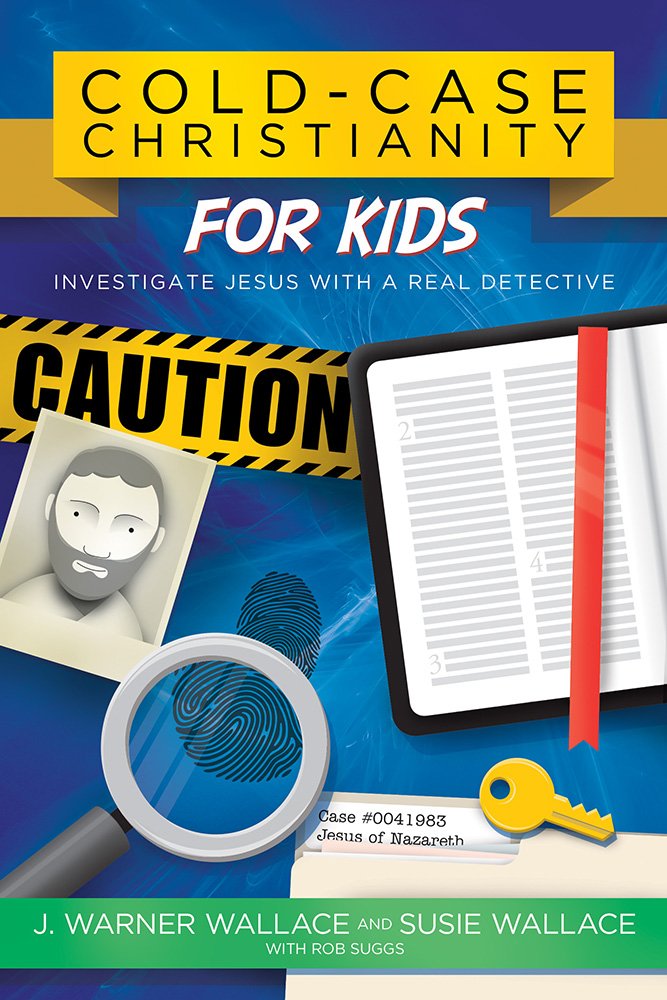
3. Cold-Case Christianity for Kids

by J. Warner Wallace and Susie Wallace

Cover of Cold-Case Christianity for Kids by J. Warner Wallace, a Christian apologetics book that teaches children to investigate evidence for Jesus using a detective approach.

Cold-Case Christianity for Kids approaches Christian apologetics through a detective lens. Drawing from J. Warner Wallace’s background as a homicide detective, the book teaches children how to evaluate eyewitness testimony, examine evidence, and think logically about claims surrounding Jesus.

Rather than simply presenting information, this book trains kids in investigative thinking. Readers learn how to test statements, weigh reliability, and examine the historical case for Christianity step by step. The structure mirrors the adult version, allowing families to explore the material together at different levels.

It also includes illustrations, downloadable activities, and case-note worksheets that reinforce critical thinking skills. For kids who enjoy hands-on learning or the idea of solving a mystery, this format can be especially engaging.

A great fit for:

  • Kids who love detective stories or investigative themes

  • Families who want to teach logical reasoning alongside faith

  • Homes, classrooms, or church groups that appreciate interactive learning tools

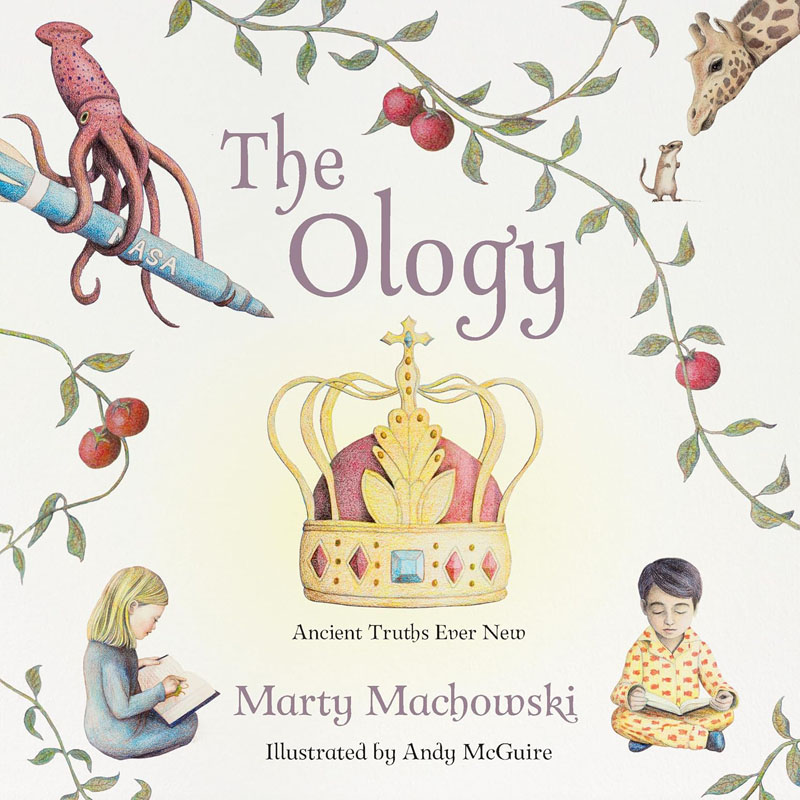
4. The Ology

by Marty Machowski

Cover of The Ology: Ancient Truths, Ever New by Marty Machowski, an illustrated theology book for kids ages 8–12.

The Ology is not written as a traditional apologetics book, but it lays the theological foundation that makes apologetics possible. Rather than focusing on defending specific objections, it systematically walks children through core doctrines of the Christian faith in a clear, structured way.

Arranged around categories of theology such as who God is, what sin is, who Jesus is, and how salvation works, this book introduces children to biblical concepts with depth and precision. The language is accessible, but it does not oversimplify. It treats children as capable thinkers.

Beautiful illustrations and a cohesive narrative thread make it especially effective as a family read-aloud. For parents who want to build doctrinal clarity alongside evidence-based conversations, this book offers strong support.

A great fit for:

  • Families who want structured theological foundations

  • Kids who enjoy big-picture understanding of the Bible

  • Homes that value thoughtful, doctrine-rich discussion

5. The Awesome Book of Bible Answers for Kids!

by Josh McDowell and Kevin Johnson

Cover of The Awesome Book of Bible Answers for Kids by Josh McDowell, a Christian apologetics question-and-answer book for children ages 8–12.

The Awesome Book of Bible Answers for Kids takes a direct question-and-answer approach to some of the most common topics children wrestle with. Rather than presenting one long investigative narrative, it offers concise, focused responses to real-life questions about God, forgiveness, right and wrong, other religions, and how faith connects to everyday life.

Josh McDowell, long known for his apologetics work with students and adults, adapts core biblical truths into a format that feels approachable and readable for upper elementary children. Each answer is rooted in Scripture while remaining clear and practical.

Because of its structure, this book works especially well for kids who enjoy browsing topics independently or jumping to the question that is currently on their mind. It also makes an excellent companion resource for parents who want a quick, reliable way to address faith-based questions as they arise.

A great fit for:

  • Kids who enjoy direct, question-and-answer formats

  • Families who want a practical resource for everyday faith conversations

  • Homes or classrooms looking for accessible apologetics across a range of topics

Chapter Books vs Workbooks vs Devotionals

Parents often wonder which format works best.

  • Chapter books encourage independent exploration.

  • Workbooks create structured parent-child discussions.

  • Devotionals blend reflection with reasoning.

  • Curriculum-style books offer systematic coverage.

There isn’t one right answer to this, and every child learns a little differently. The best apologetics books for your child are the ones that match their personality and learning style.

Frequently Asked Questions

Is 8 too young for apologetics?

No. By age 8, many children are already forming abstract thoughts and asking foundational questions. Apologetics at this stage should be gentle and age-appropriate, not heavy or argumentative.

What if my child doesn’t seem interested?

Start with conversation, not curriculum. Sometimes a single question over dinner does more than a structured study.

Are apologetics books only for homeschool families?

Not at all. Any parent who wants to help their child understand the reasons behind their faith can benefit from these resources.

Final Thoughts

Christian apologetics books for kids ages 8–12 are not about creating debate champions. They’re about helping children understand what they believe and why they believe it.

They help children:

• Love God with both their hearts and their minds
• Grow confident in the truth and reliability of the Bible
• Stand firm when difficult questions arise
• Think carefully about the ideas and messages they encounter in culture

If your child is beginning to ask deeper questions about faith, that isn’t something to fear. It’s a sign they’re growing up, and the right apologetics book can help you walk that journey together.

But apologetics is only one piece of a child’s reading life. All the books we place in their hands shape imagination, character, and understanding, which is why thoughtfully chosen Christian chapter books can be just as influential in this season. Some tell powerful stories, while others encourage quiet reflection and spiritual growth. Together with apologetics, they form a balanced foundation.

And even in the baby and toddler years, simple, steady exposure through Christian board books begins laying foundations that later conversations can build on.

Before children can clearly explain what they believe, they are already forming assumptions about the world. They are learning whether God feels distant or near, whether faith belongs only in church or in ordinary daily life.

When Scripture shows up in bedtime routines, in alphabet lessons, in simple prayers of gratitude, it becomes part of the atmosphere of home. It doesn’t feel added on. It feels normal.

You don’t need a shelf full of books or a complicated routine. A few thoughtful choices, read consistently, will do more than you think. And over time, those small, steady rhythms become part of how your child understands reality.

Let’s Be Friends!

Follow The Smartest Sprout on Facebook and Instagram! Discover the latest parenting tips, activity ideas, and more! Plus, get deal alerts on our favorite educational toys and healthy family essentials!
DIY Chore and Behavior Chart for Kids – The Ultimate System

DIY Chore and Behavior Chart for Kids – The Ultimate System

This post contains affiliate links. Read our affiliate disclosure here.

If you’re tired of nagging, negotiating, and repeating yourself 47 times a day, this DIY chore and behavior chart for kids might be exactly what your home needs.

This isn’t a cute printable that gets ignored after a week. It’s a powerful, visual system that combines chores, incentives, screen time rules, and sibling fairness into one clear structure. And because everything is visible and consistent, kids quickly understand what’s expected without constant reminders.

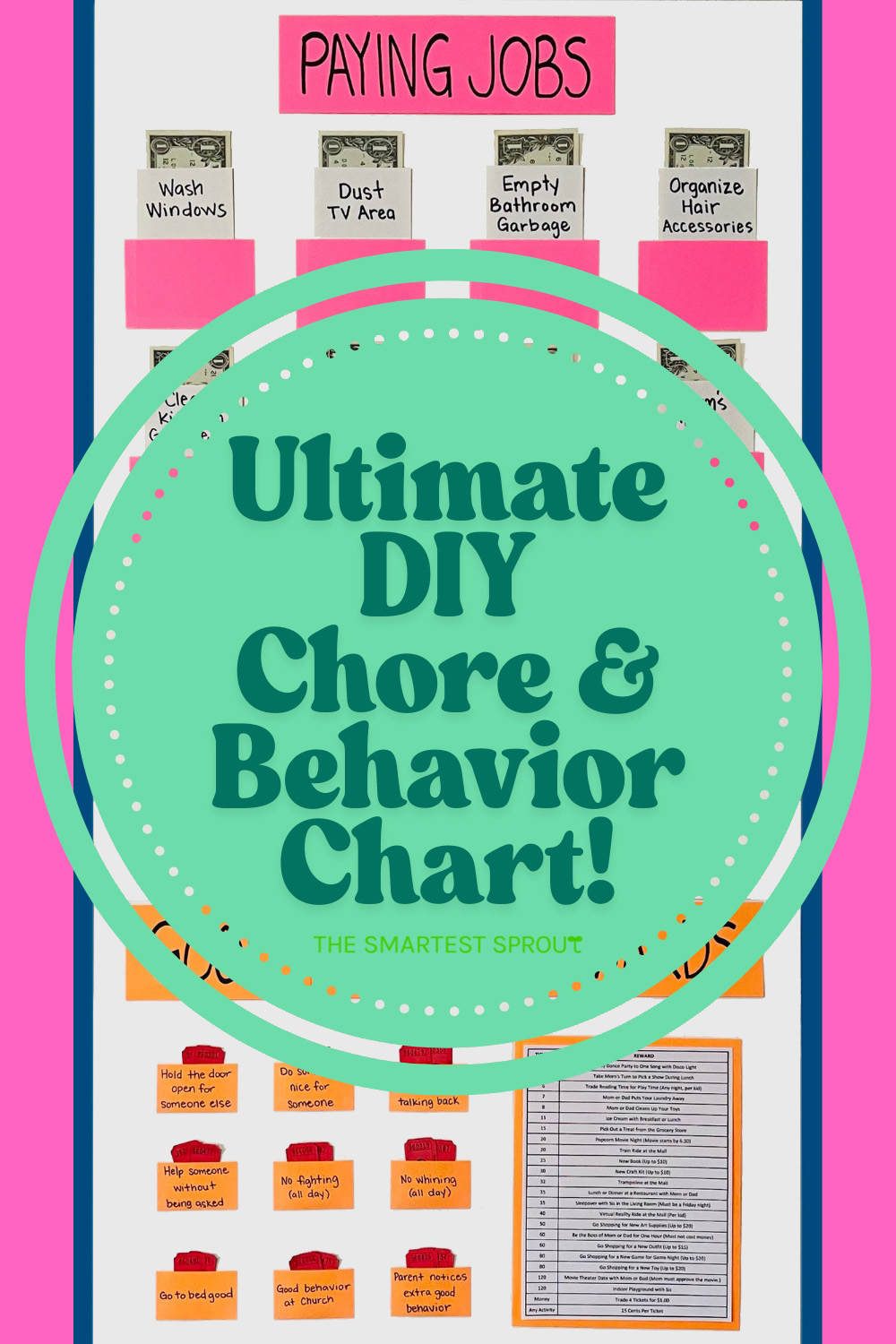
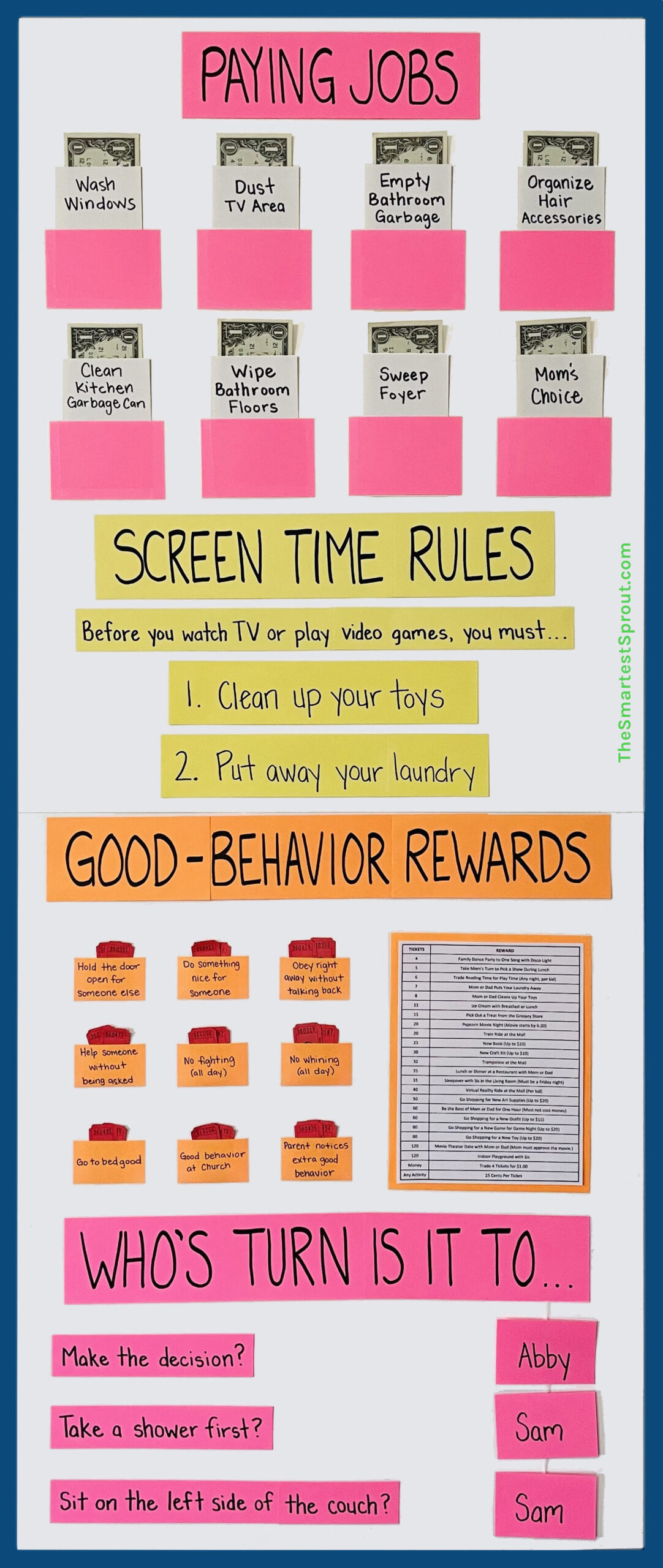
Ultimate DIY chore and behavior chart for kids with paying jobs, screen time rules, reward tickets, and sibling turn-taking system

Why Most Chore Charts for Kids Stop Working

A lot of chore charts fail because they:

  • Only focus on chores

  • Don’t separate required tasks from optional earning

  • Lack consistency

  • Rely only on punishment

  • Don’t address real-life friction points like screen time or turn-taking

Kids need clarity. They need to see what’s expected and what happens next. That’s exactly why a DIY chore and behavior chart for kids works better than a simple checklist.

When everything is verbal, it becomes a power struggle. When it’s visual, it becomes predictable.

What Makes This DIY Behavior Chart Different

This chart is divided into four sections that address everyday parenting pain points.

1. Paying Jobs

This section includes optional extra tasks kids can complete to earn money. You decide what job cards go with which dollar amounts, and kids can pick and choose at their leisure.

Examples:

  • Wash windows

  • Organize a closet

  • Vacuum the car

  • Deep clean a bedroom

This teaches:

  • Work equals reward

  • Initiative matters

  • Money is earned, not handed out

It also helps kids learn basic responsibility around earning.

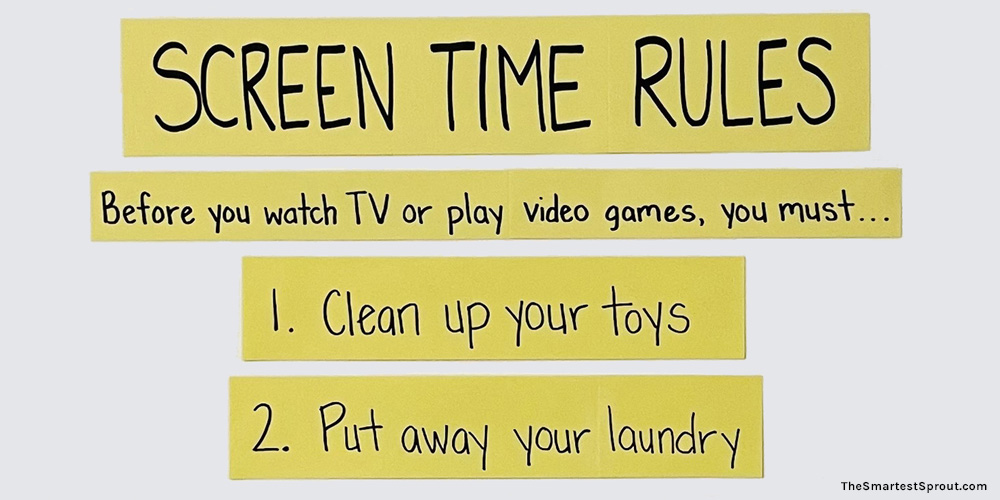
2. Screen Time Rules

This might be the most powerful section. Instead of constantly arguing about devices, expectations are posted clearly.

Before screens are allowed, specific tasks must be completed. No ifs, ands, or buts. 

For example:

  • Clean up toys

  • Put away laundry

When it’s written down, there’s no debating what “clean enough” means. It removes emotion from the conversation.

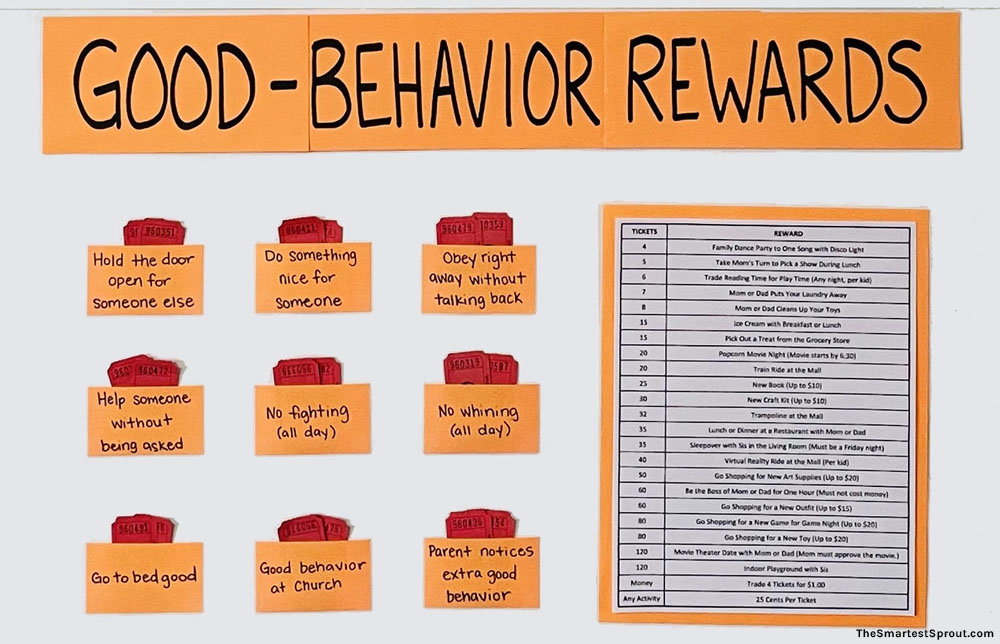
3. Good Behavior Rewards

Positive reinforcement works better than constant correction.

This section includes small rewards that can be earned through consistent effort. Your kids can earn tickets for practicing certain good behaviors and save up the tickets to buy rewards. 

Ideas:

  • Pick the family movie

  • Choose dinner

  • Stay up 15 minutes later

  • Earn tickets toward a larger reward

The goal isn’t bribery. It’s reinforcing habits you want repeated.

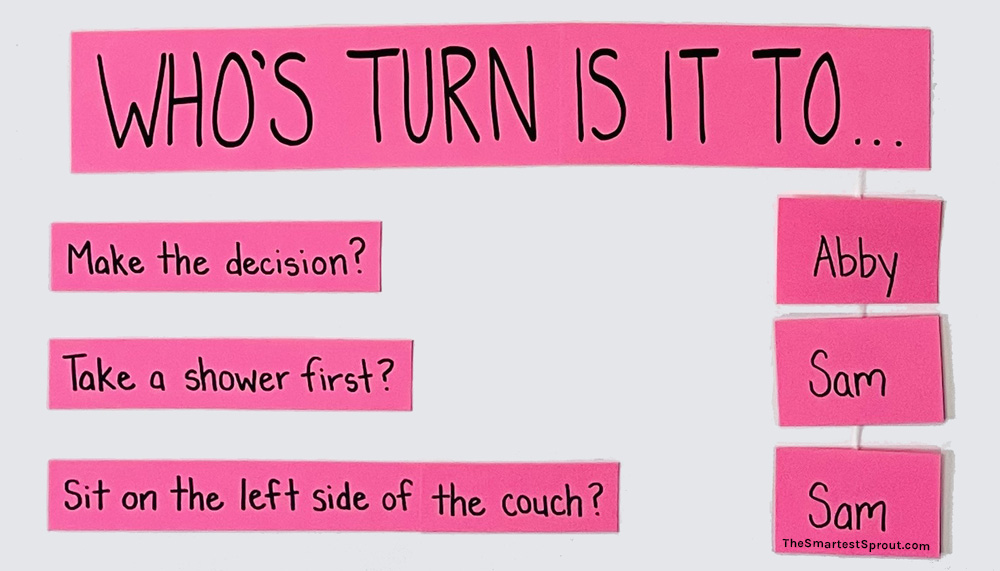
4. Who’s Turn Is It?

If you have multiple kids, this section eliminates daily arguments. The flaps rotate to show the name of the child who’s turn it is to do something next. 

Post answers to questions like:

  • Who picks the show

  • Who sits in the front

  • Who goes first

  • Who chooses the game

When it’s visible, fairness feels objective. No more “That’s not fair!”

How to Build the DIY Chore + Behavior Chart (Step by Step)

DIY chore and behavior chart for kids featuring paying jobs with money pockets, screen time rules, good behavior rewards with raffle tickets, and a sibling turn-taking system

Step 1: Gather Supplies

You don’t need anything fancy and you should already have most of these items around the house.

  • Two large poster boards 22″ x 28″

  • Black permanent marker

  • 3″ x 5″ index cards

  • Colored cardstock

  • Clear tape

  • Packing tape
  • Painter’s tape
  • Durable string or twine

  • Raffle tickets

  • Ruler

  • Scissors and/or paper cutter
  • Dollar bills
  • Microsoft Excel (Optional)

These simple materials are all you need to build this DIY chore and behavior chart for kids from scratch.

Step 2: Tape the Two Poster Boards Together to Make One Tall Board

  1. Lay both poster boards face down on the floor or large table, with the bottom board overlapping the top board about 1/8″ so that there is not a crack showing.
  2. Line up the edges so they match up evenly and form one tall board. Make sure you line them up so that the short edges are touching each other. This should be a very tall behavior chart.
  3. Place packing tape along the seam on the back.
  4. Create a decorative border by taping on strips of cardstock paper. (Optional)
  5. Flip the boards over (front side up).
  6. Add either one strip of packing tape across the front seam if desired.

Step 3: Create Your Section Headers

You’ll make four bold header strips, each are 3″ high:

  • Paying Jobs

  • Screen Time Rules

  • Good-Behavior Rewards

  • Who’s Turn Is It To…

  1. Cut large colored rectangles for each header.
  2. Write each title in large, bold letters.
  3. Tape each header to the board using clear tape.

Step 4: Build the Paying Jobs Section (Money Pockets)

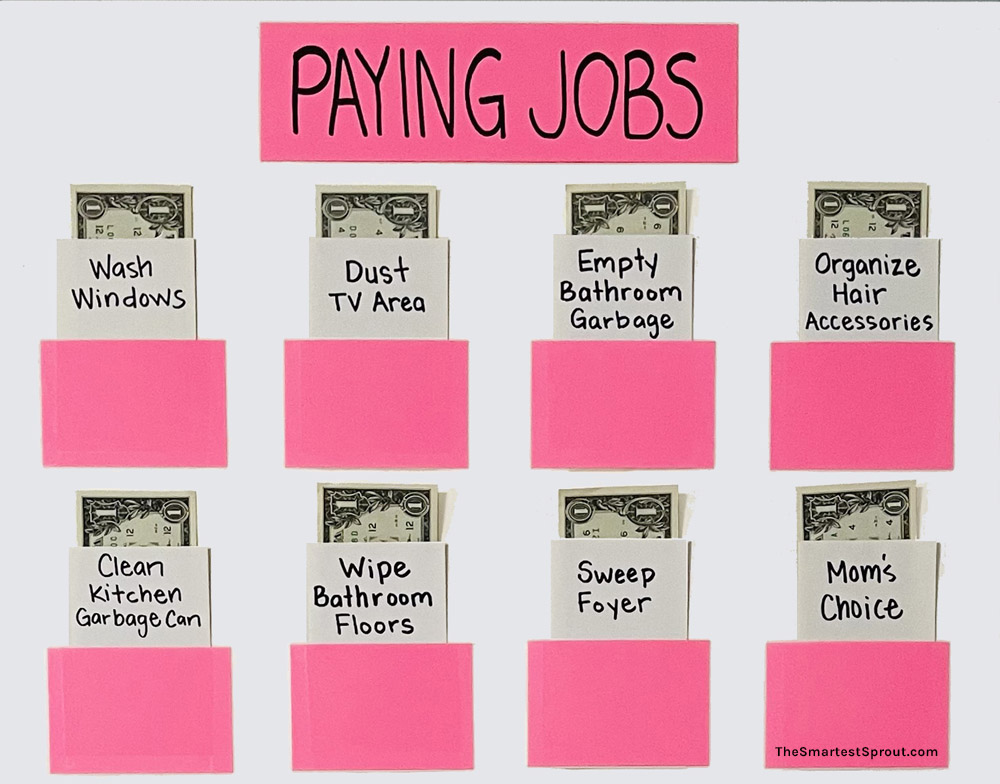
DIY chore chart for kids paying jobs section with paper money pockets taped on three sides for earning allowance

This section uses paper pockets cut from cardstock, sized to hold an index card and a dollar bill in each one. This section is about 17 1/8″ in height.

  1. Tape the “Paying Jobs” header at the top of the section.
  2. Cut 8 colored squares out of cardstock, 4″ wide x 2 3/4″ high.
  3. Arrange the squares neatly, in two rows of four. Leave enough space above each for the dollar bills to stick out without crowding.
  4. Tape the pockets onto the board, only taping the right, left, and bottom edge of each pocket.
  5. Write one job on the top half of each index card. You can use the examples below or create your own.
  6. Place one job card and one dollar bill in each pocket.

If you need help coming up with job ideas, here are a few I use in our home:

  • Wash Windows
  • Dust TV Area
  • Empty Bathroom Garbage
  • Organize Hair Accessories
  • Clean Kitchen Garbage Can
  • Wipe Bathroom Floors
  • Sweep Foyer
  • Mom’s choice

Step 5: Build the Screen Time Rules Section (Two-Step Checklist)

DIY screen time rules chart for kids showing required chores before TV and video games

This is a simple “you must do this before screens” list. This section is about 10 3/4″ high. Make sure to modify the screen time prerequisites to fit your family’s needs.

  1. Tape on “Screen Time Rules” header at the top of the section.
  2. On a strip of cardstock 1 1/2″ high, write “Before you watch TV or play video games, you must…”. Tape that strip below the section header.
  3. Using two more cardstock strips 2 1/4″ high, write your two screen time prerequisites and tape each one onto the chart.

If you need help coming up with screen time prerequisite ideas, we use the ones below:

  • Clean up your toys
  • Put away your laundry

Step 6: Build the Good-Behavior Rewards Section (Ticket System)

DIY good behavior reward chart for kids with raffle tickets and positive behavior incentives

This section uses tangible rewards, that can be bought with good behavior tickets. Children can earn one ticket each time they show specific positive behaviors. This section is about 14 1/4″ high.

  1. Tape the “Good-Behavior Rewards” header to the top of the section.
  2. Similar to the “Paying Jobs” pockets, cut out and arrange 9 good behavior pockets, 2 1/2″ wide x 1 1/2″ high, and tape them to the board.
  3. On each pocket, write one good behavior your child needs to do in order to earn that ticket. Have several raffle tickets sticking out of each pocket. If you don’t have any tickets, you can create your own or buy them here on Amazon.

If you need ideas on what good behaviors to include, here are the ones I use:

  • Hold the door open for someone else

  • Do something nice for someone

  • Obey right away without talking back

  • No fighting (all day)
  • No whining (all day)

  • Help someone without being asked

  • Go to bed good

  • Good behavior at church
  • Parent notices extra good behavior

Next, you’ll need to make the rewards chart and tape it onto your poster board. You can make this by hand or with Microsoft Excel. The purpose of the rewards chart is to show all of the good behavior rewards available, and how many tickets each reward costs. I like each ticket to be worth about 25 cents for each reward that holds a monetary value.

Here are some of my favorite rewards we use at home:

  • 7 tickets = Mom or dad puts your laundry away
  • 20 tickets = Train ride at the mall
  • 25 tickets = New book (Up to $10)

My rewards chart is 6 1/2″ wide x 8 1/2″ high, and I put a cardstock border around it for decoration.

Step 7: Build the Who’s Turn Is It Section (Fairness Tracker)

DIY kids turn taking chart to prevent sibling arguments and track decision order

This section prevents daily arguments by showing who gets what. The footprint for this section is 12 1/4″ high.

  1. Tape the “Who’s Turn Is It To…” header to the top of the section. 
  2. Write the question strips, cut them out and tape onto the poster board. The strips on my example are 1 1/2″ high. 
  3. Cut out three rectangles from the cardstock, 3 1/2″ wide x 2 1/4″ high. Write one child’s name on three of the rectangles and your other child’s name on the remaining three rectangles. Cut three pieces of durable string or twine, each about 3 1/4″ long. Sandwich each piece of string between two of the opposite children’s names, back to back and secure with tape. Leave an inch of string hanging out of the top as a tail. Tape the tail of the string to the poster board. Please note this particular setup will only work with two children. Optional: Use velcro dots to secure instead of string.

Step 8: Hang It Up!

Hanging this large of a poster may feel daunting, but it doesn’t need to be. I hung mine up with a bunch of painter’s tape circles on the back and pressing it firmly against the wall. So far, it’s held up for nine months without falling once.

How to Introduce Your Kids to the Chore and Behavior Chart

How you introduce the chart matters almost as much as how you build it.

Don’t roll this out in the middle of frustration or after a rough day. A new system introduced during a meltdown will feel like punishment.

Instead:

  1. Gather your kids together when everyone is calm.
  2. Stand next to the chart and walk through each section. 
  3. Explain what is required daily and what is optional.
  4. Clarify what earns money and what earns rewards. 
  5. Explain how the turn taking prevents arguments.

Be confident and matter-of-fact. Avoid sounding apologetic or uncertain.

You might say something like:

“This is how we’re going to keep things running smoothly in our house. The chart shows what needs to be done, what you can earn for doing jobs and having good behavior, and how we’ll decide turns.”

Let them ask questions and clarify your expectations. Most importantly, follow through. If screen time requires toys cleaned up first, stick to it every single time. Consistency is what makes the chart powerful.

Why Visual Systems Work for Kids

Children process structure visually far better than verbally. When expectations live only in your voice, they feel flexible and emotional. When expectations are written down, they feel clear, predictable, and fair.

If you’re working on building consistency at home, the right discipline philosophy matters just as much as the structure you use.

That’s what makes this DIY chore and behavior chart for kids so effective.

A visual system reduces:

  • Repeated reminders

  • Power struggles

  • “You never told me!” arguments

  • Sibling fairness debates

It also builds independence. Instead of constantly asking, “What do I need to do?” kids can look at the board and answer their own question. And over time they begin to internalize the routine.

That’s the goal. Not just compliance, but ownership.

Unlike printable chore charts that get ignored after a week, this DIY chore and behavior chart for kids becomes part of your daily rhythm. It removes emotion, reduces negotiation, and builds responsibility through structure instead of reminders.

Final Thoughts

No chore chart will magically eliminate every complaint or argument. Kids will still have moments when they push back or test boundaries. That’s normal.

What a clear, consistent system does provide is structure. And structure reduces friction.

This ultimate DIY chore and behavior chart works because it separates required responsibilities from optional earning opportunities. It makes screen time expectations visible instead of negotiable. It reinforces positive behavior instead of focusing only on correction. And it builds fairness directly into everyday decisions that typically cause sibling conflict.

When expectations are posted and consistently followed, the emotional temperature of the home often drops. You are no longer repeating yourself constantly. Your kids are no longer guessing what counts. The board becomes the reference point instead of you.

The effort it takes to build the chart is small compared to the daily energy it can save. Clear expectations, visible rewards, and consistent follow-through create a calmer, more predictable environment.

And in a busy home, predictability can make all the difference.

Let’s Be Friends

Follow The Smartest Sprout on Facebook and Instagram! Discover the latest parenting tips, activity ideas, and more! Plus, get deal alerts on our favorite educational toys and healthy family essentials!
The 14 Best Marriage Communication Books for 2026

The 14 Best Marriage Communication Books for 2026

The 14 Best Marriage Communication Books for 2026

This post contains affiliate links. Read our affiliate disclosure here.

Strong communication is one of the most important foundations of a healthy marriage. No matter how long you have been together, learning how to communicate with clarity, empathy, and respect can strengthen connection and reduce unnecessary conflict.

The best marriage communication books go beyond surface advice. They help couples understand not only what to say, but how and when to say it. Whether you are searching for books on communication in marriage to resolve conflict, rebuild trust, or deepen emotional intimacy, the right book can provide practical tools and lasting insight.

Below is a carefully curated list of the best communication in marriage books for 2026, featuring research-backed strategies, practical conversation frameworks, and relationship-building habits that couples can apply immediately.

What Makes a Marriage Communication Book Worth Reading?

Not every relationship book offers practical help. The most effective marriage communication books provide clear frameworks, guided conversations, and tools couples can apply immediately.

Some focus on emotional validation and attachment patterns. Others rely on decades of research to explain why certain communication habits strengthen connection while others create distance. The strongest books on communication in marriage do more than offer encouragement. They give couples structure, language, and direction.

Understanding what makes a book truly helpful will make it easier to choose one that fits your current season of marriage.

How to Choose the Right Marriage Communication Book

Before selecting a book, consider your current season of marriage.

Are you navigating frequent conflict? Rebuilding trust? Feeling emotionally distant? Looking for structured conversation prompts? Or simply wanting to grow closer?

Different books meet different needs. Some are best for couples who want research-backed frameworks. Others are ideal for those who prefer guided reflections or daily connection exercises.

Choosing a book that aligns with your goals will make it far more helpful and practical.

The Best Books on Communication in Marriage

The Best Marriage Communication Books

Each of the books below offers a unique approach to improving communication between spouses. Some focus on emotional connection, others on practical habits or structured conversations. All provide valuable insight that can support healthier communication.

1. The 7 Principles for Making Marriage Work: A Practical Guide from the Country’s Foremost Relationship Expert

by John M. Gottman, PH.D., and Nan Silver

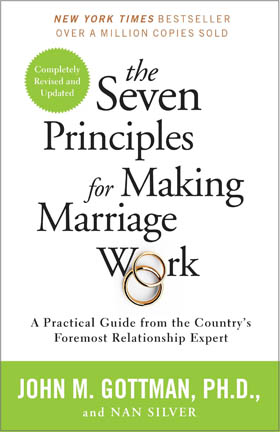
The Seven Principles for Making Marriage Work by John Gottman marriage communication book cover

The Seven Principles for Making Marriage Work is one of the most research-backed marriage books available. Based on decades of study at the Gottman Institute, this book outlines the habits and interaction patterns that predict long-term relational success.

Rather than offering vague advice, John Gottman presents clear, evidence-based principles that help couples strengthen friendship, manage conflict effectively, and increase emotional intimacy. The book includes practical exercises designed to improve communication, reduce defensiveness, and foster mutual respect.

Because the guidance is grounded in long-term observation and behavioral research, this book is especially helpful for couples who want a structured, science-informed approach to improving communication and resolving conflict.

Why it works:

  • Based on decades of longitudinal research

  • Identifies habits that predict relationship success

  • Provides practical communication exercises

  • Teaches constructive conflict resolution

2. Hold Me Tight: Seven Conversations for a Lifetime of Love

by Dr. Sue Johnson

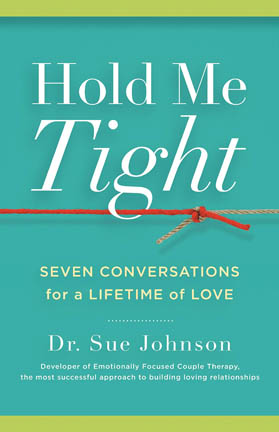
Hold Me Tight by Dr. Sue Johnson marriage communication book cover

Hold Me Tight is grounded in Emotionally Focused Therapy (EFT), a research-based approach to understanding how emotional attachment shapes conflict and connection in marriage.

Rather than focusing on surface-level communication techniques, Dr. Sue Johnson helps couples identify the deeper emotional patterns driving their arguments. She explains how “demon dialogues” — repetitive negative cycles — often stem from unmet attachment needs rather than simple disagreement.

The book is structured around seven key conversations that help couples recognize emotional triggers, repair relational injuries, and rebuild secure connection. By addressing the underlying attachment dynamic, communication becomes calmer, clearer, and more productive.

For couples who feel stuck in recurring conflict or emotional distance, this book offers both insight and structured guidance toward lasting change.

Why it works:

  • Based on decades of clinical research

  • Addresses emotional roots of conflict

  • Provides structured conversations to follow

  • Strengthens long-term attachment security

3. I Hear You: The Surprisingly Simple Skill Behind Extraordinary Relationships

by Michael S. Sorensen

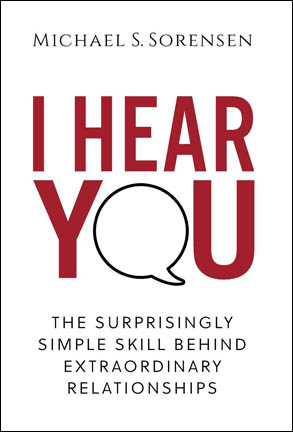
I Hear You by Michael S. Sorensen marriage communication book cover

I Hear You focuses on one foundational communication skill that often determines whether conversations build connection or create conflict: validation.

Rather than offering broad relationship advice, Michael Sorensen breaks down what validation is, why it matters, and how to apply it in everyday conversations. The book explains how feeling understood reduces defensiveness and makes productive discussion possible, especially in marriage.

Though the principles apply to all relationships, this book is particularly powerful for couples who struggle with recurring arguments, emotional shutdown, or feeling unheard.

Because validation directly influences tone, trust, and openness, it can transform the quality of communication without requiring dramatic personality changes.

Why it works:

  • Teaches a specific, actionable communication skill

  • Reduces defensiveness during conflict

  • Helps partners feel heard and understood

  • Encourages calmer, more productive conversations

4. Eight Dates: Essential Conversations for a Lifetime of Love

by John M. Gottman, PH.D., and Julie Schwartz Gottman PH.D

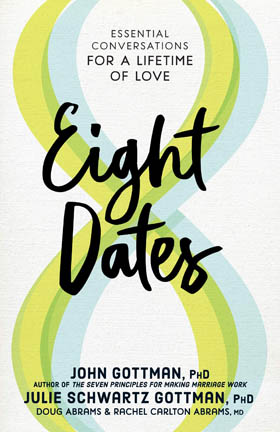
Eight Dates by John and Julie Gottman marriage communication book cover

Eight Dates is built around one simple but powerful idea: meaningful communication requires intentional time and focused conversation. Drawing on decades of research, the Gottmans guide couples through eight structured “dates,” each centered on a core relationship topic such as trust, conflict, money, sex, family, and shared dreams.

Rather than offering abstract advice, the book provides guided prompts and practical exercises designed to help couples talk about the issues that most often create tension or distance. Each date creates space for open dialogue, emotional honesty, and mutual understanding.

Because the structure is clear and research-backed, this book works well for both newlyweds and long-term couples who want to strengthen connection through intentional conversation.

Why it works:

  • Based on decades of marriage research

  • Provides structured conversation prompts

  • Addresses real-life relationship stressors

  • Encourages emotional honesty and validation

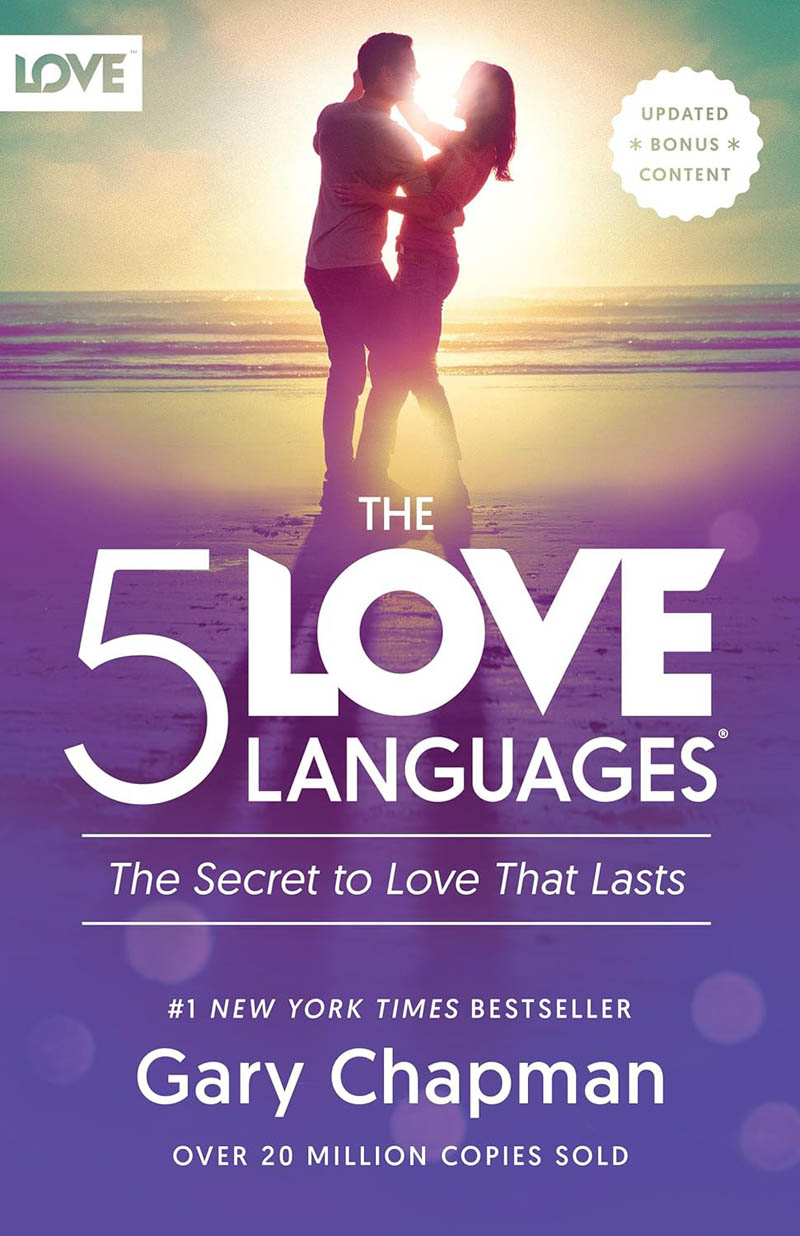
5. The 5 Love Languages: The Secret to Love That Lasts

by Gary Chapman

The 5 Love Languages by Gary Chapman marriage communication book cover

One of the most well-known marriage communication books, The 5 Love Languages explains why couples often feel misunderstood even when they care deeply about one another.

Dr. Gary Chapman teaches that people give and receive love in five primary ways: words of affirmation, acts of service, receiving gifts, quality time, and physical touch. When spouses speak different “love languages,” emotional needs can go unmet — not from lack of love, but from misalignment.

Although this book is not a technical communication manual, it strengthens communication in marriage by helping couples interpret each other’s behavior more accurately and express love more intentionally.

Why it works:

  • Clarifies emotional expectations

  • Reduces recurring misunderstandings

  • Encourages intentional connection

  • Provides a shared vocabulary for discussing needs

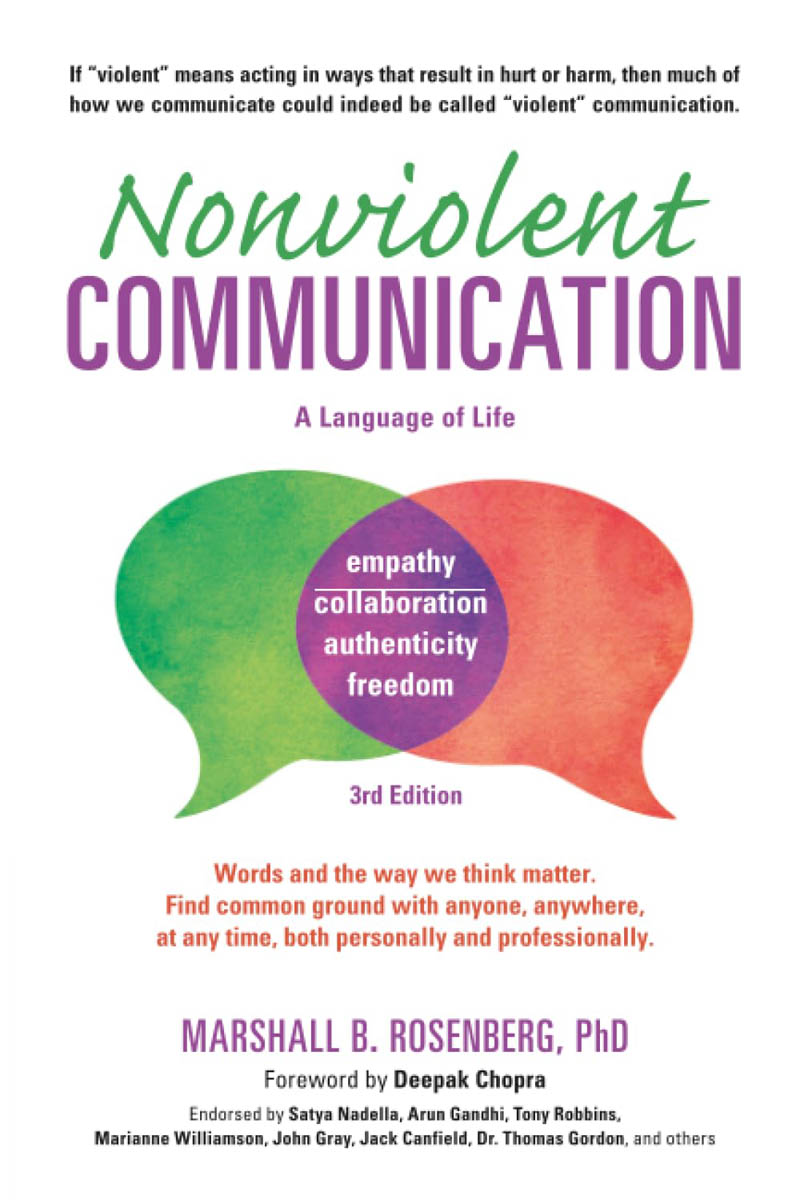
6. Nonviolent Communication: A Language of Life

by Marshall B. Rosenberg PhD

Nonviolent Communication by Marshall Rosenberg communication skills book cover

Nonviolent Communication introduces a communication framework centered on empathy, clarity, and mutual understanding. Though not written specifically for marriage, its principles are widely used in counseling, mediation, and conflict resolution.

Marshall Rosenberg outlines a four-part approach that helps individuals express needs without blame, listen without defensiveness, and move conversations toward collaborative solutions. The focus is on replacing criticism, judgment, and reactive speech with intentional, compassionate dialogue.

For couples who struggle with recurring arguments, emotional escalation, or feeling misunderstood, this book provides a structured model for speaking and listening more constructively.

Why it works:

  • Teaches a clear communication framework

  • Reduces blame and defensiveness

  • Encourages empathy and mutual understanding

  • Applicable to both everyday conversations and conflict

7. The Love Dare

by Alex Kendrick

The Love Dare by Alex and Stephen Kendrick Christian marriage book cover

The Love Dare is a Christian marriage book structured as a 40-day challenge designed to help couples practice intentional, unconditional love. Rather than focusing primarily on communication theory, it encourages daily action steps that reshape attitudes, habits, and patterns within a relationship.

Each day presents a specific “dare” that prompts husbands and wives to act with patience, kindness, and selflessness — even when emotions feel strained. Over time, these consistent actions often soften defensiveness and open the door for healthier conversations.

Because the book emphasizes behavior change alongside heart change, it can be especially impactful for couples who feel stuck in negative communication cycles.

Why it works:

  • Encourages daily intentional action

  • Disrupts unhealthy relational patterns

  • Promotes patience and selflessness

  • Builds a foundation for healthier communication

8. 10 Ways to a Stronger Marriage

by Trea & Lea Morgan

10 Ways To A Stronger Marriage by Trey and Lea Morgan marriage communication book cover

10 Ways To A Stronger Marriage is a practical guide focused on everyday habits that strengthen connection and communication between spouses.

Trey and Lea Morgan address modern challenges that commonly affect marriages, including digital distractions, social media boundaries, friendship dynamics, and conversational habits. The tone is straightforward and accessible, making the book easy to implement without feeling overwhelming.

Each chapter includes simple action steps and discussion questions that encourage couples to talk openly and evaluate patterns that may be weakening their connection. The emphasis on conversation, praise, and intentional friendship makes it especially relevant for couples who feel more like roommates than partners.

Why it works:

  • Addresses modern communication challenges

  • Encourages intentional conversation

  • Includes practical action steps

  • Provides discussion questions for deeper dialogue

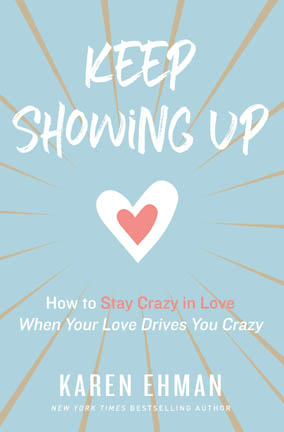
9. Keep Showing Up: How to Stay Crazy in Love When Your Love Drives You Crazy

by Karen Ehman

Keep Showing Up by Karen Ehman Christian marriage book cover

Keep Showing Up is a Christian marriage book that explores how everyday differences between spouses can either create division or strengthen connection.

Karen Ehman addresses the common frustrations that build over time — differences in personality, habits, priorities, and expectations — and offers practical guidance for responding with grace rather than irritation. While the book does not focus exclusively on communication techniques, it emphasizes how tone, forgiveness, and intentional effort shape daily interactions.

Through real-life examples and discussion prompts, the book encourages couples to shift from comparison and criticism to consistency and encouragement. It may be especially helpful for long-term couples who feel worn down by recurring minor conflicts.

Why it works:

  • Addresses everyday relational friction

  • Encourages forgiveness and consistency

  • Provides practical conversation starters

  • Grounds communication habits in Christian perspective

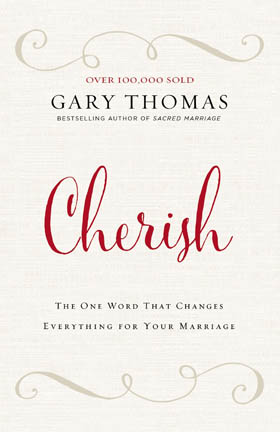
10. Cherish: The One Word That Changes Everything for Your Marriage

by Gary Thomas

Cherish by Gary Thomas Christian marriage book cover

Cherish is a Christian marriage book built around a simple but powerful idea: when spouses intentionally cherish one another, the tone of the relationship changes.

Rather than focusing on techniques for arguing better, Gary Thomas emphasizes how mindset shapes communication. When couples move from indifference or irritation to honor and appreciation, everyday conversations naturally become more respectful and affirming.

The book blends personal stories with biblical principles, encouraging husbands and wives to protect, prioritize, and value one another intentionally. While it is not a technical communication manual, it addresses the attitudes that often determine whether conversations feel critical or caring.

For couples who feel stuck in routine or subtle resentment, this book offers a perspective shift that can positively influence how they speak and respond to one another.

Why it works:

  • Shifts mindset from survival to intentional honor

  • Reduces subtle contempt in communication

  • Encourages daily acts of appreciation

  • Grounds relational habits in Christian principles

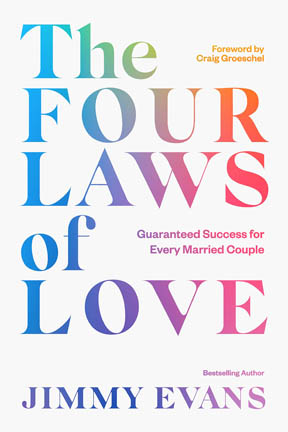
11. The Four Laws of Love: Guaranteed Success for Every Married Couple

by Jimmy Evans

The Four Laws of Love by Jimmy Evans Christian marriage book cover

The Four Laws of Love is a Christian marriage book that outlines four foundational principles designed to strengthen long-term commitment and relational health.

Drawing from his personal experience and biblical teaching, Jimmy Evans explains how understanding the purpose and design of marriage can reshape attitudes, expectations, and daily interactions. Rather than focusing solely on conversation techniques, the book emphasizes aligning behavior and mindset with core relationship principles.

While it is not a technical guide to communication skills, it addresses many of the underlying attitudes that influence how couples speak to one another — especially during conflict.

This book may be particularly helpful for couples who want a faith-centered framework for improving both communication and overall relational health.

Why it works:

  • Grounds marriage in clear guiding principles

  • Addresses attitudes that affect communication

  • Offers practical steps rooted in Christian teaching

  • Encourages long-term commitment and intentionality

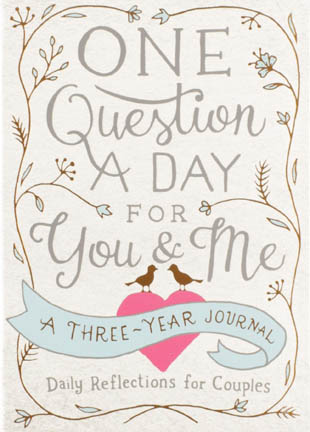
12. One Question a Day for You & Me: Daily Reflections for Couples, A Three Year Journal

by Aimee Chase

One Question a Day for You & Me by Aimee Chase couples communication journal cover

One Question a Day for You & Me is a guided journal designed to help couples build consistent communication through short, daily reflection prompts.

Each day includes a single question for both partners to answer. Over the course of three years, couples can look back and see how their thoughts, priorities, and relationship have evolved. The format is simple but effective, especially for couples who struggle to find time for deeper conversations.

While this book does not offer research-based communication strategies, it encourages regular dialogue and emotional sharing — two habits that strengthen connection over time.

Why it works:

  • Creates a daily communication rhythm

  • Encourages emotional openness

  • Makes meaningful conversation easy and low-pressure

  • Builds shared history through reflection

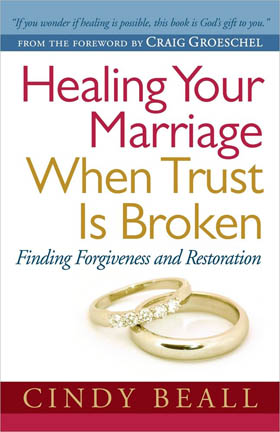
13. Healing Your Marriage When Trust is Broken: Finding Forgiveness and Restoration

by Cindy Beall

Healing Your Marriage When Trust Is Broken by Cindy Beall Christian marriage book cover

Healing Your Marriage When Trust Is Broken is a Christian marriage book written for couples navigating betrayal, addiction, or serious breaches of trust.

Drawing from her personal experience, Cindy Beall addresses the painful realities that follow infidelity and deception while offering guidance rooted in faith and accountability. The book focuses on the difficult but necessary conversations that must take place when trust has been damaged.

While this is not a general communication guide, it directly addresses how couples can begin rebuilding honesty, transparency, and emotional safety after deep hurt. For marriages recovering from betrayal, addiction, or deception, it provides a framework for confession, forgiveness, and restoration.

Because communication after betrayal requires clarity, humility, and structure, this book may be particularly helpful during seasons when trust must be rebuilt from the ground up.

Why it works:

  • Addresses communication after betrayal

  • Encourages accountability and transparency

  • Provides faith-based guidance for forgiveness

  • Focuses on rebuilding emotional safety

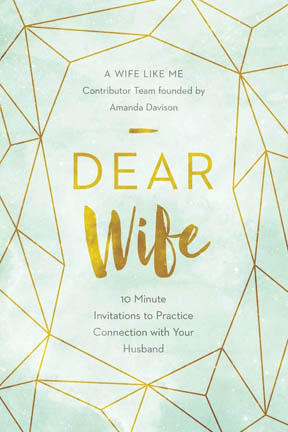
14. Dear Wife: 10 Minute Invitations to Practice Connection with Your Husband

by Amanda Davison

Dear Wife by Amanda Davison Christian marriage communication book cover

Dear Wife is a Christian marriage book written specifically for wives who feel their relationship has slipped into routine and want to rebuild intentional connection. Rather than offering complex communication theory, it focuses on small, guided invitations designed to shift the tone of everyday interaction.

Amanda Davison encourages wives to step out of autopilot and pursue deeper intimacy through short, reflective prompts rooted in biblical principles. Each invitation is meant to spark meaningful conversation, strengthen emotional connection, and create more intentional time together.

Because the book centers on a wife’s role in cultivating connection, it may be especially helpful during seasons when busyness, complacency, or spiritual drift have created distance.

Why it works:

  • Encourages intentional daily connection

  • Provides structured reflection prompts

  • Grounds communication in Christian principles

  • Focuses on emotional and spiritual intimacy

Frequently Asked Questions

What is the best marriage communication book?

The best marriage communication books depend on your needs. Research-based books by John Gottman or Sue Johnson are ideal for structured guidance, while others focus on emotional validation or daily connection.

Can books improve communication in marriage?

Yes. Communication in marriage books provide frameworks and tools that help couples understand patterns, reduce defensiveness, and strengthen connection over time.

How long does it take to see improvement?

Consistent application of communication strategies can lead to noticeable improvement within weeks, though long-term growth requires continued effort.

Are marriage communication books effective for newlyweds?

Yes. Many communication books are especially helpful early in marriage, when couples are still establishing habits and relational patterns.

Final Thoughts

Communication in marriage is not about avoiding disagreement. It is about learning how to navigate differences with clarity, empathy, and respect.

The best marriage communication books offer practical tools that help couples listen more carefully, speak more thoughtfully, and build deeper connection over time. Investing in stronger communication skills can have a lasting impact on your relationship.

Other Articles You May Enjoy:

Let’s Be Friends

Follow The Smartest Sprout on Facebook and Instagram! Discover the latest parenting tips, activity ideas, and more! Plus, get deal alerts on our favorite educational toys and healthy family essentials!
The 7 Best Christian Board Books for Babies and Toddlers (Ages 0–3)

The 7 Best Christian Board Books for Babies and Toddlers (Ages 0–3)

The 7 Best Christian Board Books for Babies and Toddlers (Ages 0–3)

This post contains affiliate links. Read our affiliate disclosure here.

If you’re raising little ones, you already know that the first three years matter more than we once realized. Neural pathways are forming, language is exploding, and attachment is deepening. Childhood patterns are being set. And yes, faith foundations can begin here too.

Board books may seem simple, but they are one of the most powerful discipleship tools in early childhood. The right Christian board books don’t just entertain. They shape vocabulary, worldview, memory, and spiritual familiarity with truth.

In this guide, I’m sharing the best Christian board books for babies and toddlers. These books support both cognitive development and early faith formation.

Why Start Theology So Early?

Babies may not understand doctrine, but they do absorb patterns.

Repetition builds neural wiring.
Language builds categories.
Images build familiarity.

When biblical language is woven into early literacy, children begin to:

• Recognize God-centered vocabulary
• Associate faith with comfort and connection
• Develop early moral frameworks
• Build long-term memory pathways tied to truth

Spiritually, this means faith isn’t introduced suddenly at age five. It feels familiar. Cognitively, rhythm, repetition, and simple theological phrases strengthen language acquisition and comprehension skills.

Early exposure does not mean pressure. It’s about planting seeds.

What Makes a Good Christian Board Book?

Not all Christian board books are created equal.

Here is what I look for:

• Biblically accurate content, not vague spirituality
• Simple and age-appropriate language
• Durable pages that survive toddler life
• Theologically sound messaging
• A reflection of God’s character that aligns with Scripture

When a book meets these standards, it serves both the mind and the heart.

Why Christian Baby Books Matter More Than We Think

In early childhood, consistency builds security.

When faith becomes part of bedtime routines, morning snuggles, or quiet reading moments, children begin to associate God with:

• Safety
• Love
• Predictability
• Connection

From a developmental perspective, that pairing shapes emotional architecture, and from a spiritual perspective, it plants deep roots. You don’t need dozens of books, you just need a few intentional ones.

The Best Christian Board Books for Babies and Toddlers

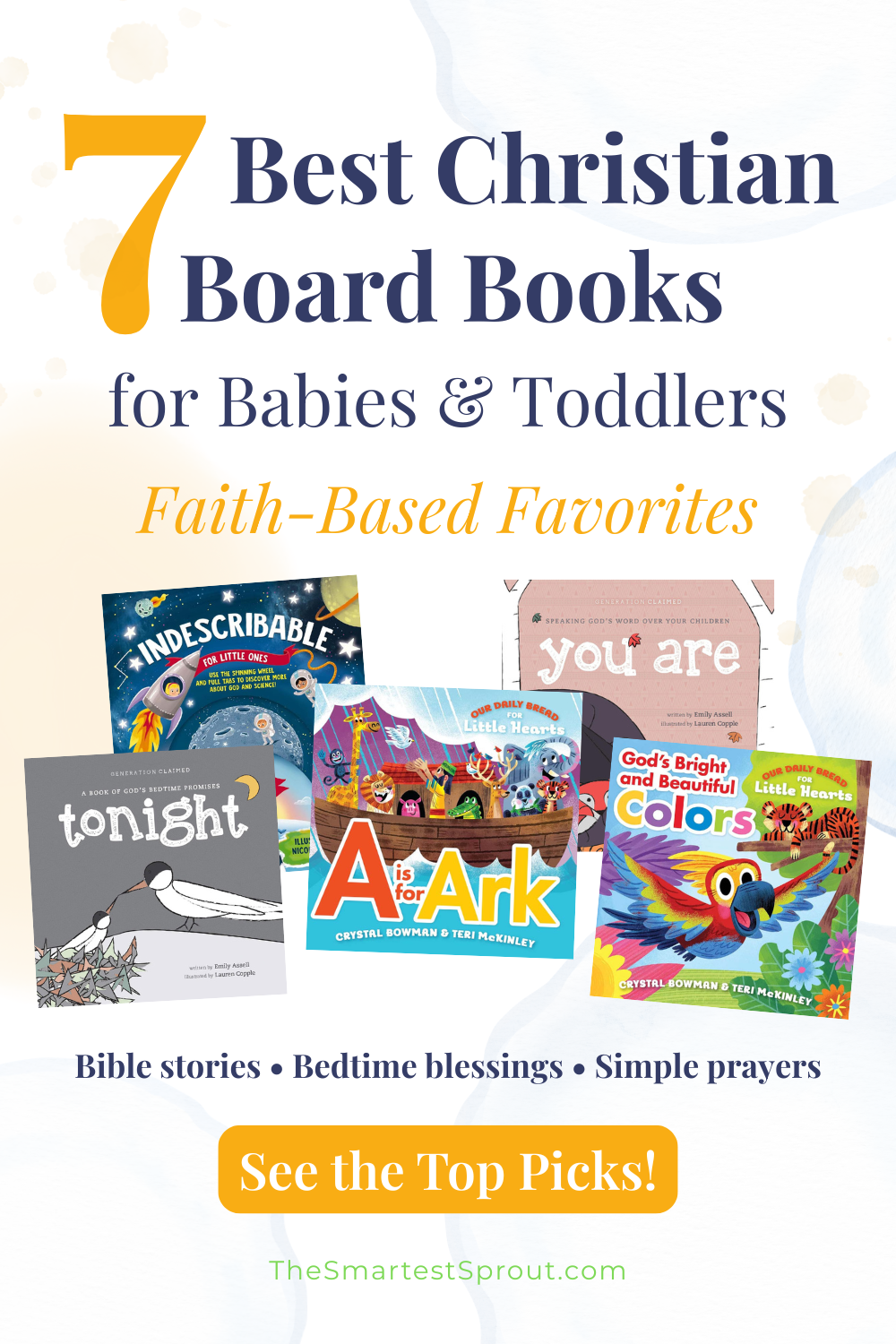
7 Best Christian Board Books for Babies and Toddlers featuring faith-based Bible stories, bedtime blessings, and simple prayer books for young children

These are the Christian board books we’ve found to be the most meaningful, developmentally appropriate, and rooted in biblical truth. Each one is a standout in its category.

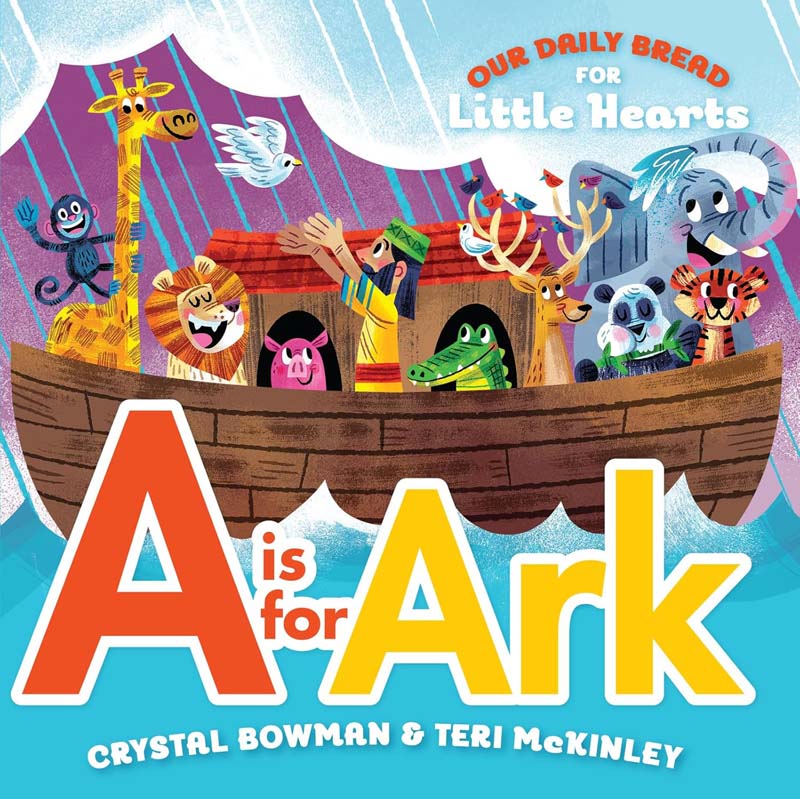
A Is for Ark Bible-based alphabet board book for toddlers featuring Noah’s ark and animals

Best Christian Alphabet Board Book for Toddlers

A Is for Ark by Crystal Bowman and Teri McKinley

If you want a board book that reinforces both early literacy and biblical storytelling, A Is for Ark is an easy winner.

This Bible-based A to Z board book walks toddlers through the story of Noah’s ark while introducing all twenty-six letters of the alphabet. Each page pairs colorful illustrations with simple rhymes, making it developmentally appropriate for ages one to three. The repetition and rhythm make it ideal for early readers who thrive on predictable patterns.

What sets this book apart is that it does more than teach letters. It anchors alphabet learning in a familiar Bible story, helping children connect literacy skills with faith from the very beginning.

Why This Book Wins:

• Reinforces letter recognition from A to Z
• Uses rhyme to strengthen phonological awareness
• Supports vocabulary growth through biblical storytelling
• Introduces the story of Noah in simple, engaging language
• Encourages repetition, which strengthens early memory pathways
• Combines early literacy development with biblical truth

This is a strong option for toddlers who are beginning to recognize letters and enjoy rhythmic reading patterns. It also works beautifully as a baby shower gift for families who want to integrate faith into early learning.

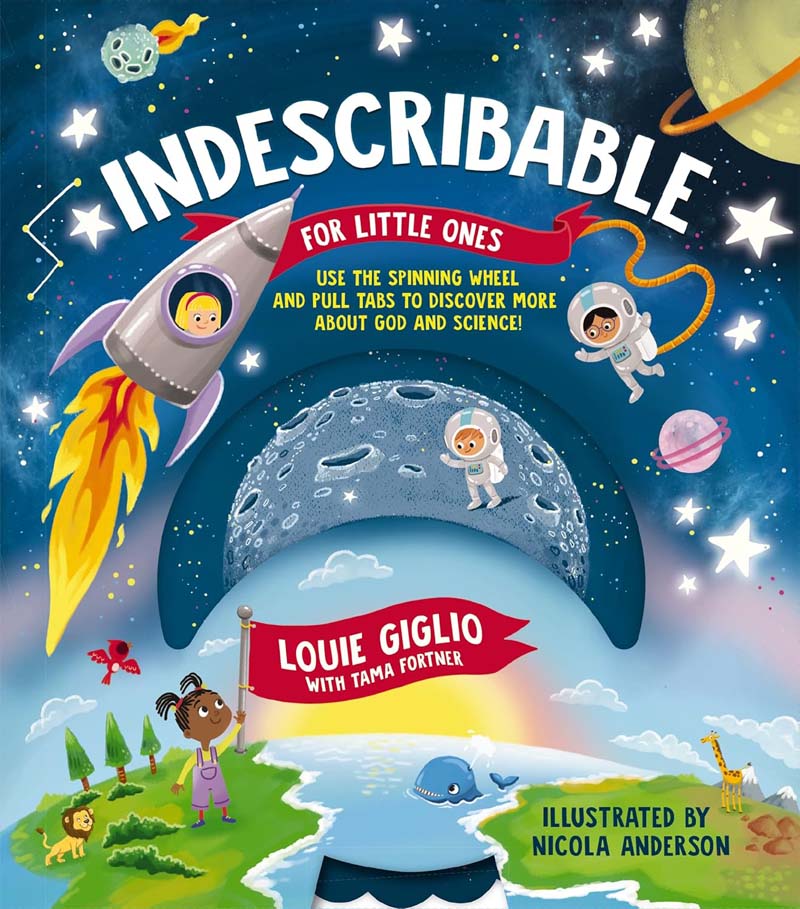
Indescribable for Little Ones board book by Louie Giglio introducing toddlers to creation and science through Genesis 1

Best Christian Board Book About Creation and Science

Indescribable for Little Ones by Louie Giglio

If you’re looking for a board book that connects biblical truth with early scientific curiosity, this is the one.

Indescribable for Little Ones introduces babies and toddlers to the wonders of God’s creation through the framework of Genesis 1. It walks through space, earth, animals, and people while reinforcing the foundational truth that everything was made by God. The interactive pull tabs and spinning wheels make it engaging for little hands while keeping the message simple and clear.

What makes this book stand out is that it does not separate faith from learning. It frames scientific discovery as something that points back to God as Creator. That is a powerful foundation to lay in the earliest years.

Why This Book Wins:

• Follows the creation account in Genesis 1 in age-appropriate language
• Encourages curiosity about space, animals, nature, and the human body
• Connects early STEM exposure with biblical worldview
• Strengthens fine motor skills through interactive elements
• Builds vocabulary related to science and creation
• Reinforces awe and wonder directed toward God

This book is especially strong for toddlers who are beginning to notice the world around them and ask simple questions. It gives parents a natural way to connect everyday observations with faith.

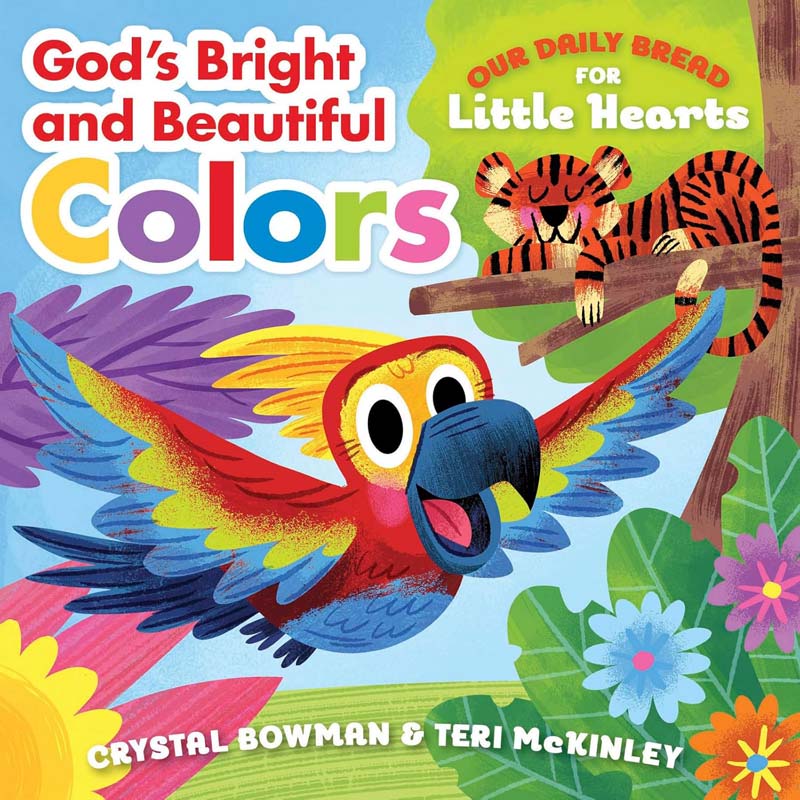
God’s Bright and Beautiful Colors Christian board book teaching toddlers colors through God’s creation

Best Christian Board Book About Colors

God’s Bright and Beautiful Colors by Crystal Bowman and Teri McKinley

If you want a board book that teaches basic colors while reinforcing God as Creator, this one stands out.

God’s Bright and Beautiful Colors introduces toddlers to seven foundational colors through bright illustrations and short, rhythmic verses. As children learn about blue skies, yellow suns, green leaves, and purple grapes, they are also reminded that God made the world and everything in it. The connection between everyday learning and biblical truth feels natural and age-appropriate.

This book does not just teach color recognition. It frames early learning within a biblical worldview, helping toddlers connect what they see around them to the God who created it.

Why This Book Wins:

• Reinforces basic color recognition in a developmentally appropriate way
• Uses rhyme to strengthen early language and listening skills
• Introduces God as Creator through everyday examples
• Encourages observation of the natural world
• Supports vocabulary growth through descriptive language
• Connects early academic concepts with biblical truth

This is a strong choice for toddlers who are beginning to identify colors and describe the world around them. It also works well for parents who want everyday learning moments to point back to faith.

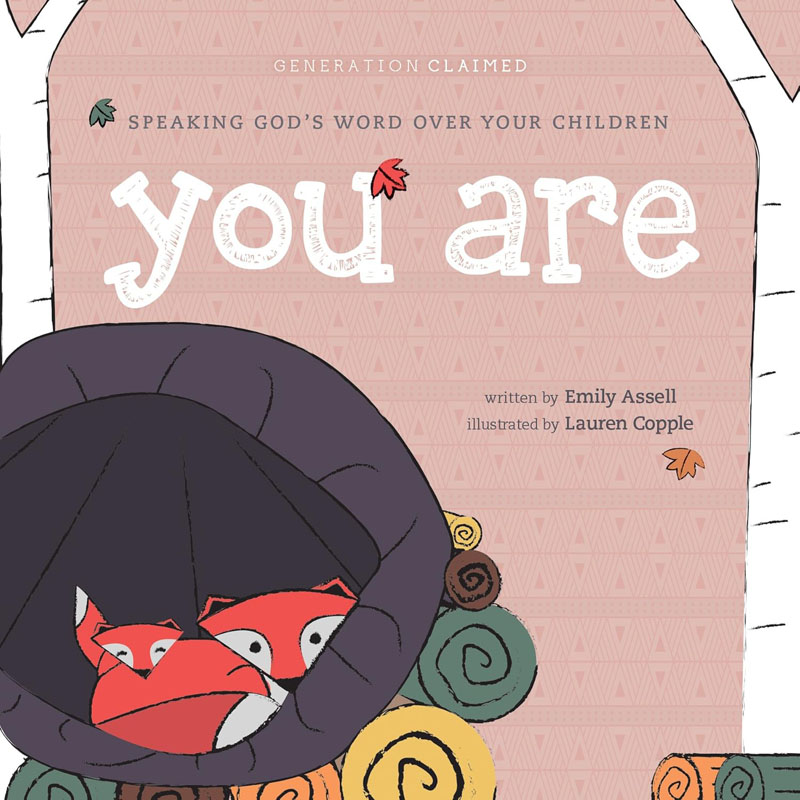
You Are Christian board book about identity in Christ for babies and toddlers

Best Christian Board Book About Identity in Christ

You Are: Speaking God’s Word over Your Children by Emily Assell

This is such an inspiring book for parents who want to intentionally speak truth over their children from the very beginning.

You Are is written as a series of biblical affirmations rooted directly in Scripture. Each page pairs a loving declaration with a verse, helping little ones hear who God says they are. Rather than simply telling a story, this book speaks identity. Precious. Chosen. Set free. Loved.

What makes this book especially powerful is that it centers identity in Christ, not in performance or personality. It gently reinforces that a child’s worth is anchored in God’s Word.

Why This Book Wins:

• Grounds identity in Scripture rather than emotion
• Includes a Bible verse on each page
• Reinforces foundational truths about being loved and chosen by God
• Strengthens listening and language development through repetition
• Encourages parents to intentionally speak life over their children
• Makes a meaningful gift for baby showers, dedications, and baptisms

This is a beautiful option for families who want daily reading to become a habit of declaring biblical truth over their children. It is simple enough for toddlers, yet meaningful enough to revisit as they grow.

Tonight Christian bedtime board book with Bible promises for toddlers

Best Christian Board Book for Bedtime

Tonight: A Book of God’s Bedtime Promises by Emily Assell

This is a peaceful, Scripture-filled way to end your day and is one of the most comforting bedtime board books available.

Tonight is built around the idea of speaking God’s promises of protection, rest, and peace over your child before sleep. Each page includes a short declaration paired with a Bible verse, helping little ones fall asleep hearing truth instead of fear.

What makes this book especially powerful is how gently it addresses common childhood worries about the dark, bad dreams, or being alone. It reminds children that God does not sleep, that His love casts out fear, and that He watches over them through the night.

Why This Book Wins:

• Includes Scripture on every page
• Helps replace bedtime anxiety with biblical truth
• Creates a calming nighttime routine
• Reinforces language development through repetition
• Encourages parents to intentionally speak God’s promises aloud
• Sturdy board book format for nightly use

The soft illustrations of baby animals and their parents add to the calming tone, making this an ideal final book before lights out. It is simple enough for toddlers, yet meaningful enough to grow with your child.

This is one of those books that easily becomes part of a nightly rhythm.

Great and Small Prayers for Babies Christian lift-the-flap board book with simple thank-you prayers

Best First Prayer Board Book for Babies

Great and Small Prayers for Babies by Ms. Anna Abramskaya

Prayer doesn’t have to be complicated to be meaningful. This charming board book introduces babies and toddlers to simple thank-You prayers through interactive animal flaps and short, rhythmic phrases. It models gratitude in a way little ones can understand and eventually echo.

Each spread pairs a large animal with a hidden baby animal, adding a playful element that keeps toddlers engaged while gently reinforcing the habit of thanking God.

Why This Book Wins:

• Models simple prayers without overwhelming young listeners
• Builds early habits of gratitude toward God
• Lift-the-flap format strengthens fine motor skills
• Short, rhythmic phrases support language development
• Durable board book design for daily repetition
• Makes a thoughtful baby dedication or shower gift

It’s a beautiful starting point for families who want prayer to feel natural, simple, and woven into everyday life from the very beginning.

The King of All Things Christian board book about Jesus as King and worship for toddlers

Best Christian Board Book to Inspire Worship and Wonder

The King of All Things by Shay and Catherine Gregorie

If you are looking for a board book that cultivates awe rather than just teaching a concept, this one stands out.

The King of All Things is written as a blessing over a child, celebrating Jesus as the Great King over all creation. The language is lyrical and prayerful, helping young hearts begin to associate God with beauty, goodness, and sovereignty. The illustrations are gentle and heirloom-quality, making this a meaningful addition to a child’s library.

What makes this book unique is its tone. It does not focus on academic learning. It focuses on shaping affection. It invites little ones to see Jesus not only as Creator, but as King.

Why This Book Wins:

• Introduces the kingship of Christ in simple, reverent language
• Encourages worshipful imagination and wonder
• Strengthens emotional security through blessing-style text
• Builds listening skills through rhythmic phrasing
• Reinforces the truth that Jesus reigns over all things
• Makes a meaningful baby shower or baptism gift

This is a beautiful option for parents who want story time to shape not just knowledge, but love for the Lord.

Final Thoughts

The books we read to our children in the earliest years matter more than we tend to realize. Not because a board book carries the full weight of theology, but because repetition shapes what feels familiar.

Long before a child can explain what they believe, they are forming quiet assumptions about the world around them. They are learning whether God feels distant or near, whether faith belongs only in church or in ordinary daily life.

When Scripture shows up in bedtime routines, in alphabet lessons, in simple prayers of gratitude, it becomes part of the atmosphere of home. It doesn’t feel added on. It feels normal.

You don’t need a shelf full of books or a complicated routine. A few thoughtful choices, read consistently, will do more than you think. And over time, those small, steady rhythms become part of how your child understands reality.

Let’s Be Friends!

Follow The Smartest Sprout on Facebook and Instagram! Discover the latest parenting tips, activity ideas, and more! Plus, get deal alerts on our favorite educational toys and healthy family essentials!
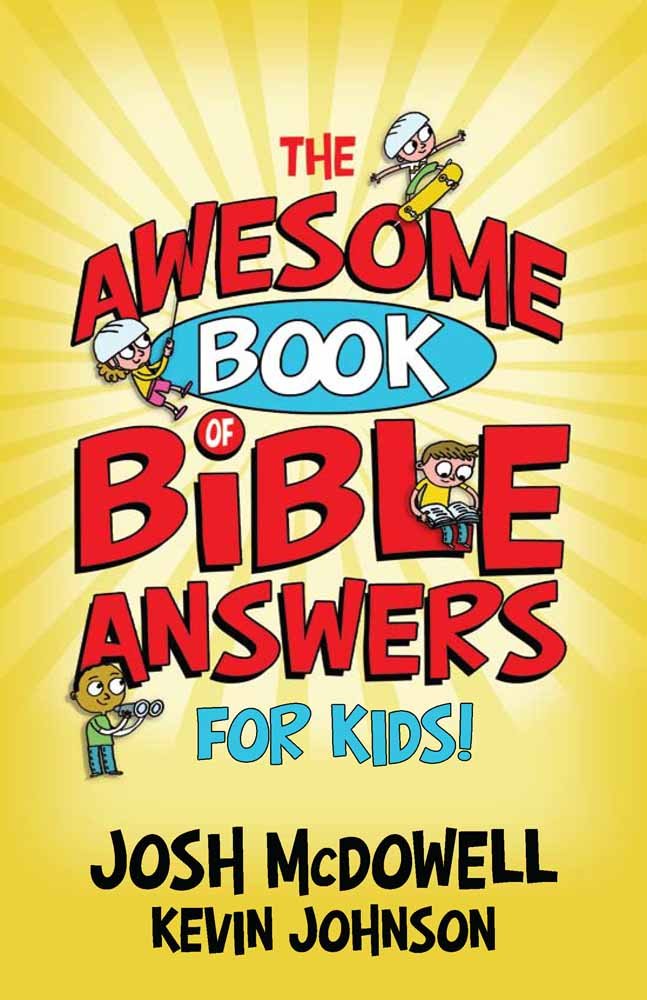
Pin It on Pinterest